JSTOR Global Plants Home
  • Home
  • Browse
  • About
  • Access
  • Account
    • Saved Items
    • Profile
  • Log in

Global Plants

Skip to Main Content
  • JSTOR Global Plants Home
  • Global Plants

    • Browse
    • About
    • Access
    • Account
      • Saved Items
      • Profile
Log in
  • Browse
  • About
  • Access
  • Account
    • Saved Items
    • Profile
Advanced Search

Compilation
Pseudobahia bahiifolia

3 Images see all

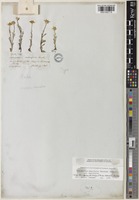
Holotype of Monolopia bahiifolia Benth. [family ASTERACEAE]
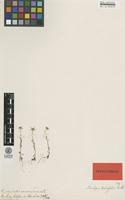
Isotype of Monolopia bahiifolia Benth. [family ASTERACEAE]
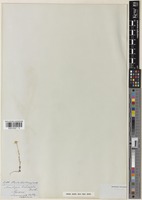
Pseudobahia bahiifolia Rydb. [family ASTERACEAE]
Previous
Next

Name

Identification
Isotype of Monolopia bahiifolia Benth. [family ASTERACEAE ] (stored under name); Verified by Not on sheet, Isotype of Pseudobahia bahiifolia (Benth.) Rydb. [family ASTERACEAE ] Verified by Not on sheet,
Related name
  • Monolopia bahiifolia
  • Pseudobahia bahiifolia
Common name
  • Hartweg’s golden sunburst, Flora of North America Vol. 21

Flora

Entry for Pseudobahia bahiifolia (Bentham) Rydberg [family COMPOSITAE]
Herbarium
Flora of North America (FNA)
Collection
Flora of North America
Resource Type
Reference Sources
Entry From
Flora of North America, Vol 21,
Names
Pseudobahia bahiifolia (Bentham) Rydberg [family COMPOSITAE], in N. L. Britton et al., N. Amer. Fl., 34: 83. 1915
Monolopia bahiifolia Bentham [family COMPOSITAE], Pl. Hartweg., 317. 1849 (as bahiaefolia)
Past names
bahiaefolia
Treatment Author(s)
Dale E. Johnson
Information
Plants to 20 cm. Leaves 8–25 mm (linear to oblanceolate), usually 3-lobed. Peduncles 20–50 mm. Phyllaries 3–8, connate at bases, elliptic to lanceolate. Ray florets 3–8. Disc florets 8–25+; tubes cylindric, abruptly dilated (throats broadly funnelform), lobes glabrous. Cypselae 1.5–2.5 mm. 2n = 8.
Conservation Status
of conservation concern;
Phenology
mar-may (spring)
Altitude range
100–200 m;
Distribution
USA Calif.

Related Materials

  • Terms and Conditions
  • Privacy Policy
  • Cookie Policy
  • Cookie Settings
  • Accessibility
  • Help
  • Contact Us
  • Facebook
  • Twitter
ITHAKA

JSTOR is part of ITHAKA, a not-for-profit organization helping the academic community use digital technologies to preserve the scholarly record and to advance research and teaching in sustainable ways.

©2000-2026 ITHAKA. All Rights Reserved. JSTOR®, the JSTOR logo, JPASS®, Aluka®, and ITHAKA® are registered trademarks of ITHAKA.

╳