JSTOR Global Plants Home
  • Home
  • Browse
  • About
  • Access
  • Account
    • Saved Items
    • Profile
  • Log in

Global Plants

Skip to Main Content
  • JSTOR Global Plants Home
  • Global Plants

    • Browse
    • About
    • Access
    • Account
      • Saved Items
      • Profile
Log in
  • Browse
  • About
  • Access
  • Account
    • Saved Items
    • Profile
Advanced Search

Compilation
Primula laurentiana

5 Images see all

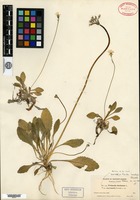
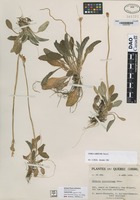
Isotype of Primula laurentiana Fernald [family PRIMULACEAE]
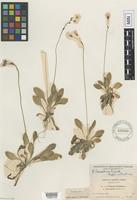
Type of Primula laurentiana Fernald [family PRIMULACEAE]
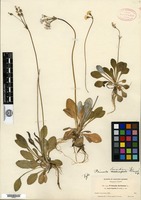
not on sheet of Primula laurentiana Fernald [family PRIMULACEAE]
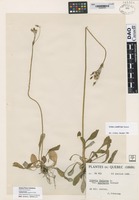
not on sheet of Primula farinosa Linnaeus variety macropoda Fern. [family PRIMULACEAE]
Isotype of Primula laurentiana Fernald [family PRIMULACEAE]
Previous
Next

Name

Identification
Isotype of Primula laurentiana Fernald [family PRIMULACEAE ] (stored under name); Verified by Not on sheet, Primula laurentiana Fernald [family PRIMULACEAE ] Verified by Not on sheet,
Related name
  • Primula laurentiana
Common name
  • primevère laurentienne, Flora of North America Vol. 8
  • Bird’s-eye primrose, Flora of North America Vol. 8

Flora

Entry for Primula laurentiana Fernald [family PRIMULACEAE]
Herbarium
Flora of North America (FNA)
Collection
Flora of North America
Resource Type
Reference Sources
Entry From
Flora of North America, Vol 8,
Names
Primula laurentiana Fernald [family PRIMULACEAE], Rhodora, 30: 68. 1928 ,
Primula farinosa Linnaeus var. macropoda Fernald [family PRIMULACEAE], Rhodora, 9: 16. 1907,. not P. macropoda Craib 1919
Primula mistassinica Michaux var. macropoda (Fernald) B. Boivin [family PRIMULACEAE]
Treatment Author(s)
Sylvia Kelso
Information
Plants 10–48 cm, herbaceous; rhizomes thin, short; rosettes not clumped; vegetative parts usually farinose but sometimes efarinose in age. Leaves not aromatic, indistinctly petiolate; petiole broadly winged; blade without deep reticulate veins abaxially, oblanceolate to spatulate, 3–10 × 0.4–1.3 cm, thin, margins crenate, apex obtuse to acute, surfaces glabrous. Inflorescences 3–12-flowered; involucral bracts saccate, ± equal. Pedicels erect or spreading, sturdy, 5–10 mm, length ca. 2 times bracts, somewhat flexuous. Flowers homostylous; calyx green, campanulate, 5–8 mm; corolla lavender, tube 6–9 mm, length 1.5–2 times calyx, eglandular, limb 10–16 mm diam., lobes 5–8 mm, apex emarginate. Capsules ellipsoid, length 1.5–2 times calyx. Seeds without flanged edges, reticulate. 2n = 72.
Phenology
Flowering summer
Altitude range
0–300 m
Distribution
USA Maine.Canada N.B.Canada Nfld. and Labr.Canada N.S.Canada Ont.Canada Que.
Discussion
Primula laurentiana is the octoploid member of a polyploid complex of sect. Aleuritia in North America that encompasses ploidy levels from 2x to 14x. It is most similar to the hexaploid P. incana; it differs in its larger flowers, more open inflorescence, and more robust stature. Both species are heavily farinose and have homostylous flowers. The efarinose form described as forma chlorophylla Fernald is a common variant throughout the range of the species. In coastal northeastern Canada, P. laurentiana blends morphologically and ecologically with P. stricta and crossing between the two is likely; assessment of species identity can be difficult here.

Related Materials

  • Terms and Conditions
  • Privacy Policy
  • Cookie Policy
  • Cookie Settings
  • Accessibility
  • Help
  • Contact Us
  • Facebook
  • Twitter
ITHAKA

JSTOR is part of ITHAKA, a not-for-profit organization helping the academic community use digital technologies to preserve the scholarly record and to advance research and teaching in sustainable ways.

©2000-2026 ITHAKA. All Rights Reserved. JSTOR®, the JSTOR logo, JPASS®, Aluka®, and ITHAKA® are registered trademarks of ITHAKA.

╳