JSTOR Global Plants Home
  • Home
  • Browse
  • About
  • Access
  • Account
    • Saved Items
    • Profile
  • Log in

Global Plants

Skip to Main Content
  • JSTOR Global Plants Home
  • Global Plants

    • Browse
    • About
    • Access
    • Account
      • Saved Items
      • Profile
Log in
  • Browse
  • About
  • Access
  • Account
    • Saved Items
    • Profile
Advanced Search

Compilation
Prenanthes japonica

8 Images see all

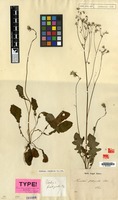
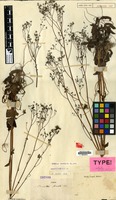
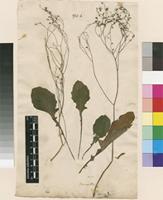
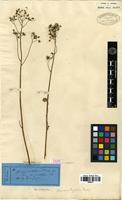
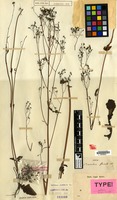
Type of Prenanthes fastigiata Blume [family COMPOSITAE]
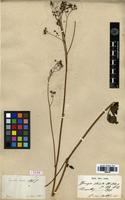
Type of Prenanthes striata Blume [family COMPOSITAE]
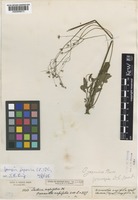
Lectotype of Prenanthes japonica L. [family ASTERACEAE]
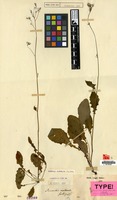
Type? of Crepis polycephala Sch.Bip. [family ASTERACEAE]
Youngia japonica (L.) DC. [family COMPOSITAE]
Type of Prenanthes stricta Blume [family ASTERACEAE]
Type of Prenanthes striata Blume [family COMPOSITAE]
Type of Prenanthes fastigiata Blume [family COMPOSITAE]
Previous
Next

Name

Identification
Prenanthes japonica L. [family ASTERACEAE ] (stored under name); Verified by Not on sheet, Youngia japonica (L.) DC. [family ASTERACEAE ] Verified by Not on sheet,
Related name
  • Prenanthes japonica
  • Youngia japonica
Common name
  • Oriental false hawksbeard, Flora of North America Vol. 19

Flora

Entry for Youngia japonica (Linneaus) de Candolle [family COMPOSITAE]
Herbarium
Flora of North America (FNA)
Collection
Flora of North America
Resource Type
Reference Sources
Entry From
Flora of North America, Vol 19,
Names
Youngia japonica (Linneaus) de Candolle [family COMPOSITAE], in A. P. de Candolle and A. L. P. P. de Candolle, Prodr., 7: 194. 1838
Prenanthes japonica Linnaeus [family COMPOSITAE], Mant. Pl., 107. 1767
Crepis japonica (Linnaeus) Bentham [family COMPOSITAE]
Youngia japonica subsp. elstonii (Hochreutiner) Babcock & Stebbins [family COMPOSITAE]
Treatment Author(s)
Phyllis L. Spurr
Information
Stems terete, fistulose. Leaves: petioles 1–10 cm, glabrous, puberulent, or densely hairy (hairs often brownish, crinkled); blades 3–12(–25) × 2–4(–6) cm, lateral lobes 0–20, mostly gradually reduced proximally, terminal lobes elliptic, ovate, obovate, or oblong-truncate, larger than laterals, apices obtuse or acute. Peduncles 1–5(–15) mm. Phyllaries 3.5–6 mm, bases and midribs becoming ± spongy, abaxial faces glabrous, glabrate, or hairy (hairs appressed, shining). Florets: corollas mostly 4.5–6.5 mm; anthers dark green (drying purplish); styles and style-branches yellow. Cypselae 1.5–2.5 mm, bases hollow, lightly calloused; pappi 2.5–3.5 mm, slightly surpassing phyllaries. 2n = 16.
Phenology
mar-may (spring), jun-aug (summer)
Altitude range
0–2400 m;
Distribution
se Asiaintroduced also in MexicoCentral AmericaSouth AmericaEuropeAfricaPacific IslandsAustralia.USA Ala.USA Ark.USA D.C.USA Fla.USA Ga.USA Ky.USA La.USA Md.USA Miss.USA N.Y.USA N.C.USA Pa.USA S.C.USA Tenn.USA Tex.USA Va.
Discussion
Youngia japonica is now considered a pantropical weed. Relatively few specimens in the flora match what Babcock and Stebbins called subsp. elstonii, with cauline leaves almost as large as the basal and with conspicuous, lobed bracts at the bases of the proximalmost branches of the capitulescence. In subsp. japonica, to which most of our specimens are referred, the cauline leaves are much reduced or lacking, as are the bracts of the capitulescence.
Native/Introduced
introduced;

Related Materials

  • Terms and Conditions
  • Privacy Policy
  • Cookie Policy
  • Cookie Settings
  • Accessibility
  • Help
  • Contact Us
  • Facebook
  • Twitter
ITHAKA

JSTOR is part of ITHAKA, a not-for-profit organization helping the academic community use digital technologies to preserve the scholarly record and to advance research and teaching in sustainable ways.

©2000-2026 ITHAKA. All Rights Reserved. JSTOR®, the JSTOR logo, JPASS®, Aluka®, and ITHAKA® are registered trademarks of ITHAKA.

╳