JSTOR Global Plants Home
  • Home
  • Browse
  • About
  • Access
  • Account
    • Saved Items
    • Profile
  • Log in

Global Plants

Skip to Main Content
  • JSTOR Global Plants Home
  • Global Plants

    • Browse
    • About
    • Access
    • Account
      • Saved Items
      • Profile
Log in
  • Browse
  • About
  • Access
  • Account
    • Saved Items
    • Profile
Advanced Search

Compilation
Potamogeton parvifolius

11 Images see all

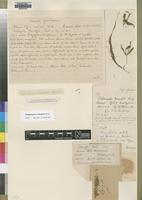
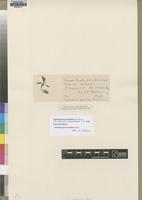
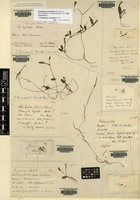
Type of Potamogeton parvifolius Buch. [family POTAMOGETONACE]
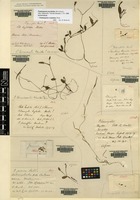
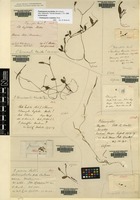
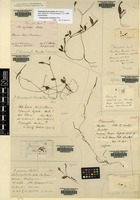
Syntype of Potamogeton parvifolius Buchenau [family POTAMOGETONACE]
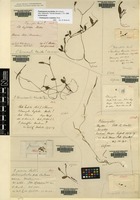
Syntype of Potamogeton parvifolius Buchenau [family POTAMOGETONACEAE]
Filed as Potamogeton octandrus Poir. [family POTAMOGETONACEAE]
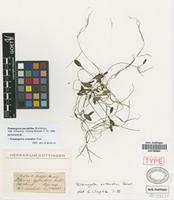
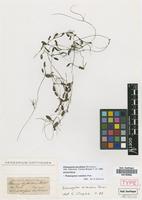
Lectotype of Potamogeton parvifolius Buch. [family POTAMOGETONACE]
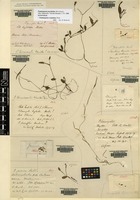
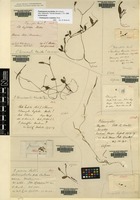
Syntype of Potamogeton parvifolius Buchenau [family POTAMOGETONACE]
Filed as Potamogeton octandrus Poir. [family POTAMOGETONACEAE]
Syntype of Potamogeton parvifolius Buchenau [family POTAMOGETONACE]
Filed as Potamogeton octandrus Poir. [family POTAMOGETONACEAE]
Syntype of Potamogeton parvifolius Buchenau [family POTAMOGETONACEAE]
Previous
Next

Name

Identification
Potamogeton parvifolius Buch. [family POTAMOGETONACE ] Potamogeton javanicus Hassk. [family POTAMOGETONACE ] Potamogeton octandrus Poir. [family POTAMOGETONACE ] (stored under name); Verified by Kaplan,Z.,
Related name
  • Potamogeton parvifolius
  • Potamogeton javanicus
  • Potamogeton octandrus

Flora

Entry for Potamogeton octandrus Poir. [family POTAMOGETONACEAE]
Herbarium
Royal Botanic Gardens, Kew (K)
Collection
Flora of Tropical East Africa
Resource Type
Reference Sources
Entry From
Flora of Tropical East Africa, page 1, (2006) Author: J.J. Symoens
Names
Potamogeton octandrus Poir. [family POTAMOGETONACEAE], in Lam., Encycl. Méth. Bot., Suppl. 4: 534 (1816); Dandy in J.L.S. 50: 517, fig. 2 (1937); Hepper in F.W.T.A., ed. 2, 3: 16 (1968); Lisowski et al. in F.A.C., Potamogetonaceae: 5 (1978); U.K.W.F., ed. 2: 302 (1994); Cook, Aquat. Wetl. Pl. S. Afr.: 236, fig. 253 d– e (2004). Type: Viet-Nam [Cochinchina], Loureiro s.n. (BM!, holo. or lecto.)
Potamogeton javanicus Hasskarl [family POTAMOGETONACEAE], in Verh. Kon. Natuurk. Ver. Ned. Indie 1 (8): 26 (1856); K. Schum. in P.O.A. C: 93 (1895); A. Benn. in F.T.A. 8: 220 (1901) & in J.L.S. 38: 24, 28 (1907); Graebner in Pflanzenr. 4 (11): 46, fig. 14 A– C (1907); A. Peter in Abh. Ges. Wiss. Göttingen 13 (2): 18, 108 (1928); F.D.O.-A.: 113 (1929). Type: Indonesia: W Java, near Tjisarupan, foot of Mt. Papandayan, Hasskarl s.n. (not located)
Potamogeton tenuicaulis F.Muell. [family POTAMOGETONACEAE], Fragm. Phyt. Austr. 1: 90 & 244 (1859) & 8: 217 (1874). Type: Australia, F. Mueller s.n. (MEL, holo.)
Potamogeton parvifolius Buchenau [family POTAMOGETONACEAE], in Abh. Natur. Ver. Bremen 7: 32 (1880). Syntypes: Madagascar, Antananarivo, 17 Dec. 1877, Rutenberg s.n. (not located); India, Khasia Hills, Hooker & Thomson s.n. (K!, syn.)
Potamogeton preussii A.Benn. [family POTAMOGETONACEAE], in F.T.A. 8: 222 (1901) pro parte quoad syntypes from Cameroon: Kumba,Barombi-ba-Mbu, Elephant Lake,1890, Preuss 451 (BM, COI, syn.); Kumba Mountains [Johann-Albrechtshöhe], bank of Elephant Lake, 1895, Staudt 462 (BM, syn.)
Information
Aquatic herb with submerged and floating leaves; rhizomes absent or present, annual or perennial, poorly developed, filiform, terete; stems annual, 20– 100 cm long, sparingly or much branched, filiform, terete with grooves, sometimes developing axillary tubers. Submerged leaves bright green to brown-green, sessile, linear, 25– 55(– 75) mm long, 0.5– 1.2(– 3) mm wide, 30– 75 times as long as wide, entire at margins, acute to acuminate, 3-veined; midrib bordered with broad rows of lacunae; lateral veins sometimes inconspicuous; intermediate leaves often present, petiolate, oblong to lanceolate; floating leaves present or absent, petiolate; petiole 3– 25(– 34) mm long, 0.2– 1.1 times as long as the lamina; lamina narrowly lanceolate toelliptical or oblong,(5– )9– 29(– 38) mm long, (2– )3– 11 mm wide, 1.3– 6(– 8.5) times as long as wide, opaque, coriaceous to subcoriaceous, bright green to dark green, sometimes with a brownish tinge, 5– 7-veined, cuneate at base, acute at apex; margins entire; stipules axillary, convolute, 4– 13 mm long, translucent, decaying early. Inflorescences developing mostly in the axils of floating leaves; peduncles 9– 20(– 40) mm long, 0.7– 2.4 times as long as the fruiting spike, as thick or slightly thicker than the stem; spikes cylindrical, 5– 16 mm long when in fruit, with 7– 9 flowers in 3– 7 contiguous or shortly distant whorls. Tepals broadly ovate, ± 1 mm long, green; carpels (3– )4(– 7). Fruitlets 1.5– 2.4(– 3.5) mm long, green; beak short to fairly long, hooked; dorsal keel mostly distinct, crenulate. Stem anatomy: stele of the oblong or the circular type; endodermis of O-type; interlacunar bundles absent, rarely a few present; subepidermal bundles present; pseudohypodermis absent or present, 1-layered.
Range
DISTR. U 1– 4; K 3, 4; T 1, 4, 7 West Africa from Senegal to Nigeria,
Altitude range
1100– 1750 m (– 2100 m, fide EA)
Distribution
UGANDA Busoga District Buluba Leper Colony, 3 Oct. 1952, G.H.S. Wood 461!;KENYA Uasin Gishu District Eldoret, Lessos Dam, 18 Dec. 1964, Lind, Agnew & Kettle 5892!;TANZANIA Bukoba District Bukoba, 20 Apr. 1905, Cunnington 54!;UGANDA Masaka District Kagera River, near mouth, 9 Dec. 1951, Norman 63!;UGANDA Mengo District Entebbe, Lake Victoria, Jan. 1938, Chandler 2088!KENYA Nairobi District Nairobi National Park, Hyena Dam, 2 Jan. 1968, Agnew 9920!;KENYA Kiambu/Machakos Districts Athi R., Fourteen Falls, 18 Apr. 1948, Bogdan 1565!TANZANIA Iringa District Mufindi, Lake Luisenga, 17 Mar. 1962, Polhill & Paulo 1788!
Distribution (external)
Cameroon
Chad
Central African Rep
Sudan
Ethiopia
Congo-Kinshasa
Burundi
Zambia
Malawi
Mozambique
Zimbabwe
Namibia
Botswana
South Africa
Madagascar
S and E Asia,
Australia
Notes
Lye (in Lidia 3: 79 (1993)) described as Potamogeton octandrus subsp. ethiopicus Lye a plant from Ethiopia with large fruits (3– 3.5 mm long) and slender peduncles (0.3– 0.5 mm thick).

Related Materials

  • Terms and Conditions
  • Privacy Policy
  • Cookie Policy
  • Cookie Settings
  • Accessibility
  • Help
  • Contact Us
  • Facebook
  • Twitter
ITHAKA

JSTOR is part of ITHAKA, a not-for-profit organization helping the academic community use digital technologies to preserve the scholarly record and to advance research and teaching in sustainable ways.

©2000-2026 ITHAKA. All Rights Reserved. JSTOR®, the JSTOR logo, JPASS®, Aluka®, and ITHAKA® are registered trademarks of ITHAKA.

╳