JSTOR Global Plants Home
  • Home
  • Browse
  • About
  • Access
  • Account
    • Saved Items
    • Profile
  • Log in

Global Plants

Skip to Main Content
  • JSTOR Global Plants Home
  • Global Plants

    • Browse
    • About
    • Access
    • Account
      • Saved Items
      • Profile
Log in
  • Browse
  • About
  • Access
  • Account
    • Saved Items
    • Profile
Advanced Search

Compilation
Portulaca sp.

7 Images see all

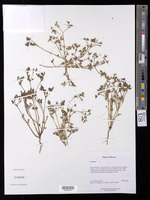
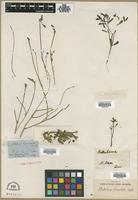
Portulaca sp. [family PORTULACACEAE]
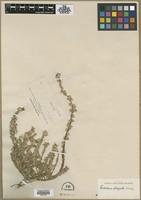
Type? of Portulaca elongata Rusby [family PORTULACACEAE]
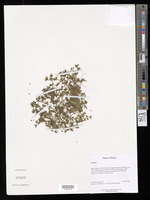
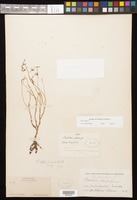
Portulaca sp. [family PORTULACACEAE]
Filed as Portulaca sp. [family PORTULACACEAE]
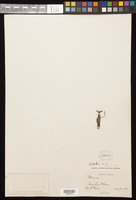
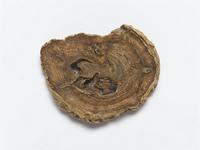
Portulaca sp.; root
Filed as Portulaca lanceolata Engelm. in A.Gray [family PORTULACACEAE]
Filed as Portulaca sp. [family PORTULACACEAE]
Previous
Next

Name

Identification
Portulaca sp. [family PORTULACACEAE ]
Related name
  • Portulaca sp.

Flora

Entry for PORTULACA sp. [family PORTULACACEAE]
Herbarium
Royal Botanic Gardens, Kew (K)
Collection
Flora Somalia
Resource Type
Reference Sources
Entry From
Flora Somalia, Vol 1, (1993) Author: by M. G. Gilbert [updated by M. Thulin 2008]
Names
PORTULACA sp. [family PORTULACACEAE], = Thulin 6398.
Information
Most similar to the more widespread P. kermesina. Perhaps sometimes a short-lived perennial. Leaves sometimes rather close spaced, 7–15 x 0.7–1 mm; axillary wool white, sometimes very copious and almost concealing stem, scales absent. Involucral leaves up to 22 mm long but often less. Sepals 5.5–7 mm long, acute. Petals yellow. Stamens more than 20. Capsule lid truncated-conical, 3.5 mm high. Seeds ± compressed, 0.45–0.5 mm long, dark brown, not iridescent, testa cells with conspicuously undulate margins, ± flat.
Range
S2 not known elsewhere.
Altitude range
c. 130 m.
Distribution
SOMALIA Lavranos & Carter 23170.
Notes
Closest to the following species, also related to P. ciferrii, but with less obviously perennial habit, smaller flowers and differently shaped testa cells.

Related Materials

  • Terms and Conditions
  • Privacy Policy
  • Cookie Policy
  • Cookie Settings
  • Accessibility
  • Help
  • Contact Us
  • Facebook
  • Twitter
ITHAKA

JSTOR is part of ITHAKA, a not-for-profit organization helping the academic community use digital technologies to preserve the scholarly record and to advance research and teaching in sustainable ways.

©2000-2026 ITHAKA. All Rights Reserved. JSTOR®, the JSTOR logo, JPASS®, Aluka®, and ITHAKA® are registered trademarks of ITHAKA.

╳