JSTOR Global Plants Home
  • Home
  • Browse
  • About
  • Access
  • Account
    • Saved Items
    • Profile
  • Log in

Global Plants

Skip to Main Content
  • JSTOR Global Plants Home
  • Global Plants

    • Browse
    • About
    • Access
    • Account
      • Saved Items
      • Profile
Log in
  • Browse
  • About
  • Access
  • Account
    • Saved Items
    • Profile
Advanced Search

Compilation
Portulaca collina

7 Images see all

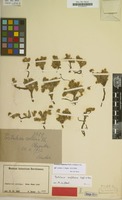
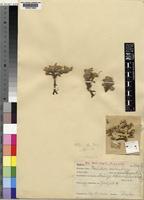
Type? of Portulaca collina Dinter [family PORTULACACEAE]
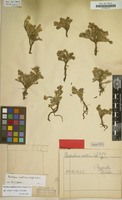
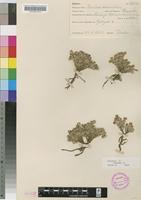
Type of Portulaca collina Dinter [family PORTULACACEAE]
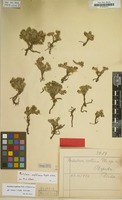
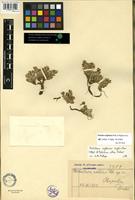
Isotype of Portulaca collina Dinter [family PORTULACACEAE]
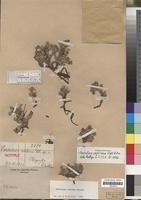
Portulaca collina Dinter [family PORTULACACEAE]
Isotype of Portulaca collina Dinter [family PORTULACACEAE]
Previous
Next

Name

Identification
Portulaca wightiana Wight & Arn. [family PORTULACACEAE ] (stored under name); Verified by S.M. Philips, 1999 Isotype of Portulaca collina Dinter [family PORTULACACEAE ] Verified by Not on Sheet,
Related name
  • Portulaca wightiana
  • Portulaca aurantiaca
  • Portulaca collina

Flora

Entry for PORTULACA wightiana Wight & Arn. [family PORTULACACEAE]
Herbarium
Royal Botanic Gardens, Kew (K)
Collection
Flora of Tropical East Africa
Resource Type
Reference Sources
Entry From
Flora of Tropical East Africa, page 1, (2002) Author: SYLVIA M. PHILLIPS
Names
PORTULACA wightiana Wight & Arn. [family PORTULACACEAE], Prodr. Fl. Pen. Ind. Or.: 356 (1834); R. Geesink in Blumea 17: 290, fig. 4 (1969); M.G. Gilbert in Fl. Somalia 1: 125 (1993); M.G. Gilbert & S.M. Phillips in K.B. 55: 779, map 2 (2000). Type: India, Madras, Sadras, Wight 1166 & in Herb. Wallich 6845 (K!, syn.)
PORTULACA collina Dinter [family PORTULACACEAE], in F.R. 19: 139 (1923); Poelln. in F.R. 37: 309 (1934); F.D.-O.A.: 270 (1938); Wild in F.Z. 1: 365 (1961). Type: Namibia, Hereroland, Okapuka, Dinter 3489 (B, holo., K!, C!, iso.)
PORTULACA usambarensis Poelln. [family PORTULACACEAE], in F.R. 48: 189 (1940). Type: Tanzania, Lushoto District, W Usambara, Gomba near Makuyuni, Mbala Hill, Peter 15388 (B†, holo.)
PORTULACA usambarensis Poelln. var. granulata [family PORTULACACEAE], in F.R. 48: 190 (1940). Type: Tanzania, Pare District, S Pare, W of Makanya [Makanja] towards the Lasiti Hills, Peter 12290 (B!, holo., K!, photo.)
Information
Succulent herb from a thick taproot; stems bushily branched, articulated, up to 7 cm high, the many short internodes 0.8–1.5 mm thick, often exceeded by the conspicuous, papery nodal scales. Leaves opposite, very fleshy, lanceolate-elliptic, 3–5.5 mm long, 1–1.5 mm wide, acute, soon caducous; nodal scales overlapping in dense circlets, 4–7 mm long, 1–2 mm wide at the base, tapering into acuminate or hair-like tips, often longer than the leaves and overlapping the scales of the node above, imparting a silvery-white appearance to the whole plant. Flowers inconspicuous, 1–3 at the branch tips, densely surrounded by hair-like scales within the 4 involucral leaves, these slightly longer and more ovate than the cauline leaves, up to 8 mm long. Sepals ovate, 2–3 mm long, connate in the lower third; petals 4, yellow, ± 1.5–4 mm long; stamens 4–8; stigma 4(–5)-branched. Capsule dehiscing 1/3 up from the base, lid a broadly rounded dome 1.4–2 mm high, pale, glossy; seeds plumply reniform, 0.4–0.6 mm long, light brown or with a greyish sheen, testa cells domed to tuberculate, the marginal cell-walls indiscernable.
Range
DISTR. K 1, 2, 4, 7; T 1, 3
Altitude range
0–1500 m
Distribution
KENYA Northern Frontier District Dandu, 5 May 1952, Gillett 13061!KENYA Kiambu District 5 km WSW of Thika, B. Harris farm, 24 Jan. 1970, Thulin 338!;KENYA Kwale District Mombasa to Nairobi road, Taru, 3°46' S 39°07' E, 22 Jan. 1972, R.B. & A.J. Faden 72/93!TANZANIA Musoma District Serengeti, Seronera, 4 May 1961, Greenway 10139!;TANZANIA Lushoto District Mkomazi, 28 Mar. 1975, Wingfield 2908!
Distribution (external)
S Ethiopia
Somalia
S Zimbabwe
Namibia
N South Africa
S India
Sri Lanka
Notes
The broad silvery-white scales make this an easily recognisable species, the whole plant often appearing white, as the small leaves are surrounded by scales and fall early. Specimens from southern Africa tend to have more flowers in each cluster (often 3–4), and the flowers are often slightly larger, with sepals to 4.5 mm and a capsule lid over 2 mm high.The degree to which the tips of the scales are drawn out into hairs is very variable, although African specimens usually have hair-like tips. In the Indian and Sri Lankan population the scales are merely acute or acuminate. Additionally fusiform root-tubers are sometimes present on adventitious roots in this population. A subdivision into 2 subspecies may be merited, but at present little material is available, and the roots are not always carefully collected.

Related Materials

  • Terms and Conditions
  • Privacy Policy
  • Cookie Policy
  • Cookie Settings
  • Accessibility
  • Help
  • Contact Us
  • Facebook
  • Twitter
ITHAKA

JSTOR is part of ITHAKA, a not-for-profit organization helping the academic community use digital technologies to preserve the scholarly record and to advance research and teaching in sustainable ways.

©2000-2026 ITHAKA. All Rights Reserved. JSTOR®, the JSTOR logo, JPASS®, Aluka®, and ITHAKA® are registered trademarks of ITHAKA.

╳