JSTOR Global Plants Home
  • Home
  • Browse
  • About
  • Access
  • Account
    • Saved Items
    • Profile
  • Log in

Global Plants

Skip to Main Content
  • JSTOR Global Plants Home
  • Global Plants

    • Browse
    • About
    • Access
    • Account
      • Saved Items
      • Profile
Log in
  • Browse
  • About
  • Access
  • Account
    • Saved Items
    • Profile
Advanced Search

Compilation
Polytrichastrum formosum

5 Images see all

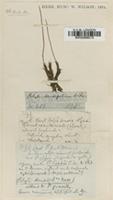
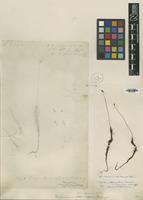
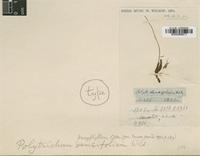
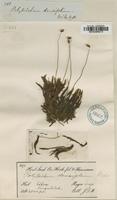
Type of Polytrichum densifolium Wilson ex Mitt. [family POLYTRICHACEAE]
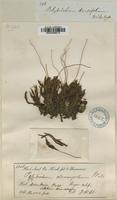
Type of Polytrichum attenuatum Menzies ex Brid. [family POLYTRICHACEAE]
Type of Polytrichum densifolium Wilson ex Mitt. [family POLYTRICHACEAE]
Previous
Next

Name

Identification
Polytrichastrum formosum (Hedw.) G.L.Sm. [family POLYTRICHACEAE ] (stored under name); Polytrichum formosum Hedw. [family POLYTRICHACEAE ] Polytrichum attenuatum Menzies ex Brid. [family POLYTRICHACEAE ]
Related name
  • Polytrichum densifolium
  • Polytrichastrum formosum
  • Polytrichum formosum
  • Polytrichum attenuatum

Flora

Entry for Polytrichastrum formosum (Hedwig) G. L. Smith [family ]
Herbarium
Flora of North America (FNA)
Collection
Flora of North America
Resource Type
Reference Sources
Entry From
Flora of North America, Vol 27,
Names
Polytrichastrum formosum (Hedwig) G. L. Smith [family ], Mem. New York Bot. Gard., 21(3): 37. 1971,
Polytrichum formosum Hedwig [family ], Sp. Musc. Frond., 92, plate 19, fig. 1a. 1801
Polytrichum attenuatum Menzies [family ]
Treatment Author(s)
Gary L. Smith Merrill
Information
Plants medium and slender to large and robust, green to dark olive green to blackish, in loose tufts. Stems (2–)3–8(–20) cm, mostly unbranched. Leaves 6–8(–12) mm, erect to erect-spreading when dry, spreading to subsquarrose and broadly recurved when moist; sheath ovate to elliptic, yellowish, hyaline-margined, gradually tapering or abruptly contracted to the blade, the cells at the shoulders forming a differentiated hinge; blade lanceolate to linear; costa prominent abaxially and toothed near the tip; excurrent as a short, toothed point; marginal lamina erect, (2–)3–5(–10) cells wide, plane or erect, sharply toothed from apex nearly to the sheath; lamellae (3–)4–5(–7) cells high, margins ± entire to finely serrulate in profile, the marginal cells in section rounded to narrowly elliptic and somewhat taller than the cells beneath, the cell walls not or moderately thickened; median cells of sheath 8–12 µm wide, narrowly rectangular, 5–7(–10):1; cells of marginal lamina subquadrate, 10–15 µm. Sexual condition dioicous or polygamous; perichaetial leaves similar to the foliage leaves, or somewhat longer, with a longer sheath. Seta 3–6 cm, yellowish to reddish brown. Capsule 4–7 mm, rather slender or short-rectangular, acutely 4(–6)-angled, inclined to almost horizontal, pale yellowish brown to brownish; hypophysis cylindric, indistinctly delimited or set off by a shallow groove; exothecium smooth or the cells weakly convex, quadrate to hexagonal, without a central thin spot; peristome 600 µm, divided to 0.6, the teeth 64 and highly regular in form or fewer and somewhat irregular, pale to brownish; epiphragm absent marginal teeth. Spores 12–16 µm.
Distribution
widespreadtemperate to cool temperate latitudes in the Northern Hemisphere.
Discussion
European treatments often assert a similarity between Polytrichastrum formosum and Polytrichum commune, which cannot be said of the North American expression of the species. The habitat and ecology of the European plants are also distinct: A. J. E. Smith (2004) described P. formosum in Britain as a common and weedy species of heaths, moorland, woods, outcrops, and old walls.

Related Materials

  • Terms and Conditions
  • Privacy Policy
  • Cookie Policy
  • Cookie Settings
  • Accessibility
  • Help
  • Contact Us
  • Facebook
  • Twitter
ITHAKA

JSTOR is part of ITHAKA, a not-for-profit organization helping the academic community use digital technologies to preserve the scholarly record and to advance research and teaching in sustainable ways.

©2000-2026 ITHAKA. All Rights Reserved. JSTOR®, the JSTOR logo, JPASS®, Aluka®, and ITHAKA® are registered trademarks of ITHAKA.

╳