JSTOR Global Plants Home
  • Home
  • Browse
  • About
  • Access
  • Account
    • Saved Items
    • Profile
  • Log in

Global Plants

Skip to Main Content
  • JSTOR Global Plants Home
  • Global Plants

    • Browse
    • About
    • Access
    • Account
      • Saved Items
      • Profile
Log in
  • Browse
  • About
  • Access
  • Account
    • Saved Items
    • Profile
Advanced Search

Compilation
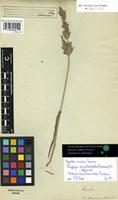
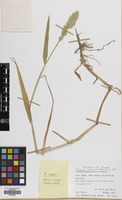
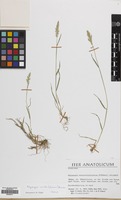
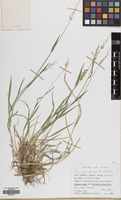
Polypogon semiverticillatus

14 Images see all

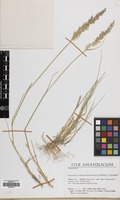
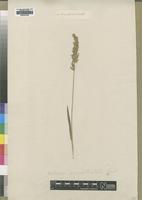
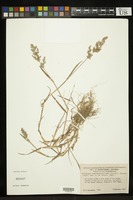
Filed as Polypogon viridis (Gouan) Breistr. [family GRAMINEAE]
Filed as Agrostis viridis Gouan [family GRAMINEAE]
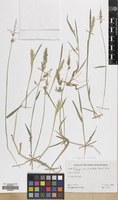
Filed as Polypogon viridis (Gouan) Breistr. [family GRAMINEAE]
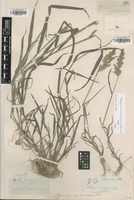
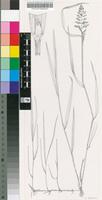
Syntype of Phalaris semiverticillata Forssk. [family GRAMINEAE]
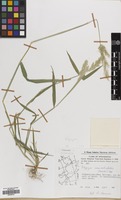
Filed as Polypogon viridis (Gouan) Breistr. [family GRAMINEAE]
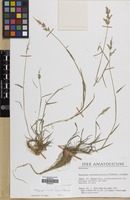
Type? of Agrostis verticillata Vill. [family POACEAE]
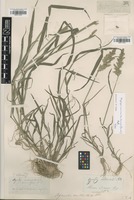
Type of Phalaris semiverticillata Forssk. [family POACEAE]
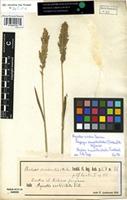
Type? of Agrostis verticillata Vill. [family POACEAE]
Filed as Polypogon fugax Nees ex Steud. [family GRAMINEAE]
Filed as Polypogon viridis (Gouan) Breistr. [family GRAMINEAE]
Polypogon semiverticillatus (Forssk.) Hyl.
Polypogon semiverticillatus (Forssk.) Hyl. [family POACEAE]
Previous
Next

Name

Identification
Polypogon semiverticillatus (Forssk.) Hyl. [family POACEAE ]
Related name
  • Polypogon semiverticillatus

Flora

Entry for Polypogon semiverticillatus Forsk. Hylander [family GRAMINEAE]
Herbarium
Royal Botanic Gardens, Kew (K)
Collection
Flora Zambesiaca
Resource Type
Reference Sources
Entry From
FZ, Vol 10, Part 1, (1971) Author: E. Launert
Names
Phalaris semiverticillata Forsk. [family GRAMINEAE], Fl. Aegypt.-Arab.: LX, 17 (1775). Type as above.
Agrostis verticillata Vill. [family GRAMINEAE], Prosp. Pl. Dauph.: 16 (1779). Type from France.
Agrostis semiverticillata Forsk. C. Christ. [family GRAMINEAE], in Dansk Bot. Ark. 4, 3: 12 (1922). Type as for Polypogon semiverticillatus.
Polypogon semiverticillatus Forsk. Hylander [family GRAMINEAE], in Uppsala Univ.Årsskr. 1945 (7): 74 (1945). — Chippindall in Meredith, Grasses & Pastures of S. Afr.: 97, 98, 99 (1955). — Bor, Grass. B.C.I. & P.: 389 (1960); Fl. Iraq, 9: 318 (1968). — Launert in Merxm., Prodr. Fl. SW. Afr. 160: 155 (1970). Type from Egypt.
Information
A rather variable perennial, rarely annual, usually loosely caespitose, often stoloniferous. Culms (15)30-100 cm. tall, erect from a decumbent base, sometimes rooting at the nodes, glabrous and smooth, 2-many-noded. Leaf-sheaths striate, tight at first later becoming loose and often slipping off the culm. Leaf-laminae 2-17 x 0.2-0.7 cm., usually expanded narrowly lanceolate to linear, glabrous, scaberulous, tapering to a fine point. Panicle usually rather contracted, 3-8(11) cm. long, up to 25 cm. wide, lobed, erect; branches verticillate, densely spiculate down to the base. Spikelets falling entire, 1.75 - 2 mm. long, ovate-elliptic to narrowly elliptic in outline, shortly pedicelled to almost sessile. Glumes equal, determining the length of the spikelet, obtusely keeled, elliptic if expanded, acute, dorsally scaberulous, green or occasionally tinged with purple. Lemma 1-1.5 mm. long, awnless, broadly elliptic, finely 5-nerved, with the apex truncate and sometimes minutely toothed. Palea 2-nerved, almost as long as the lemma. Anthers 0.5 — 0.75 mm. long. Caryopsis c. 1 mm. long, pale-brown.
Habitat
On moist ground, along irrigation ditches, streams, in waste land and on roadsides
Range
A native of the Mediterranean area and north-eastern Africa but introduced into many warm and temperate regions of the world
Distribution
Zimbabwe E Umtali Distr., Stapleford Forest Reserve, 1520 m., 29 .ix. 1948, Chase 5381 (BM; SRGH).
Distribution (external)
Angola
south-western Africa
South Africa

Related Materials

  • Terms and Conditions
  • Privacy Policy
  • Cookie Policy
  • Cookie Settings
  • Accessibility
  • Help
  • Contact Us
  • Facebook
  • Twitter
ITHAKA

JSTOR is part of ITHAKA, a not-for-profit organization helping the academic community use digital technologies to preserve the scholarly record and to advance research and teaching in sustainable ways.

©2000-2026 ITHAKA. All Rights Reserved. JSTOR®, the JSTOR logo, JPASS®, Aluka®, and ITHAKA® are registered trademarks of ITHAKA.

╳