JSTOR Global Plants Home
  • Home
  • Browse
  • About
  • Access
  • Account
    • Saved Items
    • Profile
  • Log in

Global Plants

Skip to Main Content
  • JSTOR Global Plants Home
  • Global Plants

    • Browse
    • About
    • Access
    • Account
      • Saved Items
      • Profile
Log in
  • Browse
  • About
  • Access
  • Account
    • Saved Items
    • Profile
Advanced Search

Compilation
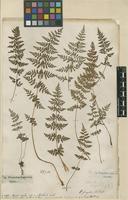
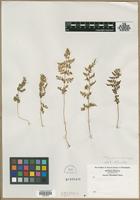
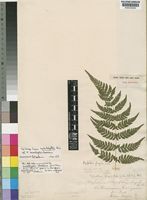
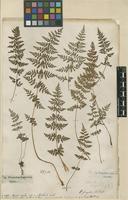
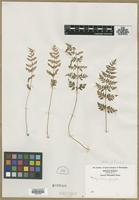
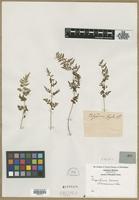
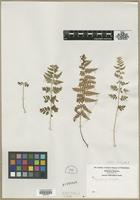
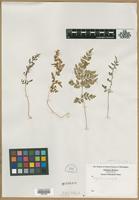
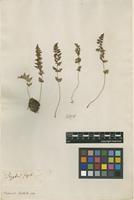
Polypodium fragile

18 Images see all

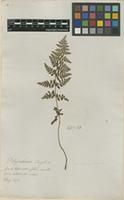
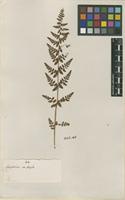
Filed as Cyathea indet. [family CYATHEACEAE]
Filed as Polypodium fragile L. [family POLYPODIACEAE]
Filed as Cystopteris fragilis (L.) Bernh. [family WOODSIACEAE]
Type? of Polypodium rhaeticum L. [family DRYOPTERIDACEAE]
Filed as Aspidium sp. [family DRYOPTERIDACEAE]
Lectotype of Polypodium fragile L. [family POLYPODIACEAE]
Filed as Cyathea indet. [family CYATHEACEAE]
Filed as Aspidium sp. [family DRYOPTERIDACEAE]
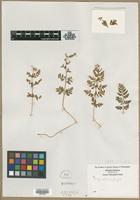
Metathelypteris fragilis (Baker) Holttum [family THELYPTERIDACEAE]
Filed as Cyathea indet. [family CYATHEACEAE]
Filed as Cystopteris fragilis (L.) Bernh. [family WOODSIACEAE]
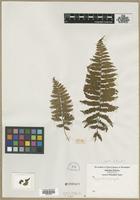
Type? of Aspidium fragile Sw. [family CYSTOPTERIDACEAE]
Previous
Next

Name

Identification
Cystopteris fragilis (L.) Bernh. [family WOODSIACEAE ] (stored under name); Polypodium rhaeticum L. [family DRYOPTERIDACEAE ] Polypodium fragile L. [family DRYOPTERIDACEAE ]
Related name
  • Polypodium fragile
  • Metathelypteris fragilis
  • Aspidium tenue
  • Cyathea fragilis
  • Nephrodium fragile
  • Dryopteris setigera
  • Polypodium rhaeticum
  • Nephrodium gracilescens
  • Cystopteris fragilis
  • Aspidium fragile
  • Aspidium sp.
  • Dryopteris fragilis
  • Cyathea indet.
  • Macrothelypteris torresiana
  • Polypodium filix-fragile
Common name
  • fragile fern, Flora of North America Vol. 2
  • Brittle fern, Flora of North America Vol. 2
  • cystoptère fragile, Flora of North America Vol. 2

Flora

Entry for Cystopteris fragilis (Linnaeus) Bernhardi [family WOODSIACEAE]
Herbarium
Flora of North America (FNA)
Collection
Flora of North America
Resource Type
Reference Sources
Entry From
Flora of North America, Vol 2,
Names
Cystopteris fragilis (Linnaeus) Bernhardi [family WOODSIACEAE], Neues J. Bot., 1(2): 26, plate 2, fig. 9. 1806
Polypodium fragile Linnaeus [family POLYPODIACEAE], Sp. Pl., 2: 1091. 1753
Cystopteris dickieana Sim [family WOODSIACEAE]
Cystopteris fragilis subsp. dickieana (Sim) Hylander [family WOODSIACEAE]
Treatment Author(s)
Christopher H. Haufler
Robbin C. Moran
Michael D. Windham
Information
Stems creeping, not cordlike, internodes short, beset with old petiole bases, hairs absent; scales tan to light brown, lanceolate, radial walls thin, luminae tan. Leaves monomorphic, clustered at stem apex, to 40 cm, nearly all bearing sori. Petiole dark at base, mostly green to straw-colored distally, shorter than or nearly equaling blade, base sparsely scaly. Blade lanceolate to narrowly elliptic, 1(--2)-pinnate-pinnatifid, widest at or just below middle, apex acute; rachis and costae lacking gland-tipped hairs or bulblets; axils of pinnae lacking multicellular, gland-tipped hairs. Pinnae usually perpendicular to rachis, not curving toward blade apex, margins serrate to sharply dentate; proximal pinnae pinnatifid to pinnate-pinnatifid, ± equilateral, basiscopic pinnules not enlarged; basal basiscopic pinnules sessile, base truncate to obtuse, distal pinnae deltate to ovate. Veins directed mostly into teeth. Indusia ovate to lanceolate, without gland-tipped hairs. Spores spiny or verrucate, usually 39--60 µm. 2 n = 168, 252.
Phenology
Sporulating summer--fall
Altitude range
0--4500 m
Distribution
GreenlandSt. Pierre and Miquelonworldwide.USA AlaskaUSA Calif.USA Colo.USA Conn.USA IdahoUSA Ill.USA Ind.USA IowaUSA Kans.USA MaineUSA Mass.USA Mich.USA Minn.USA Mont.USA Nebr.USA Nev.USA N.H.USA N.Mex.USA N.Y.USA N.Dak.USA OhioUSA Oreg.USA Pa.USA S.Dak.USA Tex.USA UtahUSA Vt.USA Wash.USA Wis.USA Wyo.Canada Alta.Canada B.C.Canada Man.Canada N.B.Canada Nfld.Canada N.W.T.Canada N.S.Canada Ont.Canada P.E.I.Canada Que.Canada Sask.Canada Yukon
Discussion
Cystopteris fragilis is most often confused with C . tenuis in the east and C . reevesiana in the southwest. Habitat and geography, as well as the morphologic features discussed in the key, usually serve to separate these taxa. For instance, C . fragilis is more likely to be found on cliffs whereas the other species prefer boulders and soil ( C . fragilis occurs at higher elevations and/or latitudes than the other species). These distinctions can be confounded when C . fragilis forms hybrids with sympatric species. Sterile pentaploid plants have been discovered where C . fragilis overlaps with C . laurentiana , tetraploid hybrids are likely where C . fragilis occurs with C . tenuis , and triploids may form where C . fragilis is found with C . reevesiana . Even after segregating relatively distinct elements such as Cystopteris protrusa , C . reevesiana , and C . tenuis , and identifying sterile hybrids, C . fragilis still remains a polymorphic and complex taxon that probably contains a number of natural, cryptic evolutionary units. For example, morphologically distinct hexaploid cytotypes have been reported (C. H. Haufler and M. D. Windham 1991). These occur as isolated and disjunct populations in Ontario, Alaska, Arizona, Colorado, Montana, and Wyoming. Isozymic profiles of each of these populations indicate that the hexaploids are polyphyletic and should not be accorded species status.
The presence of verrucate spores (as opposed to the normal spiny spores) has been used to circumscribe Cystopteris dickieana . Although genetic analyses have not been undertaken, we think the verrucate spore is probably a recessive feature controlled by one or a few genes. While present at low frequency in much of the range of C . fragilis , verrucate spores are particularly prominent in the Great Plains. Perhaps in this region the genetic combinations specifying verrucate spores have been fixed. Following R. F. Blasdell (1963), C . dickieana is also considered here to be conspecific with C . fragilis because (1) early stages in the development of spiny spores can appear verrucate (A. C. Jermy and L. Harper 1971), (2) the hexaploid cytotypes discussed above always have verrucate spores, regardless of their parentage, (3) individuals with verrucate spores can be found in populations that are otherwise uniformly spiny-spored, and (4) individuals and populations that have verrucate spores are not otherwise (morphologically, ecologically, or genetically) distinct from those that have spiny spores.
Especially in the western portion of its North American range (British Columbia, Washington, Montana, Idaho, Oregon, California), Cystopteris fragilis appears to be developing morphologically and ecologically distinctive variants. Hybrid individuals with aborted spores have been discovered, and plants from these areas increasingly tend to grow on both soil and rock and to have slightly different morphologies on the two substrates. These variants intergrade, however, and are not sufficiently distinct to warrant species status. This polymorphic polyploid is probably actively speciating at the tetraploid level, perhaps through gene silencing (C. R. Werth and M. D. Windham 1991).

Related Materials

  • Terms and Conditions
  • Privacy Policy
  • Cookie Policy
  • Cookie Settings
  • Accessibility
  • Help
  • Contact Us
  • Facebook
  • Twitter
ITHAKA

JSTOR is part of ITHAKA, a not-for-profit organization helping the academic community use digital technologies to preserve the scholarly record and to advance research and teaching in sustainable ways.

©2000-2026 ITHAKA. All Rights Reserved. JSTOR®, the JSTOR logo, JPASS®, Aluka®, and ITHAKA® are registered trademarks of ITHAKA.

╳