JSTOR Global Plants Home
  • Home
  • Browse
  • About
  • Access
  • Account
    • Saved Items
    • Profile
  • Log in

Global Plants

Skip to Main Content
  • JSTOR Global Plants Home
  • Global Plants

    • Browse
    • About
    • Access
    • Account
      • Saved Items
      • Profile
Log in
  • Browse
  • About
  • Access
  • Account
    • Saved Items
    • Profile
Advanced Search

Compilation
Polygonum uvifera

5 Images see all

Filed as Polygonum uvifera L. [family POLYGONACEAE]
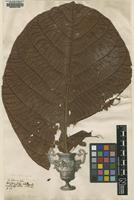
Lectotype of Polygonum uvifera L. [family POLYGONACEAE]
Filed as Coccoloba uvifera (L.) L. [family POLYGONACEAE]
Filed as Polygonum uvifera L. [family POLYGONACEAE]
Previous
Next

Name

Identification
Polygonum uvifera L. [family POLYGONACEAE ] (stored under name); Coccoloba uvifera (L.) L. [family POLYGONACEAE ]
Related name
  • Polygonum uvifera
  • Coccoloba uvifera
Common name
  • Shore-grape, Flora of North America Vol. 5
  • uva de playa, Flora of North America Vol. 5

Flora

Entry for Coccoloba uvifera (Linnaeus) Linnaeus [family POLYGONACEAE]
Herbarium
Flora of North America (FNA)
Collection
Flora of North America
Resource Type
Reference Sources
Entry From
Flora of North America, Vol 5,
Names
Coccoloba uvifera (Linnaeus) Linnaeus [family POLYGONACEAE], Syst. Nat. ed., 10, 2: 1007. 1759
Polygonum uvifera Linnaeus [family POLYGONACEAE], Sp. Pl., 1: 365. 1753
Treatment Author(s)
Craig C. Freeman
Information
Plants with branches spreading or sprawling, 2–7(–15) m. Stems: bark gray, peeling off in small white, gray, or brown flakes, inner bark light brown; twigs green and puberulent when young, gray at maturity, glabrous or pubescent. Leaves: those of adventitious or juvenile shoots often much larger and of different shape from those of normal shoots; ocrea persistent proximally, deciduous distally, brown or reddish brown, cylindric to funnelform, 3–8 mm, coriaceous proximally, membranous distally, margins oblique, glabrous or densely puberulent; petiole 5–15 mm, puberulent to pilose; blade pale green abaxially, green to bluish green adaxially, round to transversely elliptic, (6–)10–20(–27) × 6–20(–27) cm, length equaling or less than width, coriaceous, base cordate, margins sometimes revolute, apex rounded to blunt or emarginate, abaxial surface dull, adaxial surface shiny or dull, minutely punctate, glabrous. Inflorescences 10–30 cm, puberulent or glabrous, pistillate pendent in fruit; peduncle 1–5 cm, glabrous. Pedicels 1–4 mm, glabrous. Flowers: tepals round to broadly elliptic, margins entire, apex obtuse. Staminate flowers 1–7 per ocreate fascicle. Pistillate flowers: tube obpyriform, 12–20 × 8–12 mm, becoming fleshy. Achenes 8–11 × 8–10 mm, shiny. 2n = 132.
Distribution
MexicoWest IndiesCentral AmericaSouth America.USA Fla.
Discussion
Coccoloba uvifera is an early colonizer of exposed, sandy shorelines. The wood has a specific gravity of 0.7, and a red sap obtained by cutting the bark has been used in commerce for tanning and dyeing (E. L. Little Jr. et al. 1969).
Pistillate inflorescences of some specimens of Coccoloba uvifera appear to bear clusters of up to five flowers at each node; all but one abort, leaving a single flower that produces a fruit. The pedicels of the abortive flowers usually are more slender than those of the fertile flowers.

Related Materials

  • Terms and Conditions
  • Privacy Policy
  • Cookie Policy
  • Cookie Settings
  • Accessibility
  • Help
  • Contact Us
  • Facebook
  • Twitter
ITHAKA

JSTOR is part of ITHAKA, a not-for-profit organization helping the academic community use digital technologies to preserve the scholarly record and to advance research and teaching in sustainable ways.

©2000-2026 ITHAKA. All Rights Reserved. JSTOR®, the JSTOR logo, JPASS®, Aluka®, and ITHAKA® are registered trademarks of ITHAKA.

╳