JSTOR Global Plants Home
  • Home
  • Browse
  • About
  • Access
  • Account
    • Saved Items
    • Profile
  • Log in

Global Plants

Skip to Main Content
  • JSTOR Global Plants Home
  • Global Plants

    • Browse
    • About
    • Access
    • Account
      • Saved Items
      • Profile
Log in
  • Browse
  • About
  • Access
  • Account
    • Saved Items
    • Profile
Advanced Search

Compilation
Polygonum minimum

4 Images see all

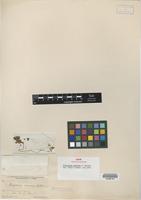
Isotype of Polygonum minimum S. Watson [family POLYGONACEAE]
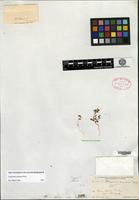
Type of Polygonum minimum S. Watson [family POLYGONACEAE]
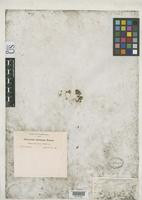
Holotype of Polygonum minimum Watson, S. 1871 [family POLYGONACEAE]
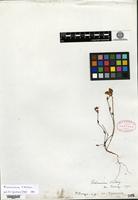
Type of Polygonum torreyi S. Watson [family POLYGONACEAE]
Previous
Next

Name

Identification
Polygonum minimum S. Watson [family POLYGONACEAE ] (stored under name); Verified by O. V. Yurtseva (MW), 1999 Polygonum torreyi S. Watson [family POLYGONACEAE ] Verified by S. Watson, 1873 Polygonum minimum S. Watson [family POLYGONACEAE ] Verified by S. Watson, Polygonum torreyi S. Watson [family POLYGONACEAE ] Verified by S. Watson,
Related name
  • Polygonum torreyi
  • Polygonum minimum
Common name
  • Broad-leaf or leafy dwarf knotweed, Flora of North America Vol. 5

Flora

Entry for Polygonum minimum S. Watson [family POLYGONACEAE]
Herbarium
Flora of North America (FNA)
Collection
Flora of North America
Resource Type
Reference Sources
Entry From
Flora of North America, Vol 5,
Names
Polygonum minimum S. Watson [family POLYGONACEAE], Botany (Fortieth Parallel), 315. 1871
Polygonum torreyi S. Watson [family POLYGONACEAE]
Treatment Author(s)
Mihai Costea
François J. Tardif
Harold R. Hinds†
Information
Herbs. Stems prostrate to erect, often zigzagged, reddish brown, simple or branched from base, wiry, 2–30 cm, papillose-scabrid-ulous. Leaves evenly distributed or crowded at branch tips, arti-culated to ocreae, basal leaves persistent, hardly reduced distally; ocrea 1–4 mm, papillose-scabridulous, proximal part cylindric, distal part entire or dentate-lacerate; petiole 0.1–3 mm; blade 1-veined, not pleated, narrowly elliptic, elliptic, ovate, obovate, or subround, 6–27 × 3–8 mm, margins flat, smooth, irregularly thickened or papillose-denticulate, apex apiculate, green adaxially. Inflorescences axillary; cymes from near stem and branch bases, sometimes also crowded at branch apices, 1–3-flowered. Pedicels enclosed in ocreae, erect to spreading, 2–3 mm. Flowers semi-open or closed; perianth 1.8–2.5 mm; tube 22–29% of perianth length; tepals overlapping, greenish with narrow white or pink margins, almost sepaloid, oblong, cucullate, ± navicular, apex rounded; midveins thickened, unbranched; stamens 8. Achenes enclosed in perianth or tip exserted, black, elliptic to ovate, 1.8–2.3 mm, faces subequal, smooth, shiny.
Phenology
jul-aug (summer), sep (fall)
Altitude range
1500–3300 m;
Distribution
USA AlaskaUSA Calif.USA Colo.USA IdahoUSA Mont.USA Nev.USA Oreg.USA UtahUSA Wash.USA Wyo.Canada Alta.Canada B.C.

Related Materials

  • Terms and Conditions
  • Privacy Policy
  • Cookie Policy
  • Cookie Settings
  • Accessibility
  • Help
  • Contact Us
  • Facebook
  • Twitter
ITHAKA

JSTOR is part of ITHAKA, a not-for-profit organization helping the academic community use digital technologies to preserve the scholarly record and to advance research and teaching in sustainable ways.

©2000-2026 ITHAKA. All Rights Reserved. JSTOR®, the JSTOR logo, JPASS®, Aluka®, and ITHAKA® are registered trademarks of ITHAKA.

╳