JSTOR Global Plants Home
  • Home
  • Browse
  • About
  • Access
  • Account
    • Saved Items
    • Profile
  • Log in

Global Plants

Skip to Main Content
  • JSTOR Global Plants Home
  • Global Plants

    • Browse
    • About
    • Access
    • Account
      • Saved Items
      • Profile
Log in
  • Browse
  • About
  • Access
  • Account
    • Saved Items
    • Profile
Advanced Search

Compilation
Polygonum marinense

12 Images see all

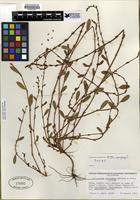
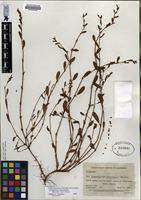
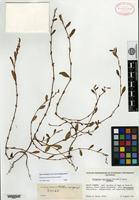
Isotype of Polygonum marinense Mertens & Raven [family POLYGONACEAE]
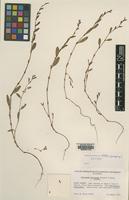
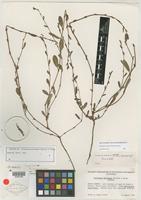
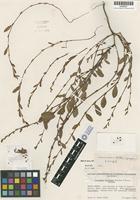
Holotype of Polygonum marinense T. R. Mertens & P. H. Raven [family POLYGONACEAE]
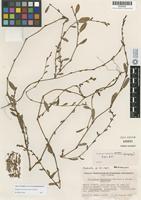
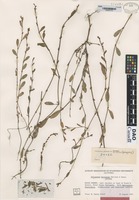
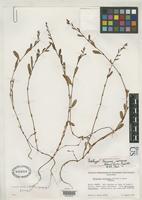
Isotype of Polygonum marinense Mertens & Raven [family POLYGONACEAE]
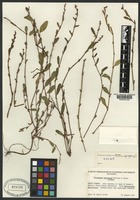
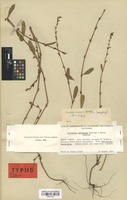
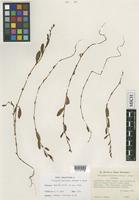
Paratype of Polygonum marinense Mertens and Raven [family POLYGONACEAE]
Isotype of Polygonum marinense T. R. Mert. & P. H. Raven [family POLYGONACEAE]
Isotype of Polygonum marinense T.R. Mertens & P.H. Raven [family POLYGONACEAE]
Isotype of Polygonum marinense T. R. Mert. & P. H. Raven [family POLYGONACEAE]
Isotype of Polygonum marinense T. R. Mertens & P. H. Raven [family POLYGONACEAE]
Holotype of Polygonum marinense T. R. Mertens & P. H. Raven [family POLYGONACEAE]
Isotype of Polygonum marinense Mertens, T.R. & Raven, P.H. 1965 [family POLYGONACEAE]
Isotype of Polygonum marinense T.R.Mert. & P.H.Raven [family POLYGONACEAE]
Previous
Next

Name

Identification
Isotype of Polygonum marinense Mertens & Raven [family POLYGONACEAE ] (stored under name);
Related name
  • Polygonum marinense
Common name
  • Marin knotweed, Flora of North America Vol. 5

Flora

Entry for Polygonum marinense T. R. Mertens & P. H. Raven [family POLYGONACEAE]
Herbarium
Flora of North America (FNA)
Collection
Flora of North America
Resource Type
Reference Sources
Entry From
Flora of North America, Vol 5,
Names
Polygonum marinense T. R. Mertens & P. H. Raven [family POLYGONACEAE], Madroño, 18: 87. 1965
Treatment Author(s)
Mihai Costea
François J. Tardif
Harold R. Hinds†
Information
Plants often reddish tinged, heterophyllous, subsucculent. Stems prostrate to ascending, branching from base, not wiry, 15–40 cm. Leaves: ocrea 4–6 mm, proximal part funnelform, distal part silvery hyaline, soon disintegrating, leaving almost no fibrous remains; petiole 2–5 mm; blade often reddish tinged, elliptic to obovate or oblanceolate; 20–35 × 9–16 mm, margins flat, apex rounded; stem leaves (1.3–)2–2.6(–3.5) times as long as branch leaves; distal leaves overtopping flowers in distal part of inflorescence. Inflorescences axillary; cymes in most leaf axils, 1–4-flowered. Pedicels mostly exserted from ocreae, 2–4 mm. Flowers semi-open; perianth 3–3.5(–4) mm; tube 18–25% of perianth length; tepals overlapping, green, margins white or pink, petaloid, not keeled, broadly rounded, cucullate; midveins unbranched; stamens 8. Achenes exserted from perianth, brown, ovate, 3-gonous, 2.8–3.4(–4) mm, faces subequal or evidently unequal, apex not beaked, edges straight, shiny, minutely roughened; late-season achenes uncommon, 4.5–5 mm. 2n = 60.
Conservation Status
of conservation concern;
Phenology
apr-may (spring), jun-aug (summer), sep-oct (fall)
Altitude range
0–10 m;
Distribution
USA Calif.
Discussion
The origin and taxonomic affinities of Polygonum marinense are uncertain. T. R. Mertens and P. H. Raven (1965) suggested a relationship with P. oxyspermum C. A. Meyer & Bunge or the Mediterranean P. robertii Loiseleur-Deslongchamps. Polygonum marinense may be confused with P. ramosissimum. It can be distinguished by its subsucculent texture, funnelform ocreae, leaves rounded at the apices, and semi-open flowers. Marin knotweed is known from fewer than 15 locations in Marin, Napa, Solano, and Sonoma counties; it is threatened by coastal development.

Related Materials

  • Terms and Conditions
  • Privacy Policy
  • Cookie Policy
  • Cookie Settings
  • Accessibility
  • Help
  • Contact Us
  • Facebook
  • Twitter
ITHAKA

JSTOR is part of ITHAKA, a not-for-profit organization helping the academic community use digital technologies to preserve the scholarly record and to advance research and teaching in sustainable ways.

©2000-2026 ITHAKA. All Rights Reserved. JSTOR®, the JSTOR logo, JPASS®, Aluka®, and ITHAKA® are registered trademarks of ITHAKA.

╳