JSTOR Global Plants Home
  • Home
  • Browse
  • About
  • Access
  • Account
    • Saved Items
    • Profile
  • Log in

Global Plants

Skip to Main Content
  • JSTOR Global Plants Home
  • Global Plants

    • Browse
    • About
    • Access
    • Account
      • Saved Items
      • Profile
Log in
  • Browse
  • About
  • Access
  • Account
    • Saved Items
    • Profile
Advanced Search

Compilation
Polygonum buxiforme

8 Images see all

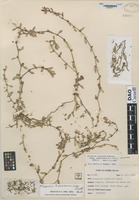
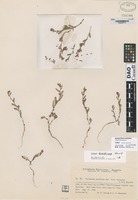
Holotype of Polygonum caurianum B.L. Robinson subspecies hudsonianum Wolf & McNeill [family POLYGONACEAE]
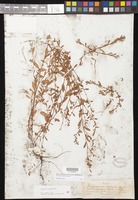
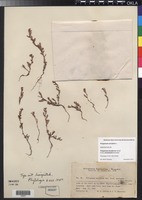
Polygonum buxiforme Small [family POLYGONACEAE]
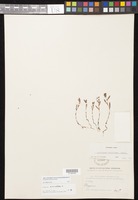
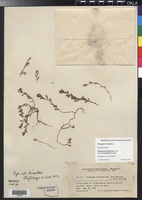
Lectotype of Polygonum buxiforme Small [family POLYGONACEAE]
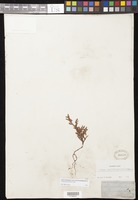
not on sheet of Polygonum buxiforme Small forma montanum Brenckle [family POLYGONACEAE]
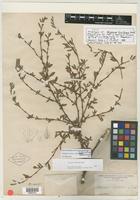
Isosyntype of Polygonum Small [family POLYGONACEAE]
Polygonum buxiforme Small [family POLYGONACEAE]
Previous
Next

Name

Identification
Polygonum buxiforme Small [family POLYGONACEAE ] (stored under name); Verified by Not on sheet,
Related name
  • Polygonum buxiforme
Common name
  • American knotweed, Flora of North America Vol. 5
  • renouée faux-buis, Flora of North America Vol. 5

Flora

Entry for Polygonum aviculare Linnaeus subsp. buxiforme (Small) Costea & Tardif [family POLYGONACEAE]
Herbarium
Flora of North America (FNA)
Collection
Flora of North America
Resource Type
Reference Sources
Entry From
Flora of North America, Vol 5,
Names
Polygonum aviculare Linnaeus subsp. buxiforme (Small) Costea & Tardif [family POLYGONACEAE], Sida, 20: 988. 2003
Polygonum buxiforme Small [family POLYGONACEAE], Bull. Torrey Bot. Club, 33: 56. 1906
Treatment Author(s)
Mihai Costea
François J. Tardif
Harold R. Hinds†
Information
Plants gray-green or bluish green, rarely green, homophyllous or subheterophyllous. Stems 1–3, erect to ascending, ± unbranched, 5–15 cm, or numerous, procum-bent, mat-forming, extensively branched, 20–70(–200) cm. Leaves: ocrea 3.5–6.5(–8) mm, proximal part cylindric, distal part silvery, relatively persistent, with inconspicuous veins, leaving almost no fibrous remains after disintegrating; petiole 0.3–2(–3.5) mm; blade green or gray-green, lateral veins visible but not raised abaxially, lanceolate to elliptic, oblanceolate, or obovate, 6–30(–45) × 3–6(–13) mm, 2.5–5.6(–10) times as long as wide, apex acute to obtuse; stem leaves 1–2.5 times as long as branch leaves. Cymes mostly uniformly distributed, but also aggregated at tips of stems and branches, 2–6-flowered. Pedicels mostly enclosed in ocreae, 1–2.5 mm. Flowers: perianth (2–)2.3–3.4(–3.6) mm, 0.9–1.3(–1.5) times as long as wide; tube 20–36% of perianth length; tepals overlapping, green with white or sometimes pink margins, oblong, apex cucullate, outer tepals pouched at base; veins branched, moderately to strongly thickened; stamens 7–8. Achenes usually enclosed in perianth, light brown to brown, ovate, 3-gonous, (1.8–)2–2.8(–3) mm, faces subequal, concave to flat, apex straight, coarsely striate-tubercled to obscurely tubercled; late-season achenes common, 2.5–5 mm. 2n = 60.
Phenology
jul-aug (summer), sep-nov (fall)
Altitude range
0–3500 m;
Distribution
USA Ala.USA AlaskaUSA Ariz.USA Ark.USA Calif.USA Colo.USA Conn.USA Del.USA D.C.USA IdahoUSA Ill.USA Ind.USA IowaUSA Kans.USA Ky.USA La.USA MaineUSA Mich.USA Minn.USA Miss.USA Mo.USA Mont.USA Nebr.USA Nev.USA N.H.USA N.J.USA N.Mex.USA N.Y.USA N.C.USA N.Dak.USA OhioUSA Okla.USA Oreg.USA Pa.USA R.I.USA S.C.USA S.Dak.USA Tenn.USA Tex.USA UtahUSA Vt.USA Va.USA Wash.USA W.Va.USA Wis.USA Wyo.Canada Alta.Canada B.C.Canada Man.Canada N.B.Canada Nfld. and Labr.Canada N.W.T.Canada N.S.Canada Ont.Canada Que.Canada Sask.Canada Yukon
Discussion
Although apparently it has a North American origin, subsp. buxiforme is considered part of the Polygonum aviculare complex because it intergrades with subsp. aviculare (M. Costea and F. J. Tardif 2003).

Related Materials

  • Terms and Conditions
  • Privacy Policy
  • Cookie Policy
  • Cookie Settings
  • Accessibility
  • Help
  • Contact Us
  • Facebook
  • Twitter
ITHAKA

JSTOR is part of ITHAKA, a not-for-profit organization helping the academic community use digital technologies to preserve the scholarly record and to advance research and teaching in sustainable ways.

©2000-2026 ITHAKA. All Rights Reserved. JSTOR®, the JSTOR logo, JPASS®, Aluka®, and ITHAKA® are registered trademarks of ITHAKA.

╳