JSTOR Global Plants Home
  • Home
  • Browse
  • About
  • Access
  • Account
    • Saved Items
    • Profile
  • Log in

Global Plants

Skip to Main Content
  • JSTOR Global Plants Home
  • Global Plants

    • Browse
    • About
    • Access
    • Account
      • Saved Items
      • Profile
Log in
  • Browse
  • About
  • Access
  • Account
    • Saved Items
    • Profile
Advanced Search

Compilation
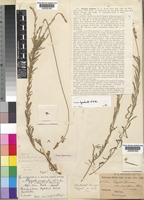
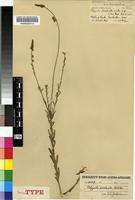
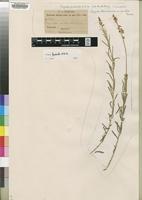
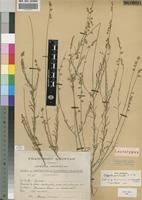
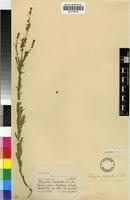
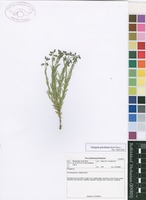
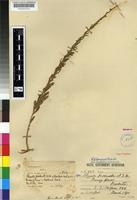
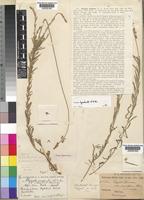
Polygala producta

8 Images see all

Polygala producta N.E.Br. [family POLYGALACEAE]
Isosyntype of Polygala producta N.E.Br. [family POLYGALACEAE]
Type of Polygala hottentota C.Presl [family POLYGALACEAE]
Lectotype of Polygala producta N.E.Br. [family POLYGALACEAE]
Filed as Polygala producta N.E.Br. [family POLYGALACEAE]
Type of Polygala producta N.E.Br. [family POLYGALACEAE]
Polygala producta N.E.Br. [family POLYGALACEAE]
Previous
Next

Name

Identification
Polygala hottentota C.Presl [family POLYGALACEAE ] Polygala producta N.E.Br. [family POLYGALACEAE ] (stored under name); Verified by Paiva,J., 1977
Related name
  • Polygala asperifolia
  • Polygala hottentota
  • Polygala not on sheet
  • Polygala rehmanni
  • Polygala producta

Flora

Entry for Polygala producta N.E.Br. [family POLYGALACEAE]
Herbarium
Royal Botanic Gardens, Kew (K)
Collection
Flora Zambesiaca
Resource Type
Reference Sources
Entry From
FZ, Vol 1, Part 1, page 303, (1960) Author: A. W. Exell
Names
Polygala rehmannii var. parviflora Chod. [family POLYGALACEAE], in Mém. Soc. Phys. Hist. Nat. Genève, 31, 2: 362 (1893). Type from the Transvaal (Rehmann 4565).
Polygala rehmannii var. gymnoptera Chod. [family POLYGALACEAE], in Engl., Bot. Jahrb. 48: 321 (1912). Type: Mozambique, Lourenço Marques, Quintas 15 (B †; COI, lectot)
Polygala producta N.E.Br. [family POLYGALACEAE], in Kew Bull. 1895: 142 (1895) emend. Burtt Davy in Kew Bull. 1924: 225 (1924); F.P.F.T. 1: 134 (1926). TAB. 57 fig.2. Type from the Transvaal (Galpin 844 selected by Burtt Davy, loc. cit., 1924).
Information
Shrublet (or sometimes an annual herb ?) up to 1.5 m. tall with slender, minutely crisped-pubescent, slightly winged stems. Leaves 10–30 x 1–5.5 mm., linear to lorate, usually sparsely minutely hairy, somewhat scabrid on the edges and upper surface, rounded or subacute at the apex, and usually mucronate. Flowers pink or purple, pedicels 2.5–3.5 mm. long, in elongated terminal racemes up to 20 cm. long with minutely pubescent or almost glabrous rhachis, small caducous bracts 0.8 mm. long and bracteoles 0.5 mm. long. Posterior sepal 2 mm. long; wing sepals 4.5–5 x 2.5–3 mm., obliquely ovate, glabrous except for minute cilia round the margin; anterior sepals 1.5 mm. long, connate. Upper petals 4 x 2 mm., irregularly obovate-spathulate; carina 4 x 1.8 mm., crest 1.5 mm. long. Stamens 8. Capsule 5 x 4 mm., broadly elliptic, glabrous, marginal wing very narrow. Seeds 3 x 1.8 mm., oblong-elliptic; caruncle 0.8 mm. long, appendages very small or absent.
Habitat
In patches of evergreen forest and in secondary thickets, grassland and abandoned cultivation
Altitude range
from sea-level to about 1300 m.
1300
0
Distribution
Mozambique M Namaacha Falls, fl. & fr. 22.ii.1955, E.M. & W. 539 (BM; LISC; SRGH).Zimbabwe S Old Bikita, 1310 m., fl. & fr. 16.xii.1953, Wild 4400 (BM; SRGH).Mozambique MS Chimoio, Monte de Belas, fl. & fr. 2.iii.1948, Garcia 466 (BM; LISC).Zimbabwe E Inyanga, Pungwe River Valley, fl. & fr. 17.vii.1948, Chase 844 (BM; SRGH).
Distribution (external)
Transvaal
Notes
P. producta can be distinguished from P. rehmannii by its smaller flowers and more elongated racemes. Specimens which appear to be hybrids between these two species have been collected in the Transvaal but in our area, although there is some overlap, P. rehmannii usually occurs at much higher altitudes.

Related Materials

  • Terms and Conditions
  • Privacy Policy
  • Cookie Policy
  • Cookie Settings
  • Accessibility
  • Help
  • Contact Us
  • Facebook
  • Twitter
ITHAKA

JSTOR is part of ITHAKA, a not-for-profit organization helping the academic community use digital technologies to preserve the scholarly record and to advance research and teaching in sustainable ways.

©2000-2026 ITHAKA. All Rights Reserved. JSTOR®, the JSTOR logo, JPASS®, Aluka®, and ITHAKA® are registered trademarks of ITHAKA.

╳