JSTOR Global Plants Home
  • Home
  • Browse
  • About
  • Access
  • Account
    • Saved Items
    • Profile
  • Log in

Global Plants

Skip to Main Content
  • JSTOR Global Plants Home
  • Global Plants

    • Browse
    • About
    • Access
    • Account
      • Saved Items
      • Profile
Log in
  • Browse
  • About
  • Access
  • Account
    • Saved Items
    • Profile
Advanced Search

Compilation
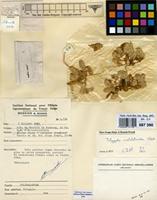
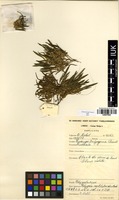
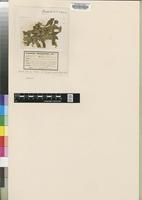
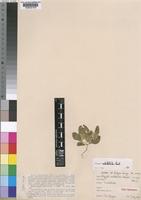
Polygala melilotoides

4 Images see all

Filed as Polygala melilotoides Chodat [family POLYGALACEAE]
Type of Polygala melilotoides Chodat [family POLYGALACEAE]
Type of Polygala melilotoides Chodat var. major Bak. [family POLYGALACEAE]
Previous
Next

Name

Identification
Polygala melilotoides Chodat [family POLYGALACEAE ] (stored under name); Polygala melilotoides Chodat [family POLYGALACEAE ]
Related name
  • Polygala melilotoides

Flora

Entry for Polygala melilotoides Chodat [family POLYGALACEAE]
Herbarium
Royal Botanic Gardens, Kew (K)
Collection
Flora of Tropical East Africa
Resource Type
Reference Sources
Entry From
Flora of Tropical East Africa, page 1, (2007) Author: JORGE PAIVA
Names
Polygala melilotoides Chodat [family POLYGALACEAE], in E.J. 48: 320 (1920); Petit in F.C.B. 7: 246, fig. 7A (1958); Exell in F.Z. 1, 1: 323, t. 57/19 (1960); Paiva in Fontqueria 50: 189, t. 17/b; t. 34/h-k (1998). Type: Congo-Kinshasa, Katanga, Senga West, Kassner 2938 (B†, holo.; BM!, lecto.; BR!, isolecto.)
Polygala melilotoides Bak.f. var. major [family POLYGALACEAE], in J.B. 56: 5 (1918). Type: Congo-Kinshasha, Katanga, Lubumbashi, Rogers 10887 (BM!, holo.; K!, iso.)
Information
Annual herb, 3–15 cm tall. Stems slender, usually pseudo-di- or trichotomously branched, apparently terminating in an inflorescence and growth continuing by lateral branches, usually exceeding the primary one, crisped-pubescent. Leaves alternate, petiolate (petiole 1–2 mm, crisped-pubescent), elliptic to broadly elliptic, 10–30(–40)≈(3–)5–12(–20) mm, subacute to rounded, base cuneate, glabrous or very minutely pubescent on both sides. Flowers whitish, pinkish or lilac, in much congested terminal racemes, often subglobose, 7–20 mm long, rachis crisped-pubescent; bracts lanceolate, 0.7–1 mm long, usually pubescent, persistent; bracteoles lanceolate, 0.5 mm long, usually pubescent, persistent; pedicels 1.5–3 mm, usually crisped-pubescent. Posterior sepal keel-shaped, 1.5–2≈0.5–1 mm, pubescent or glabrescent; wing sepals elliptic to suborbicular, (2–)2.5–3.5≈2–3 mm, pubescent towards the base; anterior sepals keel-shaped, 1–1.5 mm long, free. Upper petals obliquely obovate, constricted below the middle, 1.5–2.2≈0.7–1.5 mm, pubescent at the base; carina 2.5–3≈1.2–1.5 mm; crest 0.7–1 mm long, fimbriate. Stamens 8. Capsule elliptic to ovate in outline, 1.5–2.5≈1.5–2 mm, glabrous, narrowly winged (wing 0.2 mm wide). Seeds ovoid to subglobose, 1–1.8(–2)≈0.6–0.8(–1) mm, glabrous, rarely puberulous; caruncle subsymmetric, subglobose, 0.4–0.6 mm long, with the appendages hiding the caruncle, 0.4–0.5 mm long. Fig. 5: 7, p. 11.
Range
DISTR. U 3; T 4, 7, 8 tropical Africa, S of the Equator and North of the tropic of Capricorn
Altitude range
800–1700 m
Distribution
TANZANIA Ufipa District 30 km on Tatanda–Sumbawanga road, 27 Apr. 1997,, Bidgood et al. 3504!TANZANIA Njombe District Ruhudji, Lupembe, May 1931, Schlieben 839!TANZANIA Songea District between Kwamponjore and Songea, 14 Mar. 1956, Milne-Redhead & Taylor 9207!UGANDA Busoga District Lake Victoria, Lolui I., 8 May 1964, Jackson s.n.!
Notes
Polygala welwitschii with its two subspecies and P. melilotoides are very close, and not easy to distinguish. The seed is the most important organ to differentiate them.

Related Materials

  • Terms and Conditions
  • Privacy Policy
  • Cookie Policy
  • Cookie Settings
  • Accessibility
  • Help
  • Contact Us
  • Facebook
  • Twitter
ITHAKA

JSTOR is part of ITHAKA, a not-for-profit organization helping the academic community use digital technologies to preserve the scholarly record and to advance research and teaching in sustainable ways.

©2000-2026 ITHAKA. All Rights Reserved. JSTOR®, the JSTOR logo, JPASS®, Aluka®, and ITHAKA® are registered trademarks of ITHAKA.

╳