JSTOR Global Plants Home
  • Home
  • Browse
  • About
  • Access
  • Account
    • Saved Items
    • Profile
  • Log in

Global Plants

Skip to Main Content
  • JSTOR Global Plants Home
  • Global Plants

    • Browse
    • About
    • Access
    • Account
      • Saved Items
      • Profile
Log in
  • Browse
  • About
  • Access
  • Account
    • Saved Items
    • Profile
Advanced Search

Compilation
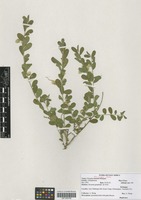
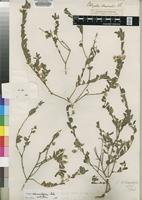
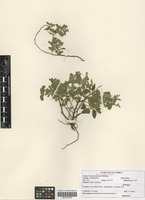
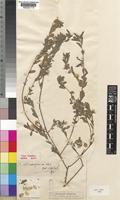
Polygala kilimandjarica

6 Images see all

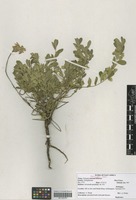
Filed as Polygala kilimandjarica Chodat [family POLYGALACEAE]
Isotype of Polygala kilimandjarica Chodat [family POLYGALACEAE]
Filed as Polygala kilimandjarica Chodat [family POLYGALACEAE]
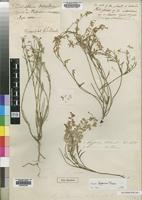
Type of Polygala kilimandjarica Chodat [family POLYGALACEAE]
Filed as Polygala kilimandjarica Chodat [family POLYGALACEAE]
Type? of Polygala abyssinica R.Br. [family POLYGALACEAE]
Previous
Next

Name

Identification
Polygala kilimandjarica Chodat [family POLYGALACEAE ] (stored under name); Isotype of Polygala kilimandjarica Chodat [family POLYGALACEAE ] Verified by Paiva,J., 1977
Related name
  • Polygala abyssinica
  • Polygala kilimandjarica

Flora

Entry for Polygala kilimandjarica Chodat [family POLYGALACEAE]
Herbarium
Royal Botanic Gardens, Kew (K)
Collection
Flora of Tropical East Africa
Resource Type
Reference Sources
Entry From
Flora of Tropical East Africa, page 1, (2007) Author: JORGE PAIVA
Names
Polygala kilimandjarica Chodat [family POLYGALACEAE], in Mém. Soc. Phys. Hist. Nat. Genève 31 (2): 320, t. 27/10 (1893); T.T.C.L.: 456 (1949); Paiva in Fontqueria 50: 177 (1998). Type: Kenya, Teita District, Maungu, Johnston 1884 (B†, holo.; K!, lecto, BM!, isolecto.)
Polygala wadibomica Chodat [family POLYGALACEAE], in Mém. Soc. Phys. Hist. Nat. Genève 31 (2): 320, t. 27/11 (1893). Type: Tanzania, Wadiboma (?=Kwediboma), Fischer s.n. (B†, holo.)
Polygala hennigii Chodat [family POLYGALACEAE], in E.J. 48(1–2): 312 (1912). Type: Tanzania, Lindi District: Tendaguru, Henning & Janeusch 323 (B†, holo.)
Information
Perennial herb or shrublet up to 1.5 m tall. Stems spreading from a woody rootstock, branched, densely patent-pubescent. Leaves alternate, subsessile (petiole up to 0.1 mm, patent-pubescent), elliptic to obovate-elliptic, 15–40≈5–15 mm, rounded to obtuse or sometimes emarginate, base cuneate, pubescent on both sides. Flowers pinkish, in lateral racemes 2–8(–11) cm long, rachis patent-pubescent; bracts linear, 1.2–1.5 mm long, pubescent, persistent; bracteoles linear, 1–1.3 mm long, pubescent, persistent; pedicels 4–6 mm, patent-pubescent. Posterior sepal keel-shaped, 3.5–4 mm long, patent-pubescent; wing sepals suborbicular to obovate-orbicular, 8–11≈7–9 mm, conspicuously and densely reticulate, patent-pubescent; anterior sepals ovate-lanceolate, 3.5 mm long, patent-pubescent, free. Upper petals obliquely oblanceolate, 5–5.5≈2 mm, pubescent from the waist downwards; carina 6.5–7≈2.5 mm; crest 1–2 mm long, fimbriate. Stamens 8. Capsule ovate-elliptic in outline, 5.5–6≈4.5–5 mm, asymmetrically bilobate, very narrowly winged (wing ± 0.1 mm wide), densely patent-pubescent. Seeds ovoid-ellipsoid, 4–4.5≈0.9–2.2 mm, white-sericeous; caruncle asymmetric, with three appendages, usually two longer, sometimes almost up to as long as the length of the seed and the other one shorter (0.5–2 mm long).
Range
DISTR. U 1; K 1–4, 6, 7; T 3, 6, 8 not known elsewhere
Altitude range
0–1500 m
Distribution
KENYA Naivasha District Suswa Plains, Suswa–Magadi, Oct. 1938, Bally 8431!KENYA Masai District Esakut Hill, Magadi road, 23 May 1964, Archer 438!KENYA Kwale District Mbuguni area, 3 Jan. 1993, Luke 3494!TANZANIA Tanga District Mnyusi, Sept. 1954, Sensei 1834!TANZANIA Kilosa District Ilonga, 2 June 1967, Robertson 672!TANZANIA Lindi District Tendaguru, Henning & Janeusch 323!UGANDA Karamoja District Lumeno R., Sept. 1958, Wilson 628! & Karasuk, Amudat, Apr. 1961, Tweedie 2124!
Notes
The type [Tanzania, Lushoto District: Kwa Mshusa, Handei, Holst s.n. (B†, holo.)] of P. usambarensis Gürke [in Abh. Preuss. Akad. Wiss.: 64 (1894); in P.O.A. C: 283 (1895); T.T.C.L.: 457 (1949); Paiva in Fontqueria 50: 312 (1998)] has disappeared and there are no duplicates. It is most likely P. kilimandjarica Chodat, which is very polymorphic and common in that area.

Related Materials

  • Terms and Conditions
  • Privacy Policy
  • Cookie Policy
  • Cookie Settings
  • Accessibility
  • Help
  • Contact Us
  • Facebook
  • Twitter
ITHAKA

JSTOR is part of ITHAKA, a not-for-profit organization helping the academic community use digital technologies to preserve the scholarly record and to advance research and teaching in sustainable ways.

©2000-2026 ITHAKA. All Rights Reserved. JSTOR®, the JSTOR logo, JPASS®, Aluka®, and ITHAKA® are registered trademarks of ITHAKA.

╳