JSTOR Global Plants Home
  • Home
  • Browse
  • About
  • Access
  • Account
    • Saved Items
    • Profile
  • Log in

Global Plants

Skip to Main Content
  • JSTOR Global Plants Home
  • Global Plants

    • Browse
    • About
    • Access
    • Account
      • Saved Items
      • Profile
Log in
  • Browse
  • About
  • Access
  • Account
    • Saved Items
    • Profile
Advanced Search

Compilation
Podocarpus gracilior

10 Images see all

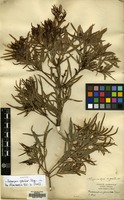
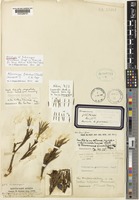
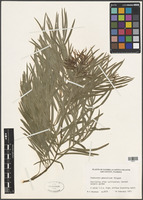
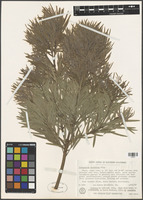
Isotype of Podocarpus gracilior Pilg. [family PODOCARPACEAE]
Filed as Podocarpus gracilior Pilg. [family PODOCARPACEAE]
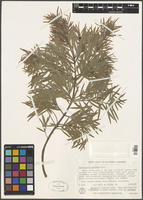
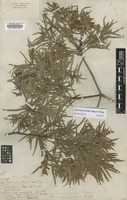
Syntype of Podocarpus gracilior Pilg. [family PODOCARPACEAE]
Filed as Podocarpus gracilior Pilg. [family PODOCARPACEAE]
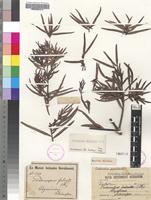
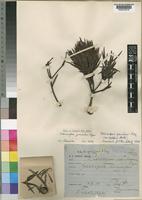
Holotype of Podocarpus gracillimus Stapf [family PODOCARPACEAE]
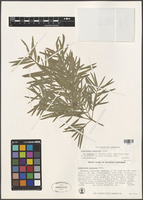
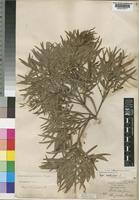
Syntype of Podocarpus gracilior Pilg. [family PODOCARPACEAE]
Afrocarpus gracilior (Pilg.) Gaussen [family PODOCARPACEAE]
Type of Podocarpus gracilior Pilg. [family PODOCARPACEAE]
Filed as Podocarpus gracilior Pilg. [family PODOCARPACEAE]
Previous
Next

Name

Identification
Unrecorded unrecorded unrecorded [family TAXACEAE ] Podocarpus usambarensis Pilg. [family PODOCARPACEAE ] Podocarpus gracilior Pilg. [family PODOCARPACEAE ] Verified by Melville, R., Afrocarpus gracilior (Pilg.) Gaussen [family PODOCARPACEAE ] (stored under name);
Related name
  • Podocarpus usambarensis
  • Podocarpus clenjala
  • Podocarpus falcatus
  • Unrecorded unrecorded
  • Afrocarpus gracilior
  • Podocarpus gracilior

Flora

Entry for PODOCARPUS gracilior Pilger [family PODOCARPACEAE]
Herbarium
Royal Botanic Gardens, Kew (K)
Collection
Flora Capensis
Resource Type
Reference Sources
Entry From
Flora Capensis, Vol 5, Part 2 (Supplement), page 3, (1933) Author: (By O. STAPF.)
Names
PODOCARPUS gracilior Pilger [family PODOCARPACEAE], in Engl. Pflanzenreich, iv. v. Taxac. 71;—Engl. Pflanzenwelt Afr. iv. v. 86, fig. 86, and Veget. Hara and Gallahochl. 11 (sphalm. P. gracilis); Pilger in Engl. & Prantl, Nat. Pflanzenf. ed. 2, p. 245, fig. 131); Burtt Davy, Flow. Pl. Transvaal, i. 101.
PODOCARPUS elongata A. Rich. [family PODOCARPACEAE], Tent. Fl. Abyss. ii. 278; Engl. Hochgebirgsfl. Trop. Afr. 109; Pfl. Ost.-Afr. C. 92, t. i. fig. B (not C-G); Oliv. in Journ. Linn Soc. Bot. xxi. 404 (as forma?); Hutchins, Forests of Kenia in Col. Rep. Miscell. no. 41, 17; not of L'Hérit.
PODOCARPUS falcata Engl. [family PODOCARPACEAE], in Hochgebirgsfl. Trop. Afr. l.c. and Veget. Usambara, 68; Pirotta in Ann. Ist. Bot. Roma, vi. 156; not of R. Br.
Taxus elongata Roth [family TAXACEAE], in Harris, Highl. Aeth. ii. 708; not of Ait.
Information
a tall tree up to 100 ft. or more high with a bole over 4 ft. in diam.; ultimate branchlets of the mature tree crowded, angular from the decurrent leaf-bases when young; terminal buds ovoid, 1/2– 3/4 lin. long; leaves in the juvenile tree loose, conspicuously plagiotropic, often subopposite, linear, long tapering to an acute point, straight or slightly falcate, up to 4 in. by 3 lin., moderately thick, in the mature tree crowded, scattered, not plagiotropic, linear, usually long and gently tapering to a sharp point, rarely shortly acute, 1–2 in. by 1/4–2 lin., coriaceous, drying dull green or brownish, midrib indistinct above, slightly raised below; male strobiles solitary or in subsessile clusters of 2 or 3, supported by broad roundish bracts, often up to 9 lin. and occasionally over 1 in. long; scales imbricate, with a broadly ovate-triangular acute blade, 1/2 lin. long; female strobiles sessile at the end of short branchlets, carrying reduced and often early deciduous leaves, the strobiles formed of a short axis, 1–1 1/2 lin. long, with 1–3 barren short ultimately deciduous scales, dry and appressed or sometimes foliaceous, spreading and recurved, the uppermost supporting an ovule; seeds ellipsoid-globose, rounded or slightly attenuated at the base, 7–10 lin. long, 6–8 lin. across, glaucous-green to purplish-brown; inner layer of seed-shell very hard, bony, slightly tubercled, up to 1 lin. thick, outer usually thinner and dry or sometimes as thick as the inner and slightly fleshy, resinous inwards. null
Range
Apparently throughout eastern tropical Africa as far as Abyssinia.
Distribution
TRANSVAAL Zoutpansberg, Houseman, Col. Herb., 5248! Pietersburg Dist.; The Downs, Rogers, 20210! (juvenile form).
Notes
Podocarpus gracilior resembles P. falcatus so much that it has for a long time been considered identical with it. Both exhibit a wide range of variation in their foliage according to its age and position in the tree, the leaves becoming smaller and more crowded as the tree reaches maturity, particularly so in the flowering parts, and at the same time attaining more of the characters which, as well as the floral and fruit-characters, are distinctive of the two species. As the progress of transition from juvenile to adult stages is never quite even, and individual trees or individual branches of one tree often lag behind or behave precociously, barren specimens taken at random from a tree and distributed without explanatory are not always identifiable with certainty. But as, moreover, the diagnostic characters even in complete specimens are never very pronounced, P. gracilior and P. falcatus may with some show of reason be considered as geographical subspecies or varieties of a P. falcatus in a broad sense, P. gracilior being typical of the tropical parts of the common area and P. falcatus proper of extratropical South Africa with occasional linkages in one or the other direction. Houseman's specimen from Zoutpansberg (a fair-sized branch with adult foliage and a detached fruit, referred here to P. gracilior, agrees exactly in its foliage with typical specimens of this species from Kenya (Hutchins, no. 598), whilst the fruit is rather large with the outer layer of its shell too soft for typical P. gracilior; but it has, on the other hand, almost its counterpart in specimens of P. falcatus collected by Fourcade in the Humansdorp Division, Cape Province. The determination of this specimen therefore remains somewhat doubtful for the present, and the same applies to Rogers's specimen from The Downs, which is in the juvenile state.

Related Materials

  • Terms and Conditions
  • Privacy Policy
  • Cookie Policy
  • Cookie Settings
  • Accessibility
  • Help
  • Contact Us
  • Facebook
  • Twitter
ITHAKA

JSTOR is part of ITHAKA, a not-for-profit organization helping the academic community use digital technologies to preserve the scholarly record and to advance research and teaching in sustainable ways.

©2000-2026 ITHAKA. All Rights Reserved. JSTOR®, the JSTOR logo, JPASS®, Aluka®, and ITHAKA® are registered trademarks of ITHAKA.

╳