JSTOR Global Plants Home
  • Home
  • Browse
  • About
  • Access
  • Account
    • Saved Items
    • Profile
  • Log in

Global Plants

Skip to Main Content
  • JSTOR Global Plants Home
  • Global Plants

    • Browse
    • About
    • Access
    • Account
      • Saved Items
      • Profile
Log in
  • Browse
  • About
  • Access
  • Account
    • Saved Items
    • Profile
Advanced Search

Compilation
Poa schimperana

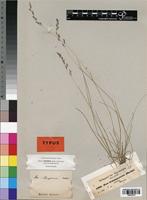
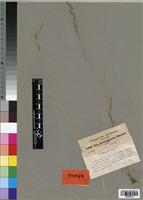
2 Images see all

Isotype of Poa schimperana A. Rich. [family POACEAE]
Previous
Next

Name

Identification
Isotype of Poa schimperana A. Rich. [family POACEAE ] (stored under name); Verified by Data not digitized,
Related name
  • Poa schimperana

Flora

Entry for POA leptoclada A. Rich. [family POACEAE]
Herbarium
Royal Botanic Gardens, Kew (K)
Collection
Flora of Tropical East Africa
Resource Type
Reference Sources
Entry From
Flora of Tropical East Africa, Part (Part 1), page 1, (1970) Author: W. D. Clayton
Names
POA leptoclada A. Rich. [family POACEAE], Tent. Fl. Abyss. 2: 422 (1851); Ann. list grasses Ug.: 39 (1947); F.P.N.A. 3: 187 (1955); F.P.S. 3: 521 (1956); A.V.P. 15: 39, 255 (1957); R.K.G.: 15 (1958); Ann. list Nyasaland grasses: 54 (1958); I.G.U.: 50 (1960); G.T.: 13 (1965). Type: Ethiopia, Tigre, Shire, Schimper 1826 (TUB, holo.!, K, iso.!)
Eragrostis puberula Steud. [family POACEAE], Syn. Pl. Glum. 1:268 (1854). Type: Ethiopia, without precise locality, Schimper (P, holo.!)
Poa pseudoschimperana Chiov. [family POACEAE], in Ann. Ist. Bot. Roma 8: 376 (1908). Type: Eritrea, Ocule Cusai, Pappi 1543 (BM, isosyn.!)
Poa schimperana Chiov. var. longigluma [family POACEAE], in Ann. Ist. Bot. Roma 8: 377 (1908). Type: Eritrea, Scimezana, Gheleba, Pappi 845 bis (FI, holo.!)
Poa schimperana Chiov. var. micrantha [family POACEAE], in Ann. Ist. Bot. Roma 8: 377 (1908). Type: Eritrea, Ocule Cusai, Deggahen, Pappi 1395 (FI, holo.!)
Poa friesiorum Pilg. [family POACEAE], in N.B.G.B. 9: 1127 (1927); F.P.N.A. 3: 187 (1955). Type: Mt. Kenya, Fries 1194b (UPS, holo.)
Poa annua Pilg. var. hypsophila [family POACEAE], in N.B.G.B. 9: 1126 (1927). Type: Mt. Kenya, Fries 1327 (UPS, holo.)
Poa schliebenii Pilg. [family POACEAE], in N.B.G.B. 12: 384 (1935). Type: as P. annua var. hypsophila
Poa oreades Peter [family POACEAE], F.D.O.-A. 1, Anh.: 114 (1936). Type: Tanganyika, Kilimanjaro, Peter 41929 (B, holo. †)
Information
Caespitose perennial; culms 5–75 cm. high, straggling or compactly tufted and erect, the lower sheaths sometimes becoming fibrous. Leaf-blades linear to almost filiform, 2–12 cm. long and 0.5–4 mm. wide, abruptly narrowed at the tip; ligule 0.6–4.5(–6) mm. long. Panicle linear to subspiciform, (2.5–)5–19 cm. long, the branches appressed to the rhachis, ± interrupted, nodding or rigid. Spikelets 2–5-flowered, elliptic, 3–4.5(–6) mm. long, light green to purple; lower glume narrowly elliptic to elliptic-oblong, 1.7–2.5(–3) mm. long, 1(–3)-nerved, the upper similar but slightly longer and 3-nerved; lemma elliptic, 2–3 mm. long or rarely more, acute to obtuse (acute in side view), glabrous to pubescent, with or without a basal tuft of wool; anthers 0.5–1 mm. long.
Range
DISTR. U1–3; K2–4, 6; T2, 3, 7 tropical African mountains from Cameroun Republic, Eritrea and Ethiopia to Rhodesia
Altitude range
1800–4750 m.
Distribution
KENYA Ravine District 16 km. N. of Timboroa, 22 June 1948, Bogdan 1749!KENYA Aberdare Range, Kinangop, near summit, 13 July 1948, Hedberg 1556!KENYA Kiambu District Limuru, 26 Aug. 1940, Greenway 6005!TANGANYIKA Masai/Mbulu District Ngorongoro Crater-rim, S. side, 5 July 1966, Greenway & Kanuri 12530!TANGANYIKA Kilimanjaro, S. side, 6 Mar. 1934, Schlieben 4894! & above Peter’s Hut, 19 June 1948, Hedberg 1276!UGANDA Karamoja District Mt. Moroto, May 1963, J. Wilson 1342!UGANDA Toro District Bwamba Pass, 16 Nov. 1935, A. S. Thomas 1439!UGANDA Kigezi District Bufundi–Behungi road, 14 Oct. 1929, Snowden 1448!
Notes
P. leptoclada is a variable species with little but its linear panicle to distinguish it from P. schimperana, so that its status is open to question. Two forms may be recognized: straggling plants with long nodding panicles and small green spikelets from the lowlands (P. leptoclada) and dwarf tufted plants with short erect panicles and larger purple spikelets from high altitudes (P. friesiorum). However, the distinction between the forms is very imprecise and shows no correlation with many other characters, so that they can scarcely be maintained as distinct species.

Related Materials

  • Terms and Conditions
  • Privacy Policy
  • Cookie Policy
  • Cookie Settings
  • Accessibility
  • Help
  • Contact Us
  • Facebook
  • Twitter
ITHAKA

JSTOR is part of ITHAKA, a not-for-profit organization helping the academic community use digital technologies to preserve the scholarly record and to advance research and teaching in sustainable ways.

©2000-2026 ITHAKA. All Rights Reserved. JSTOR®, the JSTOR logo, JPASS®, Aluka®, and ITHAKA® are registered trademarks of ITHAKA.

╳