JSTOR Global Plants Home
  • Home
  • Browse
  • About
  • Access
  • Account
    • Saved Items
    • Profile
  • Log in

Global Plants

Skip to Main Content
  • JSTOR Global Plants Home
  • Global Plants

    • Browse
    • About
    • Access
    • Account
      • Saved Items
      • Profile
Log in
  • Browse
  • About
  • Access
  • Account
    • Saved Items
    • Profile
Advanced Search

Compilation
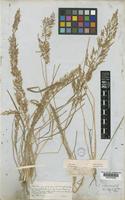
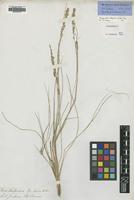
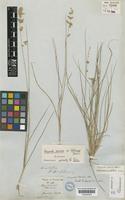
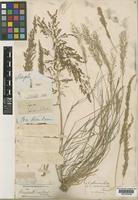
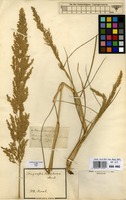
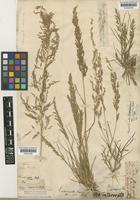
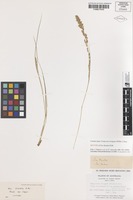
Poa diandra

14 Images see all

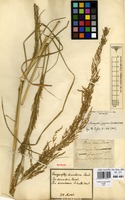
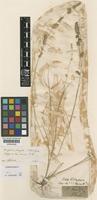
Eragrostis japonica (Thunb.) Trin. [family POACEAE]
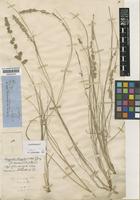
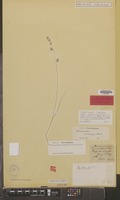
Type of Poa diandra R.Br. [family POACEAE]
Type of Eragrostis diandra (R.Br.) Steud. var. gillivrayi Domin [family POACEAE]
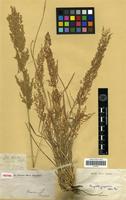
Type of Poa elongata Willd. [family GRAMINEAE]
Type of Poa diandra Roxb. [family POACEAE]
Type of Poa diandra Roxb. [family GRAMINEAE]
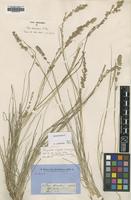
Eragrostis japonica (Thunb.) Trin. [family POACEAE]
Isotype of Poa diandra R.Br. [family POACEAE]
Type of Poa diandra Roxb. [family GRAMINEAE]
Type of Poa elongata Willd. [family POACEAE]
Isotype of Poa diandra Roxb. [family POACEAE]
Type of Poa diandra R.Br. [family POACEAE]
Isotype of Poa diandra R.Br. [family POACEAE]
Type of Poa elongata Willd. [family GRAMINEAE]
Previous
Next

Name

Identification
Eragrostis elongata (Willd.) J. Jacq. [family POACEAE ] (stored under name); Verified by Stanley Thatcher Blake, Poa diandra R.Br. [family POACEAE ] Verified by Stanley Thatcher Blake, Eragrostis diandra (R.Br.) Steud. [family POACEAE ] Verified by Stanley Thatcher Blake,
Related name
  • Eragrostis koenigii
  • Eragrostis plumosa
  • Eragrostis interrupta
  • Poa interrupta
  • Poa diandra
  • Eragrostis nutans
  • Eragrostis elongata
  • Eragrostis japonica
  • Eragrostis diandra
  • Poa elongata
  • Eragrostis diarrhena
  • Eragrostis elegans

Flora

Entry for Eragrostis japonica Thunb. Trin. [family GRAMINEAE]
Herbarium
Royal Botanic Gardens, Kew (K)
Collection
Flora Zambesiaca
Resource Type
Reference Sources
Entry From
FZ, Vol 10, Part 2, (1999) Author: T. Cope
Names
Diandrochloa diplachnoides Steud. Henry [family GRAMINEAE], in Bull. Bot. Surv. India 9: 291 (1967).
Eragrostis namaquensis var. diplachnoides Steud. Clayton [family GRAMINEAE], in Kew Bull. 25: 251 (1971). —Simon in Kirkia 8: 27 & 61 (1971). —Clayton in F.T.E.A., Gramineae: 209 (1974).
Roshevitzia diplachnoides Steud. Tzvelev [family GRAMINEAE], in Novosti Sist. Vyssh. Rast. 7: 50 (1971).
Eragrostis japonica Thunb. Trin. [family GRAMINEAE], in Mém. Acad. Imp. Sci. St.-Pétersbourg, Sér. 6, Sci. Math. 1: 405 (1830). Type from Japan.
Poa japonica Thunb. [family GRAMINEAE], Fl. Jap.: 51 (1784).
Poa tenella R. Br. [family GRAMINEAE], Prodr.: 181 (1810), non L. (1753). Type from Australia.
Eragrostis interrupta [family GRAMINEAE], auct. non (R. Br.) P. Beauv.
Poa diandra Roxb. [family GRAMINEAE], Fl. Ind. 1: 337 (1820), non R. Br. (1810). Type from India.
Poa diarrhena Schult. [family GRAMINEAE], Mant. 2: 616 (1824), based on P. diandra Roxb.
Poa tenellula Kunth [family GRAMINEAE], Révis. Gramin. 1: 113 (1829), based on P. tenella R. Br.
Eragrostis namaquensis Nees ex Schrad. [family GRAMINEAE], in Linnaea 12: 452 (1838). —Stapf in F.C. 7: 630 (1900). —Sturgeon in Rhodesia Agric. J. 51: 307 (1954). —Chippindall in Meredith, Grasses & Pastures of South Africa: 182, fig. 156 (1955). —Jackson & Wiehe, Annot. Check List Nyasal. Grass.: 40 (1958). —Simon in Kirkia 8: 27 & 61 (1971). —Clayton in F.T.E.A., Gramineae: 208 (1974). Type from South Africa.
Eragrostis tenuissima Schrad. ex Nees [family GRAMINEAE], Fl. Afr. Austral. Ill.: 409 (1841), nom. superfl. pro E. japonica (Thunb.) Trin.
Sporobolus confertiflorus A. Rich. [family GRAMINEAE], Tent. Fl. Abyss. 2: 397 (1851). Type from Ethiopia.
Poa sporoboloides A. Rich. [family GRAMINEAE], Tent. Fl. Abyss. 2: 426 (1851). Syntypes from Ethiopia.
Eragrostis diarrhena Schult. Steud. [family GRAMINEAE], Syn. Pl. Glumac. 1: 266 (1854). Type as for P. diarrhena.
Eragrostis diplachnoides Steud. [family GRAMINEAE], Syn. Pl. Glumac. 1: 268 (1854). Type from Sudan.
Eragrostis leprieurii Steud. [family GRAMINEAE], Syn. Pl. Glumac. 1: 268 (1854). Type from Senegal.
Eragrostis hochstetteri Steud. [family GRAMINEAE], Syn. Pl. Glumac. 1: 268 (1854). Type from Sudan.
Vilfa confertiflora A. Rich. Steud. [family GRAMINEAE], Syn. Pl. Glumac. 1: 155 (1854).
Eragrostis depauperata Andersson [family GRAMINEAE], in Peters, Naturw. Reise Mossambique 6, 2: 559 (1864). —T. Durand & Schinz, Consp. Fl. Afric. 5: 883 (1895).
Eragrostis interrupta var. namaquensis Nees ex Schrad. T. Durand & Schinz [family GRAMINEAE], Consp. Fl. Afric. 5: 884 (1895).
Eragrostis interrupta var. tenuissima Stapf ex Hook.f. [family GRAMINEAE], Fl. Brit. India 7: 316 (1896).
Eragrostis interrupta var. koenigii Stapf ex Hook.f. [family GRAMINEAE], Fl. Brit. India 7: 316 (1896). Type from India.
Eragrostis interrupta var. diplachnoides Steud. Stapf ex Hook.f. [family GRAMINEAE], Fl. Brit. India 7: 316 (1896).
Eragrostis interrupta var. diarrhena Schult. Stapf ex Hook.f. [family GRAMINEAE], Fl. Brit. India 7: 316 (1896).
Eragrostis namaquensis var. robusta Stapf [family GRAMINEAE], in F.C. 7: 630 (1900). —Stent & Rattray in Proc. & Trans. Rhodesia Sci. Assoc. 32: 58 (1933). Syntypes from South Africa.
Diandrochloa namaquensis Nees ex Schrad. De Winter [family GRAMINEAE], in Bothalia 7: 388 (1960). —Gibbs Russell et al., Grasses Southern Africa [Mem. Bot. Surv. S. Africa No. 58]: 104 (1990).
Diandrochloa japonica Thunb. Henry [family GRAMINEAE], in Bull. Bot. Surv. India 9: 290 (1967).
Diandrochloa diarrhena Schult. Henry [family GRAMINEAE], in Bull. Bot. Surv. India 9: 291 (1967).
Information
Robust caespitose annual; culms up to 165 cm tall, erect, often branched below, glabrous at the nodes, eglandular; leaf sheaths eglandular; ligula a short but distinct membrane with fimbriate margin; leaf laminas 3–26 cm × 1–7 mm, linear, flat or with involute margins, glabrous, eglandular.Panicle 9–60 cm long, linear to lanceolate or narrowly ovate, contracted or spreading, the spikelets evenly distributed but often crowded on short pedicels less than 1 mm long, the primary branches not in whorls, terminating in a fertile spikelet, glabrous in the axils, eglandular.Spikelets 1–2.5 × c. 1 mm, ovate-oblong, lightly laterally compressed, 4–8-flowered, the florets disarticulating from the apex downwards, the rhachilla fragile; glumes subequal, 0.4–0.8 mm long, reaching to about the middle of the adjacent lemmas, lightly keeled, narrowly lanceolate to narrowly oblong-elliptic in profile, glabrous, acute or obtuse at the apex; lemmas 0.6–0.9 mm long, lightly keeled, elliptic to ovate in profile, membranous with distinct lateral nerves, ± appressed to the rhachilla, those in opposite rows scarcely imbricate, the rhachilla ± visible between them, greenish or purplish, glabrous, obtuse at the apex; palea glabrous on the flanks, the keels slender, wingless, glabrous or scaberulous; anthers 2, 0.1–0.4 mm long.Caryopsis 0.3–0.5 mm long, obovate.
Habitat
Dambo and swampy grassland, often in water, on river margins and lake and dam shores, on sandy beaches and damp muddy ground, sometimes in riverine woodlands; also in cultivated or abandoned fields and gardens, beside irrigation canals and as a weed of rice and cotton
Range
west tropical Africa eastwards through Arabia and India to China and Japan, and southwards to South Africa
Altitude range
170–1705 m.
1705
170
Distribution
Mozambique GI Chókwe Distr., Rio Limpopo, Lionde, 7.viii.1982, Nuvunga 839 (SRGH).Mozambique MS Sofala Prov., Chemba, 6 km from Nhakolo (Tambara), c. 170 m, 15.v.1971, Torre & Correia 18435 (K; SRGH).Mozambique T Songo–Tete road, between Marueira and Chissua, 14 km from Marueira, 23.iv.1972, Macêdo 5241 (LISC).Malawi S Dedza Distr., Lake View Road, 3.ix.1950, Wiehe 625 (K; MAL).Malawi C Nkhotakota Distr., Lake Malawi (Nyasa), Benga, c. 470 m, 2.ix.1946, Brass 17496 (K).Zimbabwe S Gutu Distr., Gutu Reserve, 18.vi.1948, D.A. Robinson 334 (K).Zimbabwe E Chipinge Distr., Sabi Valley Experimental Station, v.1960, Soane 342A (K).Zimbabwe C Goromonzi Distr., Umwindsi River, 1495 m, 18.viii.1946, Wild 1194 (K).Zimbabwe W Binga Distr., Sebungwe River, c. 80 km NE of Kamativi Tin Mine, 10.v.1955, Plowes 1814 (K).Zambia S Choma Distr, Mbabala, c. 1220 m, 21.v.1963, Astle 2473 (K; SRGH).Zambia E Lundazi, 1100 m, 31.v.1954, E.A. Robinson 798 (K).Zambia C Lusaka Distr., Welgewonde Farm, east of Lusaka, 1220 m, v.1932, Trapnell 2016 (K).Zambia W Solwezi Distr., Meheta River, near Camp 6, 23.vii.1930, Milne-Redhead 759 (K).Botswana SE Gaborone Dam, 30.v.1982, P.A. Smith 3921 (K; SRGH).Zambia N Mbala Distr., Ndundu, 1705 m, 16.iv.1959, McCallum Webster A328 (K).Mozambique N Ngauma Distr., Massangulo, 1100 m, iv.1935, Gomes e Sousa 1369A (COI; K).Malawi N Mzimba Distr., Katoto, 5 km west of Mzuzu, 1370 m, 19.v.1974, Pawek 8641 (K).Zimbabwe N Guruve Distr., Nyamunyeche Estate, 5.v.1978, Nyariri 56 (K; SRGH).Zambia B 10 km north of Senanga, 1035 m, 1.viii.1952, Codd 7325 (BM; COI; K).Botswana N Okavango Swamps, Thaoge River, Masogwana, 21.ix.1974, P.A. Smith 1106 (K; SRGH).
Notes
Two variants of this species, one with smooth palea keels (‘namaquensis’) and the other with scaberulous keels (‘diplachnoides’ etc.) are recognisable in Africa, the former commoner in the south, the latter in the north.However, they are completely sympatric in tropical Africa and despite being variously accorded rank of species, subspecies or variety, their relationship still needs critical examination.At the present time there seems no point in attempting to give them formal recognition at any rank because of the practical difficulties involved in trying to determine to which of them any particular specimen belongs.Careful dissection through a high power microscope is essential for seeing the palea keels; there are no other reliable supporting characters.

Related Materials

  • Terms and Conditions
  • Privacy Policy
  • Cookie Policy
  • Cookie Settings
  • Accessibility
  • Help
  • Contact Us
  • Facebook
  • Twitter
ITHAKA

JSTOR is part of ITHAKA, a not-for-profit organization helping the academic community use digital technologies to preserve the scholarly record and to advance research and teaching in sustainable ways.

©2000-2026 ITHAKA. All Rights Reserved. JSTOR®, the JSTOR logo, JPASS®, Aluka®, and ITHAKA® are registered trademarks of ITHAKA.

╳