JSTOR Global Plants Home
  • Home
  • Browse
  • About
  • Access
  • Account
    • Saved Items
    • Profile
  • Log in

Global Plants

Skip to Main Content
  • JSTOR Global Plants Home
  • Global Plants

    • Browse
    • About
    • Access
    • Account
      • Saved Items
      • Profile
Log in
  • Browse
  • About
  • Access
  • Account
    • Saved Items
    • Profile
Advanced Search

Compilation
Poa binata

21 Images see all

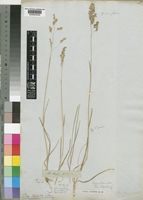
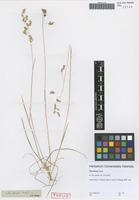
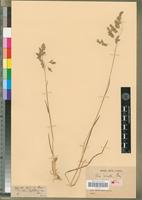
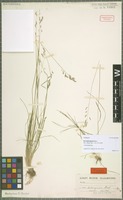
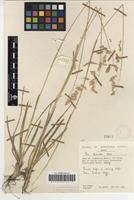
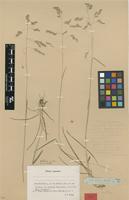
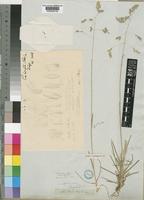
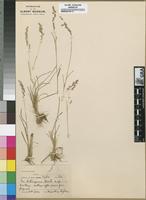
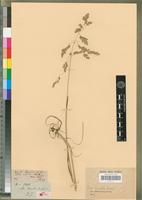
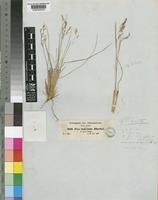
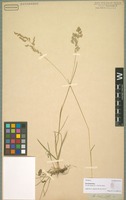
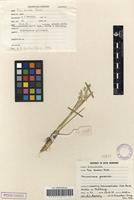
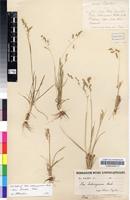
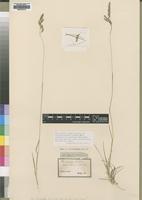
Poa binata Nees [family POACEAE]
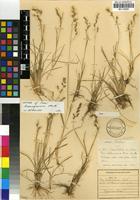
Type of Poa binata Nees [family POACEAE]
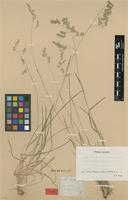
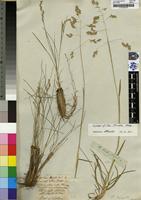
Syntype of Poa binata Nees [family POACEAE]
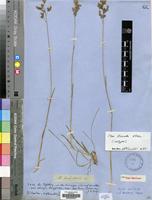
Holotype of Poa heterogama Hack. [family POACEAE]
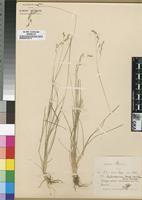
Filed as Poa binata Nees [family POACEAE]
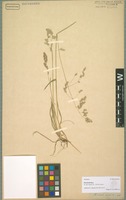
Type of Poa binata Nees [family POACEAE]
Poa binata Nees [family POACEAE]
Isotype of Poa heterogama Hack. [family POACEAE]
Syntype of Poa binata Nees [family POACEAE]
Poa simensis Hochst. ex A.Rich. [family POACEAE]
Syntype of Poa binata Nees [family POACEAE]
Filed as Poa binata Nees [family POACEAE]
Isotype of Poa heterogama Hack. [family POACEAE]
Type of Poa binata Nees [family POACEAE]
Isotype of [family ]
Type? of Poa heterogama Hack. [family POACEAE]
Isotype of Poa binata Nees [family POACEAE]
Syntype of Poa binata Nees [family GRAMINAE]
Type of Poa atherstonei Stapf [family POACEAE]
Syntype of Poa binata Nees [family POACEAE]
Type of Poa binata Nees [family POACEAE]
Previous
Next

Name

Identification
Poa binata Nees [family POACEAE ] (stored under name);
Related name
  • Poa heterogama
  • Poa simensis
  • Poa atherstonei
  • Poa binata

Flora

Entry for POA binata Nees [family POACEAE]
Herbarium
Royal Botanic Gardens, Kew (K)
Collection
Flora Capensis
Resource Type
Reference Sources
Entry From
Flora Capensis, Vol 7, page 310, (1900) Author: (By O. STAPF.)
Names
POA binata Nees [family POACEAE], Fl. Afr. Austr. 378;—Steud. Syn. Pl. Glum. i. 257; Durand & Schinz, Consp. Fl. Afr. v. 908.
Information
perennial, compactly cæspitose, glabrous; culms erect, 1/2–1 1/2 ft. high, rarely taller, more or less compressed below, usually 2-noded, internodes exserted; leaves mostly near the base; sheaths tight, smooth, the lower more or less keeled, ultimately breaking up into persistent fibres; ligules ovate, 1/2–1 1/2 lin. long; blades linear, acute, 2–6 in. by 1–1 1/2 lin., flat, with the tips often complicate and curved, smooth or finely scaberulous above; panicle ovoid or pyramidal when open, 2 1/2–6 in. long, erect or nodding, lax; rhachis smooth, very slender; branches distant, geminate, finely filiform, flexuous or wavy, up to 2 in. long, undivided to the middle or beyond it, smooth or scaberulous above; branchlets contracted; lateral pedicels very short, scaberulous; spikelets crowded on the tips of the branches, ovate-oblong, 2–2 1/2 lin. long, closely 3–5-flowered, pallid, rarely variegated with purple; glumes rather unequal, lower ovate to oblong when expanded, acute, 1–1 1/2 lin. long, 1-nerved; keel scaberulous, upper ovate, acuminate, 1 1/4–2 lin. long, 3-nerved, side-nerves usually very short; valves oblong, subacute to acute, lower 2 lin. long, glabrous or minutely pubescent below along the keel and the outer nerves, not connected by wool; tips hyaline; nerves prominent; pales 1 3/4 lin. long, keels scabrid; anthers 1–1 1/4 lin. long. null
Distribution
COAST REGION Albany Div.; Howisons Poort, near Grahamstown, coming up after a fire, 2000 ft., MacOwan, 1292! Zeyher, 4598! on cultivated land, near Grahamstown, Glass, 775! Albany, Ecklon & Zeyher, 870! Cathcart Div.; between Kat Berg and Klipplaat River, 4000–5000 ft., Drège. Komgha Div.; near Komgha, Flanagan, 934! Queenstown Div.; Table Mountain, 6000–7000 ft., Drège!EASTERN REGION Tembuland; mountains near Bazeia, 4000 ft., Baur, 526! Natal; on mountains about 100 miles inland, 4000–6000 ft., Sutherland! Riet Vlei, 4000–5000 ft., Buchanan, 284! near the Mooi River, 3000–4000 ft., Wood, 7326! Mason, 68! and without precise locality, Buchanan, 285!KALAHARI REGION Orange Free State; on the Drakens Bergen, near Harrismith, Buchanan, 116!
Notes
Very closely allied to the Abyssinian P. simensis, Hochst. ex A. Rich., which differs mainly in having narrower, more acute valves and longer ligules. Both species belong to the group of P. polycolea, Stapf.

Related Materials

  • Terms and Conditions
  • Privacy Policy
  • Cookie Policy
  • Cookie Settings
  • Accessibility
  • Help
  • Contact Us
  • Facebook
  • Twitter
ITHAKA

JSTOR is part of ITHAKA, a not-for-profit organization helping the academic community use digital technologies to preserve the scholarly record and to advance research and teaching in sustainable ways.

©2000-2026 ITHAKA. All Rights Reserved. JSTOR®, the JSTOR logo, JPASS®, Aluka®, and ITHAKA® are registered trademarks of ITHAKA.

╳