JSTOR Global Plants Home
  • Home
  • Browse
  • About
  • Access
  • Account
    • Saved Items
    • Profile
  • Log in

Global Plants

Skip to Main Content
  • JSTOR Global Plants Home
  • Global Plants

    • Browse
    • About
    • Access
    • Account
      • Saved Items
      • Profile
Log in
  • Browse
  • About
  • Access
  • Account
    • Saved Items
    • Profile
Advanced Search

Compilation
Pleurostylia heynei

4 Images see all

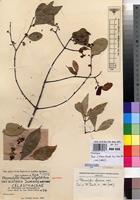
Isotype of Pleurostylia heynei Wight & Arn. var. acutifolia Suesseng. [family CELASTRACEAE]
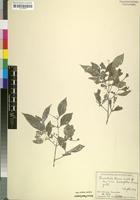
Type of Pleurostylia heynei Suess. var. acutifolia [family CELASTRACEAE]
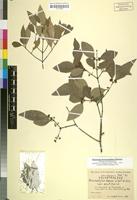
Filed as Pleurostylia heynei Suess. var. acutifolia [family CELASTRACEAE]
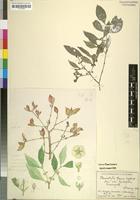
Type of Pleurostylia heynei Suess. var. acutifolia [family CELASTRACEAE]
Previous
Next

Name

Identification
Isotype of Pleurostylia heynei Wight & Arn. [family CELASTRACEAE ] Verified by Not on sheet, Pleurostylia africana Loes. [family CELASTRACEAE ] (stored under name); Verified by Not on sheet,
Related name
  • Pleurostylia africana
  • Pleurostylia heynei

Flora

Entry for Pleurostylia africana Loes. [family CELASTRACEAE]
Herbarium
Royal Botanic Gardens, Kew (K)
Collection
Flora Zambesiaca
Resource Type
Reference Sources
Entry From
FZ, Vol 2, Part 2, page 355, (1966) Author: N. K. Robson
Names
Pleurostylia africana Loes. [family CELASTRACEAE], in Engl., Bot. Jahrb. 41: 311 (1908); in Engl. & Prantl, Nat. Pflanzenfam., ed. 2, 20b: 180 (1942). — Burtt Davy & Hoyle, N.C.L.: 45 (1936). — Hutch., Botanist in S. Afr.: 476 (1946). — Brenan, T.T.C.L.: 129 (1949). — Wilczek, F.C.B. 9: 132 (1960). — White, F.F.N.R.: 219 (1962). TAB. 81 fig. A. Syntypes from Angola and Nyasaland, Buchanan 272 (B†, holotype; K).
Pleurostylia heynei var. acutifolia Suesseng. [family CELASTRACEAE], in Proc. & Trans. Rhod. Sci. Ass. 43: 110 (1953). Type: S. Rhodesia, Marandellas, Willowkopje, Dehn 724 (M).
Information
Tree or shrub 1–16(20) m. high, with rounded crown; stems pale grey-green and 4-lined when young, becoming vinous red, eventually terete. Leaf with lamina deep green or bright green and glossy above, concolorous or slightly paler beneath, 3·5–9·5(12) × 1–4 cm., elliptic to oblong-elliptic, acute to acuminate at the apex, with margin entire, angustate at the base, coriaceous or subcoriaceous, with reticulate venation equally prominent on both sides; petiole 3–8 mm. long; stipules c. 0·3 mm. long, triangular. Flowers 3-c. 15 in condensed rounded clusters; peduncle 1–4 mm. long or almost absent. Sepals 0·5–1 mm. long, broadly ovate to semicircular, rounded, with margin entire. Petals 1–1·5(2) mm. long, oblong, with margin finely ciliolate-denticulate. Disk with lobes truncate or shallowly emarginate. Ovary ovoid, slightly asymmetric; ovules 2(3). Fruit green, 7–8 mm. long, obovoid to ellipsoid. Seed 1, plano-convex.
Habitat
On termite mounds and rocky hillsides and in deciduous woodland and forest margins on well-drained soil
Altitude range
420–1100 m.
1100
420
Distribution
Malawi S Mlanje Mt., Chambe Peak, fr. 4.vi.1957, Chapman 376 (BM; FHO; K; PRE).Zimbabwe S Buhera, 1050 m., fl. xi.1953, Davies 610 (K; SRGH).Zimbabwe E Umtali Golf Course, 1080 m., fl. 11.xii.1951, Chase 4257 (BM; K; LISC; SRGH).Zimbabwe C Charter, Featherstone, fr. v.1951, Mullin 8/51 (K; LISC; SRGH).Zambia S 1·6 km. above Victoria Falls, fr. 7.vii.1930, Hutchinson & Gillett 3424 (BM; K; SRGH).Zambia C Lusaka South Fuel Reserve, st. 19.v.1934, Miller 27 (FHO).Zambia W Mwinilunga Distr., c. 1·6 km. S. of Matonchi Farm, fr. 13.xi.1955, Milne-Redhead 4481 (BM; K).Zambia N Mpika, fl. 31.i.1955, Fanshawe 1910 (K).Mozambique Z Gúruè, Lioma, fr. 1.vii.1943, Torre 5645 (LISC).Malawi C near Salima, between Grand Beach and Lake Nyasa Hotels, fl. 16.ii.1959, Robson 1622 (BM; K; LISC; PRE; SRGH).Zimbabwe N Urungwe, Kariba, c. 600 m., fl. i.1959, Goldsmith 3/59 (BM; K; LISC; SRGH).Zambia B Balovale, 1050 m., fl. xii.1953, Gilges 315 (K; PRE; SRGH).
Distribution (external)
Kenya
Uganda
Tanganyika
Katanga
Angola (Huila)
Notes
The S. African species, P. capensis (Turcz.) Loes., is closely allied to P. africana but has 6–8 ovules in each loculus.

Related Materials

  • Terms and Conditions
  • Privacy Policy
  • Cookie Policy
  • Cookie Settings
  • Accessibility
  • Help
  • Contact Us
  • Facebook
  • Twitter
ITHAKA

JSTOR is part of ITHAKA, a not-for-profit organization helping the academic community use digital technologies to preserve the scholarly record and to advance research and teaching in sustainable ways.

©2000-2026 ITHAKA. All Rights Reserved. JSTOR®, the JSTOR logo, JPASS®, Aluka®, and ITHAKA® are registered trademarks of ITHAKA.

╳