JSTOR Global Plants Home
  • Home
  • Browse
  • About
  • Access
  • Account
    • Saved Items
    • Profile
  • Log in

Global Plants

Skip to Main Content
  • JSTOR Global Plants Home
  • Global Plants

    • Browse
    • About
    • Access
    • Account
      • Saved Items
      • Profile
Log in
  • Browse
  • About
  • Access
  • Account
    • Saved Items
    • Profile
Advanced Search

Compilation
Pleuricospora fimbriolata

3 Images see all

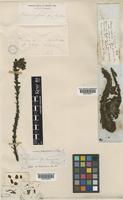
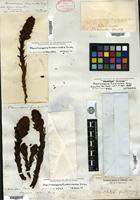
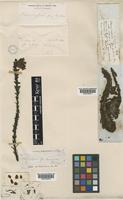
Pleuricospora fimbriolata A.Gray [family ERICACEAE]
Isotype of Pleuricospora fimbriolata A. Gray [family ERICACEAE]
Pleuricospora fimbriolata A.Gray [family ERICACEAE]
Previous
Next

Name

Identification
Isotype of Pleuricospora fimbriolata A. Gray [family ERICACEAE ] (stored under name); Verified by A. Gray, 1868 Pleuricospora fimbriolata A. Gray [family ERICACEAE ] Verified by A. Gray, 1868 Pleuricospora fimbriolata A. Gray [family ERICACEAE ] Verified by A. Gray,
Related name
  • Pleuricospora fimbriolata
Common name
  • Fringed pinesap, Flora of North America Vol. 8

Flora

Entry for Pleuricospora fimbriolata A. Gray [family ERICACEAE]
Herbarium
Flora of North America (FNA)
Collection
Flora of North America
Resource Type
Reference Sources
Entry From
Flora of North America, Vol 8,
Names
Pleuricospora fimbriolata A. Gray [family ERICACEAE], Proc. Amer. Acad. Arts, 7: 369. 1868 ,
Pleuricospora longipetala Howell [family ERICACEAE]
Treatment Author(s)
Gordon C. Tucker
Information
Inflorescences 6–10 cm; bracts cream, 8–15 × 4–8 mm. Flowers: sepals 5–8 × 2–4 cm; petals oblong, 8–10 × 4–6 cm, base slightly saccate, apex fimbriate; stamens 0.8–1.1 cm; anthers erect at anthesis, cream, 3–4 mm; ovary 3–5 × 4–5 mm, glabrous; style 1.5–2.5 × 2 mm; stigma apex lobed. Berries 1 cm diam. Seeds 0.2–0.5 mm diam. 2n = 52.
Shrubs or trees, multicellular hairs present or, sometimes, absent (Comarostaphylis); bark smooth, not furrowed, often flaky, sometimes shredding. Stems erect or prostrate. Leaves persistent (deciduous in Arctous), usually alternate, sometimes opposite or whorled (Ornithostaphylos), rarely opposite (Xylococcus); petiole usually present, sometimes absent (Arctostaphylos); blade plane, abaxial groove absent. Inflorescences terminal, panicles or racemes; perulae absent; bracts much shorter than sepals; bracteoles 2 or absent (Arctostaphylos, Arctous). Flowers pendulous; sepals (4–)5; petals (4–)5, connate, corolla deciduous, usually urceolate, sometimes cylindric, conic, or globose, lobes much shorter than tube; intrastaminal nectary disc present; stamens (8–)10; anthers dehiscent by slits or pores; ovary 2–10-locular; placentation axile; style straight. Fruits drupaceous (baccate in Arbutus), (pulp mealy or juicy), indehiscent; pyrenes 1–5, often connate into stonelike endocarp. Seeds 1–10, usually distinct, sometimes connate, globose (sometimes 3-sided), not winged.
Phenology
Flowering late spring–summer
Altitude range
100–1800 m
Distribution
USA Calif.USA Oreg.USA Wash.Canada B.C.
Discussion
b. Ericaceae Jussieu subfam. Arbutoideae Niedenzu, Bot. Jahrb. Syst. 11: 135. 1889
Arbuteae Meisner
Genera 6, species 91 or 92 (6 genera, 70 species in the flora): North America, Mexico, Central America, Europe, n Africa, n Atlantic Islands (Canary Islands); most species endemic to western North America.

Related Materials

  • Terms and Conditions
  • Privacy Policy
  • Cookie Policy
  • Cookie Settings
  • Accessibility
  • Help
  • Contact Us
  • Facebook
  • Twitter
ITHAKA

JSTOR is part of ITHAKA, a not-for-profit organization helping the academic community use digital technologies to preserve the scholarly record and to advance research and teaching in sustainable ways.

©2000-2026 ITHAKA. All Rights Reserved. JSTOR®, the JSTOR logo, JPASS®, Aluka®, and ITHAKA® are registered trademarks of ITHAKA.

╳