JSTOR Global Plants Home
  • Home
  • Browse
  • About
  • Access
  • Account
    • Saved Items
    • Profile
  • Log in

Global Plants

Skip to Main Content
  • JSTOR Global Plants Home
  • Global Plants

    • Browse
    • About
    • Access
    • Account
      • Saved Items
      • Profile
Log in
  • Browse
  • About
  • Access
  • Account
    • Saved Items
    • Profile
Advanced Search

Compilation
Pleopeltis erythrolepis

19 Images see all

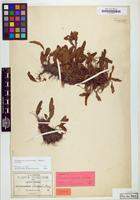
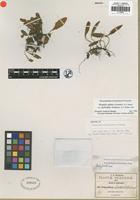
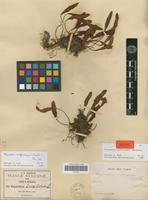
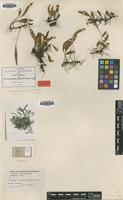
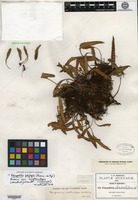
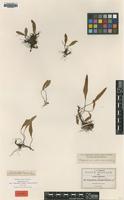
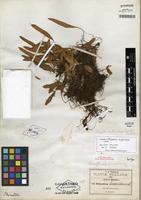
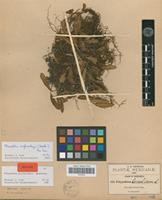
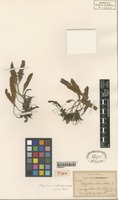
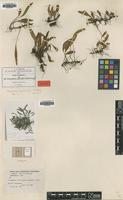
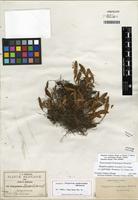
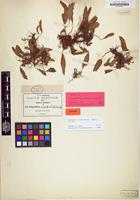
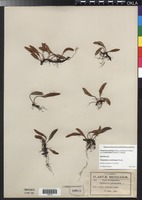
Isotype of Polypodium erythrolepis Weath. [family POLYPODIACEAE]
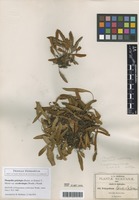
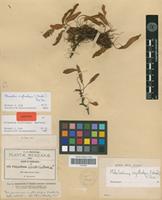
Isotype of Pleopeltis erythrolepis (Weath.) Pic.Serm. [family PTERIDOPHYTA]
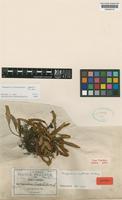
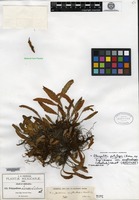
Isotype of Pleopeltis erythrolepis (Weath.) Pic.Serm. [family POLYPODIACEAE]
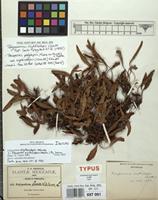
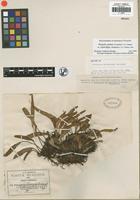
Isotype of Polypodium erythrolepis Weatherby [family POLYPODIACEAE]
Isotype of Pleopeltis erythrolepis (Weath.) Pic.Serm. [family POLYPODIACEAE]
Isotype of Pleopeltis polylepis var. erythrolepis (Weath.) T. Wendt [family POLYPODIACEAE]
Isotype of Pleopeltis erythrolepis (Weath.) Pic.Serm. [family POLYPODIACEAE]
Isotype of Pleopeltis erythrolepis (Weath.) Pic.Serm. [family PTERIDOPHYTA]
Holotype of Polypodium erythrolepis Weatherby [family POLYPODIACEAE]
Isotype of Polypodium erythrolepis Weath. [family POLYPODIACEAE]
Isotype of Pleopeltis erythrolepis (Weath.) Pic.Serm. [family PTERIDOPHYTA]
Type of Polypodium erythrolepis Weath. [family POLYPODIACEAE]
Isotype of Polypodium erythrolepis Weatherby [family POLYPODIACEAE]
Isotype of Polypodium erythrolepis Weath. [family POLYPODIACEAE]
Isotype of Pleopeltis polylepis var. erythrolepis (Weath.) T. Wendt [family POLYPODIACEAE]
Isotype of Polypodium erythrolepis Weath. [family POLYPODIACEAE]
Previous
Next

Name

Identification
Isotype of Polypodium erythrolepis Weath. [family POLYPODIACEAE ] Verified by Zink, M.J., Pleopeltis erythrolepis (Weath.) Pic.Serm. [family POLYPODIACEAE ] (stored under name); Verified by Not on sheet.,
Related name
  • Polypodium lanceolatum
  • Polypodium erythrolepis
  • Polypodium cancellatum
  • Pleopeltis erythrolepis

Flora

Entry for Pleopeltis polylepis var. erythrolepis (Weatherby) T. Wendt [family POLYPODIACEAE]
Herbarium
Flora of North America (FNA)
Collection
Flora of North America
Resource Type
Reference Sources
Entry From
Flora of North America, Vol 2,
Names
Pleopeltis polylepis var. erythrolepis (Weatherby) T. Wendt [family POLYPODIACEAE], Amer. Fern J., 70: 9. 1980
Polypodium erythrolepis Weatherby [family POLYPODIACEAE], Contr. Gray Herb., 65: 11. 1922
Pleopeltis erythrolepis (Weatherby) Pichi-Sermolli [family POLYPODIACEAE]
Treatment Author(s)
Elisabeth G. Andrews
Michael D. Windham
Information
Stems long-creeping, branched, 1--2.5 mm diam.; scales lanceolate-attenuate, centrally clathrate with cell luminae clear, glabrescent or with scattered reddish brown hairs. Leaves to 10 cm, weakly hygroscopic. Petiole round in cross section, sparsely scaly; scales rarely overlapping, margins fringed-ciliate. Blade ovate-lanceolate to oblanceolate, simple, 0.5--2 cm wide, margins entire, densely scaly abaxially, sparsely scaly adaxially; scales bicolored, broadly ovate-lanceolate, 0.5--1 mm wide, centers brown, clathrate, margins transparent, irregularly fringed-ciliate. Venation complexly anastomosing, fertile areoles with several included veinlets. Sori round to oval, discrete, surficial to shallowly embossed, soral scales attached to receptacle. Spores smooth with scattered spheric deposits, ca. 59 µm.
Phenology
Sporulating summer--fall
Altitude range
2300 m
Distribution
n Mexico.USA Texas
Discussion
The only known North American population of Pleopeltis polylepis occurs in the Davis Mountains of western Texas. It is placed in variety erythrolepis , which differs from var. polylepis , the variety common in Mexico, in that the scales on the abaxial surface of mature blades are fringed-ciliate rather than entire to erose, and mostly ovate-lanceolate rather than spheric. In addition, the scales of the abaxial blade surface tend to be more abundant than in var. polylepis . The two varieties are very similar, however, and a broad region of overlap exists in parts of Mexico where plants of intermediate morphology occur (T. Wendt 1980). In general, var. erythrolepis occurs in northern Mexico and Texas, and var. polylepis ranges from southern Mexico to Guatemala.

Related Materials

  • Terms and Conditions
  • Privacy Policy
  • Cookie Policy
  • Cookie Settings
  • Accessibility
  • Help
  • Contact Us
  • Facebook
  • Twitter
ITHAKA

JSTOR is part of ITHAKA, a not-for-profit organization helping the academic community use digital technologies to preserve the scholarly record and to advance research and teaching in sustainable ways.

©2000-2026 ITHAKA. All Rights Reserved. JSTOR®, the JSTOR logo, JPASS®, Aluka®, and ITHAKA® are registered trademarks of ITHAKA.

╳