JSTOR Global Plants Home
  • Home
  • Browse
  • About
  • Access
  • Account
    • Saved Items
    • Profile
  • Log in

Global Plants

Skip to Main Content
  • JSTOR Global Plants Home
  • Global Plants

    • Browse
    • About
    • Access
    • Account
      • Saved Items
      • Profile
Log in
  • Browse
  • About
  • Access
  • Account
    • Saved Items
    • Profile
Advanced Search

Compilation
Pleiospora bolusii

2 Images see all

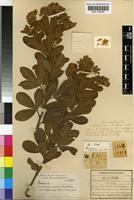
Isotype of Pleiospora bolusii Dummer [family FABACEAE]
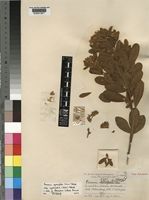
Holotype of Pleiospora bolusii Dummer [family LEGUMINOSAE-PAPILIONOIDEAE]
Previous
Next

Name

Identification
Isotype of Pleiospora bolusii Dummer [family FABACEAE ] Verified by Not on sheet, Pearsonia cajanifolia (Harv.) Polhill [family FABACEAE ] (stored under name); Verified by Not on sheet,
Related name
  • Pleiospora cajanifolia
  • Pleiospora bolusii
  • Pearsonia cajanifolia

Flora

Entry for Pearsonia cajanifolia subsp. cryptantha Baker Polhill [family LEGUMINOSAE]
Herbarium
Royal Botanic Gardens, Kew (K)
Collection
Flora Zambesiaca
Resource Type
Reference Sources
Entry From
FZ, Vol 3, Part 7, (2003) Author: various authors
Names
Pearsonia cajanifolia subsp. cryptantha Baker Polhill [family LEGUMINOSAE], in Kew Bull. 29: 394 (1974). —Lock, Leg. Afr. Check-list: 228 (1989). Type: Malawi, Zomba Mt., Whyte s.n. (K, holotype).
Eriosema cryptanthum Baker [family LEGUMINOSAE], in Bull. Misc. Inform., Kew 1897: 264 (1897).
Pleiospora holosericea Schinz [family LEGUMINOSAE], in Bull. Herb. Boissier 7: 29 (1899). —Dummer in Trans. Roy. Soc. South Africa 3: 333 (1913). —Burtt Davy, Fl. Pl. Ferns Transvaal, pt. 2: 382 (1932). Syntypes from South Africa (Northern Province and Mpumalanga).
Pleiospora paniculata Bolus ex Dummer [family LEGUMINOSAE], in Trans. Roy. Soc. South Africa 3: 331 (1913). —Burtt Davy, Fl. Pl. Ferns Transvaal, pt. 2: 382 (1932). Type from South Africa (Northern Province).
Pleiospora bolusii Dummer [family LEGUMINOSAE], in Trans. Roy. Soc. South Africa 3: 333 (1913). —Burtt Davy, Fl. Pl. Ferns Transvaal, pt. 2: 382 (1932). Type from South Africa (Northern Province).
Pleiospora macrophylla Dummer [family LEGUMINOSAE], in Trans. Roy. Soc. South Africa 3: 334 (1913). —Burtt Davy, Fl. Pl. Ferns Transvaal, pt. 2: 382 (1932). Type from South Africa (Northern Province).
Pleiospora buchananii Harms [family LEGUMINOSAE], in Repert. Spec. Nov. Regni Veg. 14: 145 (1915), nom. illegit. Types as for Eriosema cryptanthum.
Pleiospora cryptantha Baker Baker f. [family LEGUMINOSAE], Legum. Trop. Africa: 14 (1926).
Phaenohoffmannia cajanifolia subsp. cryptantha Baker J.B. Gillett [family LEGUMINOSAE], in Kew Bull. 20: 298 (1966).
Information
Undersurface of leaflets ± hidden by a dense silky indumentum. Calyx 8–10 mm long.
Habitat
Submontane grassland and often rocky hillsides in higher altitude miombo or Uapaca woodland
Altitude range
1350–2100 m.
2100
1350
Distribution
Zimbabwe E Nyanga Distr., Juliasdale, fl. 8.i.1965, Wild 6744 (K; PRE; SRGH).Malawi S Zomba Plateau, near Nowimbe Fire Tower, fl. 12.i.1979, Blackmore & Patel 141 (BM; K; MAL); Zomba Plateau, near Chingwe’s Hole, fl. 7.ii.1985, Salubeni & Nachamba 4005 (K; MAL).Zimbabwe C Shurugwi (Selukwe) Police Camp, fl. 27.xii.1968, Corby 2063 (K; PRE; SRGH).
Distribution (external)
South Africa (Northern Province, Mpumalanga and probably KwaZulu-Natal)
Notes
Subsp. cajanifoliahas the surface of the leaflets clearly visible between the sparse covering of stiff hairs and slightly smaller flowers, the calyx 6–8 mm long. It occurs further south in the North-West, Gauteng and Mpumalanga Provinces of South Africa, with some intermediates in the Groblersdal and Lydenburg area. The Zimbabwean specimens from Shurugwi tend to have relatively sparse indumentum for subsp. cryptantha, but in general the differences have a distinct geographical bias.

Related Materials

  • Terms and Conditions
  • Privacy Policy
  • Cookie Policy
  • Cookie Settings
  • Accessibility
  • Help
  • Contact Us
  • Facebook
  • Twitter
ITHAKA

JSTOR is part of ITHAKA, a not-for-profit organization helping the academic community use digital technologies to preserve the scholarly record and to advance research and teaching in sustainable ways.

©2000-2026 ITHAKA. All Rights Reserved. JSTOR®, the JSTOR logo, JPASS®, Aluka®, and ITHAKA® are registered trademarks of ITHAKA.

╳