JSTOR Global Plants Home
  • Home
  • Browse
  • About
  • Access
  • Account
    • Saved Items
    • Profile
  • Log in

Global Plants

Skip to Main Content
  • JSTOR Global Plants Home
  • Global Plants

    • Browse
    • About
    • Access
    • Account
      • Saved Items
      • Profile
Log in
  • Browse
  • About
  • Access
  • Account
    • Saved Items
    • Profile
Advanced Search

Compilation
Pleiocarpa swynnertonii

6 Images see all

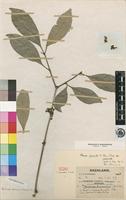
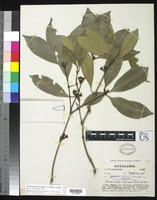
Isolectotype of Pleiocarpa swynnertonii S.Moore [family APOCYNACEAE]
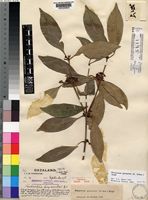
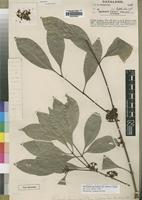
Syntype of Pleiocarpa swynnertonii S.Moore [family APOCYNACEAE]
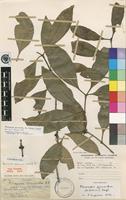
Isolectotype of Pleiocarpa swynnertonii S.Moore [family APOCYNACEAE]
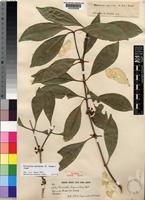
Syntype of Pleiocarpa swynnertonii S.Moore [family APOCYNACEAE]
Syntype of Pleiocarpa swynnertonii Moore, S. L. M. 1911 [family APOCYNACEAE]
Lectotype of Pleiocarpa swynnertonii S.Moore [family APOCYNACEAE]
Previous
Next

Name

Identification
Pleiocarpa pycnantha (K.Schum.) Stapf [family APOCYNACEAE ] (stored under name); Verified by Omino,E.A., Pleiocarpa swynnertonii S.Moore [family APOCYNACEAE ]
Related name
  • Pleiocarpa swynnertonii
  • Pleiocarpa pycnantha

Flora

Entry for Pleiocarpa pycnantha K. Schum. Stapf [family APOCYNACEAE]
Herbarium
Royal Botanic Gardens, Kew (K)
Collection
Flora Zambesiaca
Resource Type
Reference Sources
Entry From
FZ, Vol 7, Part 2, (1985) Author: A. J. M. Leeuwenberg and F. K. Kupicha et al.
Names
Pleiocarpa pycnantha K. Schum. Stapf [family APOCYNACEAE], in Dyer, F.T.A. 4, 1: 99 (1902). — Eggeling & Dale, Indig. Trees Uganda Prot., ed. 2: 29 (1951).—Pichon in Bol. Soc. Brot., Sér. 2, 27: 128, t. 4 fig. 1 (1953). — F. White, F.F.N.R.: 350 (1962). — R. B. Drumm. in Kirkia 10: 269 (1975). TAB. 99. Type from Uganda.
Hunteria pycnantha K. Schum. [family APOCYNACEAE], in Engl., Bot. Jahrb. 23: 222 (1896). Type as above.
Pleiocarpa welwitschii Stapf ex Hiern [family APOCYNACEAE], Cat. Afr. Pl. Welw. 1: 665 (1898). Type from Angola.
Pleiocarpa tubicina Stapf [family APOCYNACEAE], in Kew Bull. 1898: 304 (1898). Type from Zaire.
Hunteria breviloba Hallier f. [family APOCYNACEAE], in Jahrb. Hamb. Wiss. Anst. 17, Beih. 3: 189 (1900). Type from the Congo Rep.
Pleiocarpa flavescens Stapf [family APOCYNACEAE], tom. cit.: 101 (1902). Type from Ghana.
Pleiocarpa breviloba Hallier f. Stapf [family APOCYNACEAE], tom. cit.: 102 (1902). Type as for Hunteria breviloba.
Pleiocarpa microcarpa Stapf [family APOCYNACEAE], loc. cit. Type from Zaire.
Pleiocarpa bagshawei S. Moore [family APOCYNACEAE], in Journ. Bot. Lond. 45: 49 (1907). Type from Uganda.
Pleiocarpa swynnertonii S. Moore [family APOCYNACEAE], in Journ. Linn. Soc., Bot. 40: 138 (1911). Type: Zimbabwe, Chirinda forest, 1130-1220 m., fl. 27.ix.1905, Swynnerton 14 (BM, lectotype; SRGH, isolectotype).
Pleiocarpa micrantha Stapf [family APOCYNACEAE], in Dyer, F.T.A. 4, 1: 100 (1902). — Irvine, Woody Pl. Ghana: 630 (1961). Type from Ghana.
Information
An evergreen shrub or tree 1·5–30 m. tall; bark grey, smooth or slightly scaly; slash whitish, cream or pale brown with darker yellow striations, brownish yellow beneath, yielding milky latex; branches subsarmentose. Young twigs glabrous, angled, sometimes with verticillate branching-pattern. Leaves thinly coriaceous, opposite or in whorls of 3–5, completely glabrous; petiole 3–20 mm. long, angled, often narrowly winged almost to the base by a continuation of the lamina; lamina (4)6–13·5 x (1·3)2·2–5·5 cm., elliptic to obovate or narrowly obovate, the apex cuspidate with short rounded acumen or acute with rounded tip, the base attenuate; upper surface glossy, with all nerves raised (midrib both prominent and channelled); lower surface paler and mat, all nerves raised; lateral nerves ± parallel, 2–4 mm. apart, joining near the margin in a neatly looped vein; edge of leaf forming little pleats when pressed flat. Flowers white, fragrant, in dense axillary fascicles on new and old wood; pedicels up to 1 mm. long, glabrous. Calyx 1·5–2 mm. long; sepals ovate, free, glabrous. Corolla tube 5–8 mm. long, narrowed in the middle, glabrous externally, pubescent internally in upper half, hairs longest just below the anthers; corolla lobes 2–4 x 1·5–2·5 mm., elliptic, glabrous, not strongly overlapping. Stamens inserted 4-6 mm. above base of corolla tube; filaments minute, anthers 0·5–1 mm. long. Gynoecium 4–6·5 mm. long; ovary c. 1 mm. long, cylindrical, glabrous, of 2 free carpels each containing 1–4 ovules; style slender, flattened; clavuncle 2-lobed; stigma reduced to a flat region at apex of clavuncle. Fruit comprising 2 clavate mericarps 7–20 x 4·5–18 mm., pale green to orange when ripe, each containing 1 or 2 salmon-pink seeds.
Habitat
In a variety of habitats (mixed evergreen forest, deciduous forest, woodland on dunes, Brachystegia thicket) but usually on sandy soil.
Range
Widely distributed throughout tropical Africa
Distribution
Mozambique GI Gaza, Macia, S. Martinho do Bilene, fl. & fr. 4.iv.1969, Balsinhas 1453 (LISC).Mozambique MS 25 km. from Lacerdonia, N. of new railway, 200 m., fl. 6.xii.1971, Müller & Pope 1916 (K; LISC; PRE; SRGH).Mozambique Z Maganja da Costa, Gobene forest, 50km. from Vila de Maganja, c. 20 m., fl. 12.xi.1966, Torre & Correia 14541 (C; LISC; LMA; MO; SRGH; WAG).Zimbabwe E Chipinge (Chipinga) Distr., Chirinda forest, 1100 m., fl. x.1965, Goldsmith 38/65 (BR; K; LISC; PRE; SRGH).Zambia N north bank of R. Luapula near Chembe Ferry, st. 5.x.1947, Brenan & Greenway 8011 (BR; FHO; K).
Notes
Pichon, loc. cit., recognised two varieties within this species, var. pycnantha and var. tubicina (Stapf) Pichon. They were said to differ in the size of corolla lobes, var. pycnantha having lobes 2·4–5·6 x 1·4–3·45 mm. and var. tubicina 0·75–2·5(3·1) x 0·75–2 mm. In var. pycnantha, however, a branch usually was found to bear a mixture of long- and short-lobed flowers. var. tubicina was believed to occur throughout the range of the species, var. pycnantha in E. Africa. Pichon saw only one specimen of P. pycnantha from the F.Z. area, Swynnerton 14. All the F.Z. specimens I have seen with expanded flowers belong to var. pycnantha, but many of the collections lack such flowers and cannot be assigned to variety. According to Pichon (tom cit.: 131), the carpels of P. pycnantha are generally 1-2-ovulate, but I have found 4-ovulate examples, as TAB. 99 shows.

Related Materials

  • Terms and Conditions
  • Privacy Policy
  • Cookie Policy
  • Cookie Settings
  • Accessibility
  • Help
  • Contact Us
  • Facebook
  • Twitter
ITHAKA

JSTOR is part of ITHAKA, a not-for-profit organization helping the academic community use digital technologies to preserve the scholarly record and to advance research and teaching in sustainable ways.

©2000-2026 ITHAKA. All Rights Reserved. JSTOR®, the JSTOR logo, JPASS®, Aluka®, and ITHAKA® are registered trademarks of ITHAKA.

╳