JSTOR Global Plants Home
  • Home
  • Browse
  • About
  • Access
  • Account
    • Saved Items
    • Profile
  • Log in

Global Plants

Skip to Main Content
  • JSTOR Global Plants Home
  • Global Plants

    • Browse
    • About
    • Access
    • Account
      • Saved Items
      • Profile
Log in
  • Browse
  • About
  • Access
  • Account
    • Saved Items
    • Profile
Advanced Search

Compilation
Plectranthus unguentarius

7 Images see all

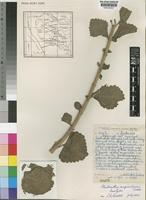
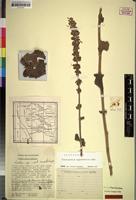
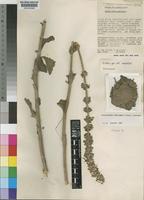
Isotype of Plectranthus unguentarius Codd [family LABIATAE]
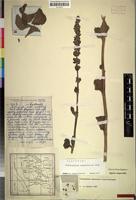
Isotype of Plectranthus unguentarius Codd [family LAMIACEAE]
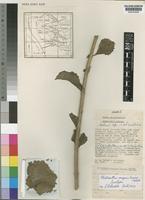
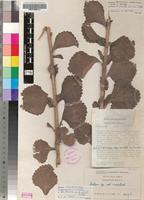
Isotype of Plectranthus unguentarius Codd [family LABIATAE]
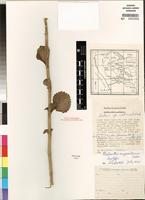
Plectranthus unguentarius Codd [family LABIATAE]
Holotype of Plectranthus unguentarius Codd [family LAMIACEAE]
Previous
Next

Name

Identification
Isotype of Plectranthus unguentarius Codd [family LABIATAE ] (stored under name); Verified by Codd, L.E., Coleus unrecorded unrecorded [family LABIATAE ]
Related name
  • Plectranthus amboinicus
  • Coleus unrecorded
  • Plectranthus unguentarius

Flora

Entry for Plectranthus unguentarius [family LAMIACEAE]
Herbarium
South African National Biodiversity Institute, Compton Herbarium, Cape Town (SAM)
Collection
Flora of Southern Africa
Resource Type
Reference Sources
Entry From
Flora of South Africa, (2003) Author: Dr J.P. Roux
Names
Plectranthus unguentarius [family LAMIACEAE]
Common names
P. amboinicus sensu Launert & Schreiber in F.S.W.A. 123:24 (1969).
Information
Perennial erect semi-succulent suffrutex 1 — 1,5 m tall; stems woody at the base, sparingly branched, densely cano-tomentose. Leaves petiolate; blade semi-fleshy, drying fairly thick-textured, broadly obovate to subrotund, 40—60 x 40-70 mm, densely pubescent, under-surface with red­dish brown gland-dots, apex rounded, base cuneate to abruptly attenuate, margin crenate. Inflorescence terminal, spike-like, up to 350 mm long, simple or with a pair of branches near the base; flowers in very dense ± 20-flowered cymes, densely tomen-tose, producing ± 40-flowered verticils, crowded towards the apex and spaced 10—30 mm apart lower down. Calyx 5—6 mm long in fruit, glandular-tomentose; uppermost tooth much larger than the remaining 4 teeth, ovate-oblong, abruptly acute at the apex. Corolla white, 10—12 mm long; tube slightly bent about the middle and expanding to the throat; upper lip 1,5 mm long. Stamens united at the base for 1—2 mm, 5—7 mm long.
Habitat
The roots are pleasantly aromatic and are used in the preparation of a pomade by the local inhabitants.
Use
9. Plectranthus unguentarius Codd in Bothalia 11: 387 (1975). Type: S.W.A./ Namibia, Kaokoveld, 17 km S. of Kaoko Otavi, De Winter & Leistner 5595 (PRE, holo.!).
Range
Known only from the Kaokoveld in northern S.W.A./Namibia, in dry Mopane woodland on high rocky situations. Map 76.

Related Materials

  • Terms and Conditions
  • Privacy Policy
  • Cookie Policy
  • Cookie Settings
  • Accessibility
  • Help
  • Contact Us
  • Facebook
  • Twitter
ITHAKA

JSTOR is part of ITHAKA, a not-for-profit organization helping the academic community use digital technologies to preserve the scholarly record and to advance research and teaching in sustainable ways.

©2000-2026 ITHAKA. All Rights Reserved. JSTOR®, the JSTOR logo, JPASS®, Aluka®, and ITHAKA® are registered trademarks of ITHAKA.

╳