JSTOR Global Plants Home
  • Home
  • Browse
  • About
  • Access
  • Account
    • Saved Items
    • Profile
  • Log in

Global Plants

Skip to Main Content
  • JSTOR Global Plants Home
  • Global Plants

    • Browse
    • About
    • Access
    • Account
      • Saved Items
      • Profile
Log in
  • Browse
  • About
  • Access
  • Account
    • Saved Items
    • Profile
Advanced Search

Compilation
Plectranthus tetensis

14 Images see all

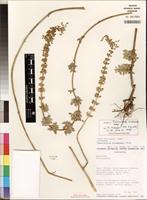
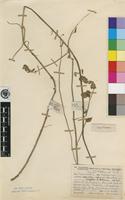
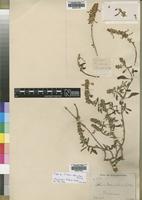
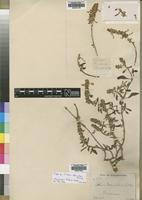
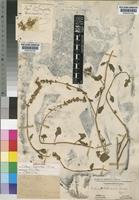
Isotype of Plectranthus tetensis (Baker) Agnew [family LAMIACEAE]
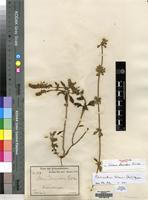
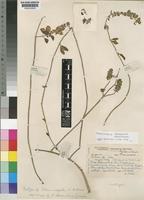
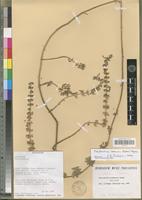
Isosyntype of Coleus decumbens Gürke [family LABIATAE]
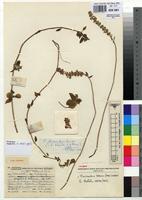
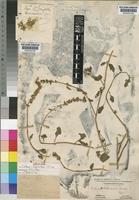
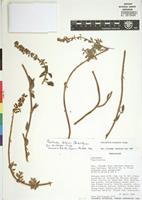
Isotype of Coleus vagatus E.A. Bruce [family LAMIACEAE]
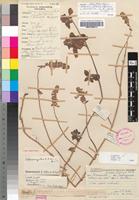
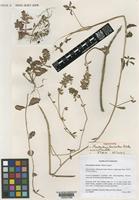
Holotype of Coleus vagatus E.A.Bruce [family LAMIACEAE]
Type of Coleus vagatus E.A.Bruce [family LAMIACEAE]
Plectranthus tetensis (Baker) Agnew
Isotype of Coleus vagatus E.A.Bruce [family LABIATAE]
Type of Coleus tetensis Baker [family LABIATAE]
Type of Coleus decumbens Gürke [family LAMIACEAE]
Isotype of Plectranthus erubescens Hedge [family LAMIACEAE]
Original material? of Plectranthus tetensis (Baker) Agnew [family LAMIACEAE]
Plectranthus lasianthus Gurke [family LABIATAE]
Type of Coleus decumbens Gürke [family LAMIACEAE]
Plectranthus tetensis (Baker) Agnew. [family LABIATAE]
Previous
Next

Name

Identification
Plectranthus tetensis (Baker) Agnew [family LAMIACEAE ]
Related name
  • Plectranthus tetensis

Flora

Entry for Plectranthus tetensis [family LAMIACEAE]
Herbarium
South African National Biodiversity Institute, Compton Herbarium, Cape Town (SAM)
Collection
Flora of Southern Africa
Resource Type
Reference Sources
Entry From
Flora of South Africa, (2003) Author: Dr J.P. Roux
Names
Plectranthus tetensis [family LAMIACEAE]
Common names
C. decumbens Giirke in Bot. Jb. 19; 211 (1894); Bak., I.e. 431 (1900); Compton, Fl. Swaziland 505 (1976); non Plectranthus decumbens Hook. f. (1864). Syntypes: Kenya, Duruma district, Hildebrandt 230; Tanzania, Kilimanjaro, Volkens 237 (BR!). Coleus tetensis Bak. in F.T.A. 5: 431 (1900). C. vagatus E. A. Bruce in Bothalia 6: 227 (1951); Codd in Mitt. bot. StSamml., Munch. 10: 248 (1971). Plectranthus vagatus (E. A. Bruce) Codd in Ross, Fl. Natal 305 (1971), non rite publ.
Information
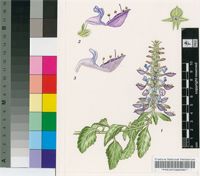
Perennial, semi-succulent, several-stemmed procumbent herb; stems pub­escent, sparingly branched, up to 0,7 m long with ascending inflorescences. Leaves shortly petiolate; blade softly succulent, ovate to obovate, 15-25 x 12-20 mm, pubescent, under-surface with orange-red gland-dots, apex obtuse, base cuneate to obtuse, obscurely crenate-dentate. Inflore­scence a terminal, dense spike-like raceme 50—80 mm long, not markedly 4-angled at the apex; bracts persistent, fleshy, rounded; flowers in 4—6-flowered sessile cymes, forming 8—12-flowered verticils; pedicels erect, appressed to the rhachis. Calyx 4—5 mm long in fruit, red gland-dotted without, densely villous inside, bilabiate, the upper lip consisting of a large broadly ovate tooth, the lower lip of 4 subequal deltoid-subulate teeth. Corolla mauve-purple, 15 — 18 mm long; tube narrow and ascending then geniculate and expanding about the middle; upper lip 3,5—4 mm long, lower lip deeply boat-shaped, 9—11 mm long. Stamens 9—11 mm long, united at the base for 2 mm. Fig. 27: 2.
Habitat
Obviously related to P. caninus (no. 12) and P. neochilus (no. 13) but distinguished by the trailing stems and fleshy persistent bracts. The leaves are not unpleasantly scented.
Use
11. Plectranthus tetensis (Bak.) Ag-new, Upland Kenya Wild Flow. 635 (1974); Codd in Bothalia 11: 390 (1975). Type: Mozambique, near Tete, Kirk. s.n. (K, holo.!).
Range
Distributed from Kenya and Tanzania through Mozambique and Zimbabwe to northern S.W.A./Na­mibia, Botswana, northern and eastern Transvaal, eastern Swaziland to coastal northern Natal; usually associated with dry thorn-scrub on brackish flats. Map 77.

Related Materials

  • Terms and Conditions
  • Privacy Policy
  • Cookie Policy
  • Cookie Settings
  • Accessibility
  • Help
  • Contact Us
  • Facebook
  • Twitter
ITHAKA

JSTOR is part of ITHAKA, a not-for-profit organization helping the academic community use digital technologies to preserve the scholarly record and to advance research and teaching in sustainable ways.

©2000-2026 ITHAKA. All Rights Reserved. JSTOR®, the JSTOR logo, JPASS®, Aluka®, and ITHAKA® are registered trademarks of ITHAKA.

╳