JSTOR Global Plants Home
  • Home
  • Browse
  • About
  • Access
  • Account
    • Saved Items
    • Profile
  • Log in

Global Plants

Skip to Main Content
  • JSTOR Global Plants Home
  • Global Plants

    • Browse
    • About
    • Access
    • Account
      • Saved Items
      • Profile
Log in
  • Browse
  • About
  • Access
  • Account
    • Saved Items
    • Profile
Advanced Search

Compilation
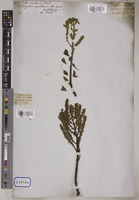
Plectranthus montanus

9 Images see all

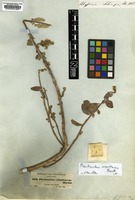
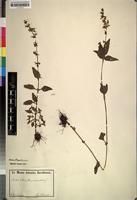
Type of Plectranthus cylindraceus Hochst. ex Benth. [family LAMIACEAE]
Lectotype of Plectranthus montanus Benth. [family LAMIACEAE]
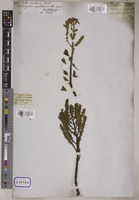
Plectranthus montanus Benth. [family LAMIACEAE]
Plectranthus montanus Benth. [family LABIATAE]
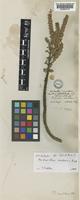
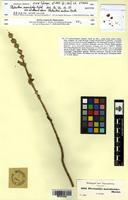
Isotype of Coleus montanus Gürke [family LABIATAE]
Isotype of Plectranthus marrubioides Benth. [family LAMIACEAE]
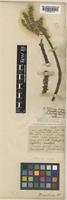
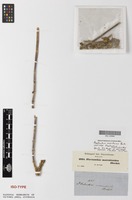
Isotype of Plectranthus marrubioides Hochst. ex Benth. [family LAMIACEAE]
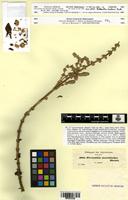
Isotype of Plectranthus marrubioides Benth. [family LAMIACEAE]
Plectranthus montanus Benth. [family LABIATAE]
Previous
Next

Name

Identification
Plectranthus montanus Benth. [family LAMIACEAE ] (stored under name); Origanum montanum unrecorded [family LAMIACEAE ]
Related name
  • Plectranthus montanus
  • Plectranthus marrubioides
  • Origanum montanum

Flora

Entry for PLECTRANTHUS montanus Benth. [family LABIATAE]
Herbarium
Royal Botanic Gardens, Kew (K)
Collection
Flora Somalia
Resource Type
Reference Sources
Entry From
Flora Somalia, (2000) Author: by O. Ryding (Aeollanthus, Basilicum, Clinopodium, Endostemon, Fuerstia, Hoslundia, Lavandula, Leucas, Micromeria, Nepeta, Ocimum, Orthosiphon, Otostegia, Plectranthus, Renschia, Salvia, Scutellaria, Stachys, Teucrium, Tinnea) and M. Thulin (Clerodendrum, Premna, Rotheca, Vitex) [updated by M. Thulin 2008]
Names
PLECTRANTHUS montanus Benth. [family LABIATAE], (1830).
PLECTRANTHUS cylindraceus Hochst. ex Benth. [family LABIATAE], (1848).
Information
Perennial herb or subshrub, 0.3–2 m tall, moderately to densely pubescent with greyish hairs; stems woody or fleshy at the base. Leaves shortly petiolate or subsessile, very fleshy; blade elliptic, obovate, oblanceolate or suborbicular, 18–70 × 8–50 mm, apex obtuse, subacute or rounded, base attenuate or cuneate, margin slightly to prominently crenate. Inflorescences elongate, dense throughout or more often interrupted in the lower part; bracts persistent at anthesis; cymes many-flowered, subsessile or very shortly pedunclate; pedicels 2–5 mm long in the fruiting stage, with short eglandular hairs. Fruiting calyx distinctly upcurved, 2–3 mm long, rather broad, with the sinus between the 2 lower lobes deeper than other sinuses; upper lobe slightly broader and markedly longer than the other 4 lobes, hardly concave; lower lobes deltoid, c. 0.5 mm long, as long as or slightly shorter than the lateral lobes. Corolla 3.5–5.5 mm long, white or pale mauve; tube only very slightly bent, rather strongly broadened towards the throat; lower lip 1–2 mm long, rather shallowly boat-shaped, ± as long as or only slightly longer than the upper lip. Stamens free, becoming markedly longer than the lower lip of the corolla. Nutlets c. 0.6 × 0.5 mm, black or dark brown, glossy, producing mucilage when wet.
Range
N1 widespread in the eastern and southern parts of Africa and also in Yemen, Saudi Arabia and India.
Altitude range
1500–1600 m.
Distribution
SOMALIA Godding 173; Lort Phillips s.n.

Related Materials

  • Terms and Conditions
  • Privacy Policy
  • Cookie Policy
  • Cookie Settings
  • Accessibility
  • Help
  • Contact Us
  • Facebook
  • Twitter
ITHAKA

JSTOR is part of ITHAKA, a not-for-profit organization helping the academic community use digital technologies to preserve the scholarly record and to advance research and teaching in sustainable ways.

©2000-2026 ITHAKA. All Rights Reserved. JSTOR®, the JSTOR logo, JPASS®, Aluka®, and ITHAKA® are registered trademarks of ITHAKA.

╳