JSTOR Global Plants Home
  • Home
  • Browse
  • About
  • Access
  • Account
    • Saved Items
    • Profile
  • Log in

Global Plants

Skip to Main Content
  • JSTOR Global Plants Home
  • Global Plants

    • Browse
    • About
    • Access
    • Account
      • Saved Items
      • Profile
Log in
  • Browse
  • About
  • Access
  • Account
    • Saved Items
    • Profile
Advanced Search

Compilation
Piriqueta capensis

6 Images see all

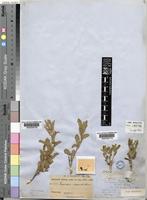
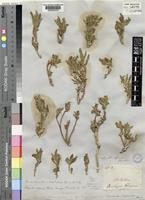
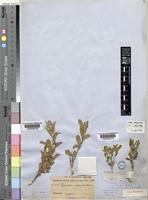
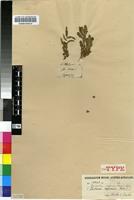
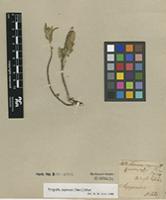
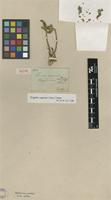
Piriqueta capensis (Harv.) Urb. [family TURNERACEAE]
Type of Piriqueta capensis (Harv.) Urb. [family TURNERACEAE]
Isotype of Piriqueta capensis (Harv.) Urb. [family TURNERACEAE]
Isotype of Turnera capensis Harv. [family TURNERACEAE]
Previous
Next

Name

Identification
Turnera unrecorded unrecorded [family TURNERACEAE ] Piriqueta capensis (Harv.) Urb. [family TURNERACEAE ] (stored under name);
Related name
  • Turnera unrecorded
  • Turnera capensis
  • Piriqueta capensis

Flora

Entry for Piriqueta capensis [family TURNERACEAE]
Herbarium
South African National Biodiversity Institute, Compton Herbarium, Cape Town (SAM)
Collection
Flora of Southern Africa
Resource Type
Reference Sources
Entry From
Flora of South Africa, (2003) Author: Dr J.P. Roux
Names
Piriqueta capensis [family TURNERACEAE]
Common names
Turnera capensis Harv. in F.C. 2: 599 (1862); Thes. Cap. 2: 25, 1.140 (1862).
Information
Small woody, sericeous, aromatic shrub-lets (chamaephytes) 15-30 cm high, with a long thick woody taproot and gnarled basal stems covered with thick corky bark, producing an­nual shoots. Leaves subsessile, stipules reduced to 1-2 pairs of minute, subulate glands, lamina narrowly ovate, 2-5 cm long, 7-14 mm broad, apex acute to obtuse, base cuneate, margin serrate, with 1-2 pairs of sessile circular glands irregularly placed on lower surface near margin, densely pubescent with coarse simple hairs. Flowers axillary, solitary, opening in the morn­ing, fading at night, on short to long pedicels which become pendulous in fruit, with a pair of minute bracts. Sepals fused in lower third forming a cup, free above, narrowly ovate-acuminate, apiculate, c. 12 mm long, 3 mm broad, thin, dorsally somewhat hairy, 3-nerved, deciduous. Petals about as long as sepals, yellow, narrowly obovate, clawed, fused to the sepaloid cup below, alternating with the sepals and together producing a small erect, annular fringe at the mouth of the cup, deciduous. Stamens 5, free, hypogynous, filaments sub­ulate, glabrous, long or short, anthers versatile, introrse. Ovary
Use
Piriqueta capensis (Harv.) Urb. in Jahrb. K. Bot. Gart. Mus. Berl. 2: 78 (1883); Gilg in Nat. Pflanzenfam. ed. 2, 21: 464 (1925); Fer-nandes in Bol. Soc. Brot. Ser. 2, 35: 160, t.7 (1961); in Mem. Junta Invest. Ultram. ser. 2, 34: 22 (1962). Type: Transvaal, Apies River, Burke & Zeyher (TCD, holo.! K, SAM!, PRE, photo.).
Range
Recorded from the Transvaal, Swaziland, northern Natal, Mozambique and Rhodesia, usually on stony hill­sides in dry bushveld. Fig. 33.

Related Materials

  • Terms and Conditions
  • Privacy Policy
  • Cookie Policy
  • Cookie Settings
  • Accessibility
  • Help
  • Contact Us
  • Facebook
  • Twitter
ITHAKA

JSTOR is part of ITHAKA, a not-for-profit organization helping the academic community use digital technologies to preserve the scholarly record and to advance research and teaching in sustainable ways.

©2000-2026 ITHAKA. All Rights Reserved. JSTOR®, the JSTOR logo, JPASS®, Aluka®, and ITHAKA® are registered trademarks of ITHAKA.

╳