JSTOR Global Plants Home
  • Home
  • Browse
  • About
  • Access
  • Account
    • Saved Items
    • Profile
  • Log in

Global Plants

Skip to Main Content
  • JSTOR Global Plants Home
  • Global Plants

    • Browse
    • About
    • Access
    • Account
      • Saved Items
      • Profile
Log in
  • Browse
  • About
  • Access
  • Account
    • Saved Items
    • Profile
Advanced Search

Compilation
Pinus balsamea

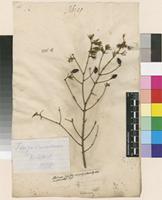
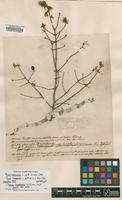
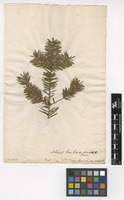
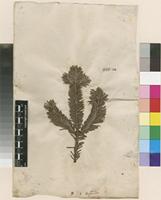
4 Images see all

Filed as Pinus balsamea L. [family PINACEAE]
Lectotype of Pinus canadensis L. [family PINACEAE]
Lectotype of Pinus balsamea L. [family PINACEAE]
Previous
Next

Name

Identification
Pinus canadensis L. [family PINACEAE ] (stored under name); Verified by James L. Reveal, Pinus balsamea L. [family PINACEAE ] Verified by James L. Reveal, Tsuga canadensis (L.) Carrière [family PINACEAE ]
Related name
  • Tsuga canadensis
  • Pinus canadensis
  • Pinus balsamea
  • Abies balsamea
Common name
  • sapin baumler, Flora of North America Vol. 2
  • Balsam fir, Flora of North America Vol. 2

Flora

Entry for Abies balsamea (Linnaeus) Miller [family PINACEAE]
Herbarium
Flora of North America (FNA)
Collection
Flora of North America
Resource Type
Reference Sources
Entry From
Flora of North America, Vol 2,
Names
Abies balsamea (Linnaeus) Miller [family PINACEAE], Gard. Dict., ed. 8, Abies no. 3. 1768
Pinus balsamea Linnaeus [family PINACEAE], Sp. Pl., 2: 1002. 1753
Treatment Author(s)
Richard S. Hunt
Information
Trees to 23m; trunk to 0.6m diam.; crown spirelike. Bark gray, thin, smooth, in age often becoming broken into irregular brownish scales. Branches diverging from trunk at right angles, the lower often spreading and drooping; twigs mostly opposite, greenish brown, pubescence sparse. Buds hidden by leaves or exposed, brown, conic, small, resinous, apex acute; basal scales short, broad, nearly equilaterally triangular, glabrous, resinous, margins entire, apex sharp-pointed. Leaves 1.2--2.5cm ´ 1.5--2mm, 1-ranked (particularly on lower branches) to spiraled, flexible; cross section flat, grooved adaxially; odor pinelike (copious ß-pinene); abaxial surface with (4--)6--7(--8) stomatal rows on each side of midrib; adaxial surface dark green, slightly or not glaucous, with 0--3 stomatal rows at midleaf, these more numerous toward leaf apex; apex slightly notched to rounded; resin canals large, ± median, away from margins, midway between abaxial and adaxial epidermal layers. Pollen cones at pollination red, purplish, bluish, greenish, or orange. Seed cones cylindric, 4--7 ´ 1.5--3cm, gray-purple, turning brown before scale shed, sessile, apex round to obtuse; scales ca. 1--l.5 ´ 0.7--1.7cm (relationship reversed in more western collections), pubescent; bracts included or exserted and reflexed over scales. Seeds 3--6 ´ 2--3mm, body brown; wing about twice as long as body, brown-purple; cotyledons ca. 4. 2 n =24.
Altitude range
0--1700m
Distribution
St. Pierre and MiquelonUSA Conn.USA IowaUSA MaineUSA Mass.USA Mich.USA Minn.USA N.H.USA N.Y.USA Pa.USA Vt.USA Va.USA W.Va.USA Wis.Canada Alta.Canada Man.Canada N.B.Canada Nfld.Canada N.S.Canada Ont.Canada P.E.I.Canada Que.Canada Sask.
Discussion
Balsam fir is frequently segregated into two varieties (e.g., H.J. Scoggan 1978--1979) based on whether the bracts are included (var. balsamea ) or exserted (var. phanerolepis Fernald), the latter considered by Liu T. S. (1971) to be a hybrid between Abies balsamea and A . fraseri . D.T. Lester (1968) demonstrated, however, that bract length may vary within a cone, annually, and from tree to tree. Nevertheless, a tendency exists for the exserted variety to be found most commonly from Newfoundland south through New England (R.C. Hosie 1969; B.F. Jacobs et al. 1984); it is not found west of Ontario. Western populations lack 3-carene and have other minor chemical differences separating them from eastern balsam fir (E.Zavarin and K.Snajberk 1972; R.S. Hunt and E.von Rudloff 1974). Morphologic variation in balsam fir has been studied mainly east of Ontario; the populations to the west have been ignored for the most part, although they may yield stronger evidence for species subdivision.
In Alberta, populations intermediate between western Abies balsamea and A . bifolia (E.H. Moss 1953; R.S. Hunt and E.von Rudloff 1974, 1979) may be classified as A . balsamea ´ bifolia . In West Virginia and Virginia, populations of balsam fir tend to be more similar to A . fraseri than are more northern populations (B.F. Jacobs et al. 1984).
Balsam fir ( Abies balsamea ) is the provincial tree of New Brunswick.

Related Materials

  • Terms and Conditions
  • Privacy Policy
  • Cookie Policy
  • Cookie Settings
  • Accessibility
  • Help
  • Contact Us
  • Facebook
  • Twitter
ITHAKA

JSTOR is part of ITHAKA, a not-for-profit organization helping the academic community use digital technologies to preserve the scholarly record and to advance research and teaching in sustainable ways.

©2000-2026 ITHAKA. All Rights Reserved. JSTOR®, the JSTOR logo, JPASS®, Aluka®, and ITHAKA® are registered trademarks of ITHAKA.

╳