JSTOR Global Plants Home
  • Home
  • Browse
  • About
  • Access
  • Account
    • Saved Items
    • Profile
  • Log in

Global Plants

Skip to Main Content
  • JSTOR Global Plants Home
  • Global Plants

    • Browse
    • About
    • Access
    • Account
      • Saved Items
      • Profile
Log in
  • Browse
  • About
  • Access
  • Account
    • Saved Items
    • Profile
Advanced Search

Compilation
Pilosella flagellaris

1 Images see all

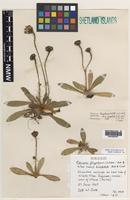
Isotype of Pilosella flagellaris subsp. bicapitata P.D.Sell & West [family BRASSICACEAE]
Previous
Next

Name

Identification
Isotype of Pilosella flagellaris Not on sheet [family BRASSICACEAE ] (stored under name); Verified by Sell, P.D.,
Related name
  • Pilosella flagellaris

Flora

Entry for Hieracium flagellare Willdenow [family COMPOSITAE]
Herbarium
Flora of North America (FNA)
Collection
Flora of North America
Resource Type
Reference Sources
Entry From
Flora of North America, Vol 19,
Names
Hieracium flagellare Willdenow [family COMPOSITAE], Enum. Pl., suppl.:, 54. 1814
Hieracium flagellare var. amauracron (Missback & Zahn) Lepage [family COMPOSITAE]
Hieracium flagellare var. cernuiforme (Naegeli & Peter) Lepage [family COMPOSITAE]
Hieracium flagellare var. pilosius Lepage [family COMPOSITAE]
Pilosella flagellaris (Willdenow) P. D. Sell & C. West [family COMPOSITAE]
Treatment Author(s)
John L. Strother
Information
Plants 5–12(–20+) cm. Stems proximally piloso-hirsute (hairs 2–4+ mm) and stellate-pubescent, distally piloso-hirsute (hairs 1–4 mm), stellate-pubescent, and stipitate-glandular. Leaves: basal 8–12+, cauline 0(–2+); blades spatulate to oblanceolate, 20–45(–130+) × 8–20(–25+) mm, lengths 2–3+ times widths, bases cuneate, margins entire, apices rounded to acute, abaxial faces piloso-hirsute (hairs 1–4+ mm) and stellate-pubescent, adaxial piloso-hirsute (hairs 1–4+ mm). Heads 2–4+ in ± umbelliform to corymbiform arrays. Peduncles piloso-hirsute, stellate-pubescent, and stipitate-glandular. Calyculi: bractlets 13–15+. Involucres hemispheric, (9–)12–13 mm. Phyllaries 30–40, apices acuminate, abaxial faces stellate-pubescent, sometimes, piloso-hirsute and stipitate-glandular as well. Florets 90–120+; corollas yellow (often each with abaxial red stripe), 6–10+ mm. Cypselae columnar, 1–2.5 mm; pappi of 25–40+, white bristles in 1 series, 4–5+ mm.
Phenology
may (spring)
Altitude range
10–300(–600+) m;
Distribution
Europe.USA Conn.USA Ind.USA MaineUSA Mass.USA Mich.USA N.H.USA N.Y.USA OhioUSA Pa.USA Vt.USA Va.Canada B.C.Canada N.B.Canada N.S.Canada P.E.I.Canada Que.
Discussion
The type of Hieracium flagellare may have resulted from a cross between plants of H. caespitosum and H. pilosella (A. Cronquist 1980).
Native/Introduced
introduced;

Related Materials

  • Terms and Conditions
  • Privacy Policy
  • Cookie Policy
  • Cookie Settings
  • Accessibility
  • Help
  • Contact Us
  • Facebook
  • Twitter
ITHAKA

JSTOR is part of ITHAKA, a not-for-profit organization helping the academic community use digital technologies to preserve the scholarly record and to advance research and teaching in sustainable ways.

©2000-2026 ITHAKA. All Rights Reserved. JSTOR®, the JSTOR logo, JPASS®, Aluka®, and ITHAKA® are registered trademarks of ITHAKA.

╳