JSTOR Global Plants Home
  • Home
  • Browse
  • About
  • Access
  • Account
    • Saved Items
    • Profile
  • Log in

Global Plants

Skip to Main Content
  • JSTOR Global Plants Home
  • Global Plants

    • Browse
    • About
    • Access
    • Account
      • Saved Items
      • Profile
Log in
  • Browse
  • About
  • Access
  • Account
    • Saved Items
    • Profile
Advanced Search

Compilation
Piaranthus geminatus

12 Images see all

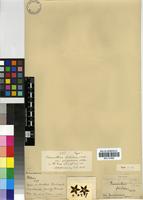
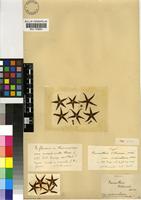
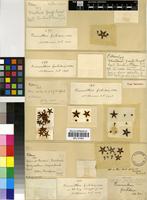
Holotype of Piaranthus foetidus N.E.Br. var. purpureus N.E.Br. [family APOCYNACEAE]
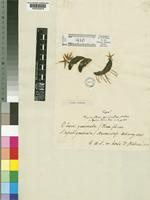
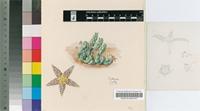
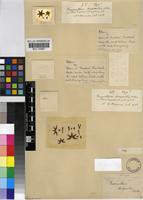
Type of Piaranthus geminatus (Masson) N.E.Br. [family ASCLEPIADACEAE]
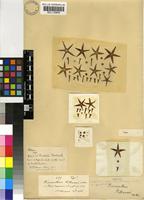
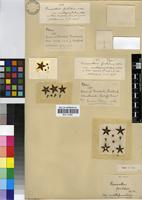
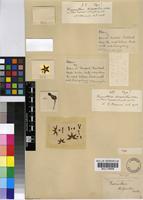
Isotype of Piaranthus pillansii N.E.Br. var. inconstans N.E.Br. [family APOCYNACEAE]
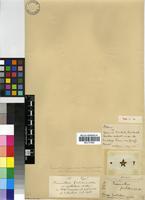
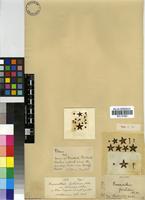
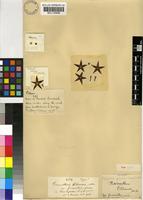
Holotype of Piaranthus geminatus (Masson) N.E.Br. var. foetidus (N.E.Br.) Meve [family APOCYNACEAE]
Piaranthus geminatus (Masson) N.E.Br. var. geminatus
Holotype of Piaranthus pillansii N.E.Br. var. inconstans N.E.Br. [family APOCYNACEAE]
Holotype of Piaranthus geminatus (Masson) N.E.Br. var. foetidus (N.E.Br.) Meve [family APOCYNACEAE]
Isotype of Piaranthus foetidus N.E.Br. var. diversus N.E.Br. [family APOCYNACEAE]
Isotype of Piaranthus foetidus N.E.Br. [family APOCYNACEAE]
Type of Piaranthus disparilis N.E.Br. [family APOCYNACEAE]
Holotype of Piaranthus pillansii N.E.Br. var. fruscatus N.E.Br. [family APOCYNACEAE]
Previous
Next

Name

Identification
Piaranthus geminatus (Masson) N.E.Br. [family APOCYNACEAE ]
Related name
  • Piaranthus geminatus

Flora

Entry for PIARANTHUS geminatus N. E. Br. [family ASCLEPIADACEAE]
Herbarium
Royal Botanic Gardens, Kew (K)
Collection
Flora Capensis
Resource Type
Reference Sources
Entry From
Flora Capensis, Vol 4, page 518, (1909) Author: By N. E. BROWN.
Names
PIARANTHUS geminatus N. E. Br. [family ASCLEPIADACEAE], in Journ. Linn. Soc. xvii. 163;—N. E. Br. in Gard. Chron. 1879, xii. 9; K. Schum. in Engl. und Prantl, Pflanzenfam. iv. ii. 277.
Stapelia geminata Masson [family ASCLEPIADACEAE], Stap. 18, t. 25; Willd. Sp. Pl. i. 1290, and Enum. Pl. Hort. Berol. 282; Pers. Syn. Pl. i. 280; Poir. Encycl. vii. 386; R. Br. in Mem. Wern. Soc. i. 25; Jacq. Stap. t. 16; Bot. Mag. t. 1326; Lodd. Bot. Cab. t. 300; Ait. Hort. Kew. ed. 2, ii. 92; Schultes, Syst. Veg. vi. 42; Link, Enum. Pl. Hort. Berol. i. 257; Spreng. Syst. Veg. i. 840; Dietr. Syn. Pl. ii. 886; Decne in DC. Prodr. viii. 661.
Obesia geminata Haw. [family ASCLEPIADACEAE], Syn. Pl. Succ. 42; Sweet, Hort. Brit. ed. 1, 278; G. Don, Gen. Syst. iv. 121.
Podanthes geminata Nicholson [family ASCLEPIADACEAE], Dict. Gard. iii. 172.
Caralluma geminata Schlechter [family ASCLEPIADACEAE], in Journ. Bot. 1898, 478.
Information
stems procumbent or decumbent, 1–1 3/4 in. long, 1/2– 3/4 in. thick, very obtusely or obscurely 4-angled with about 4 minute teeth 1/2 lin. long along each angle, glabrous, light green; flowers in pairs or solitary (rarely 3 or 4 together) at the tips of the stems; pedicels 1/4– 1/2 in. long, glabrous; sepals 1 1/2–2 lin. long, ovate or ovate-lanceolate, acuminate, glabrous; corolla 1–1 1/4 in. in diam., rotate, without a tube; lobes widely spreading, 5–7 lin. long, about 2 lin. broad at the base, lanceolate or gradually tapering to the acute apex, with revolute margins, glabrous on the back, velvety-puberulous all over the inner face, not ciliate, yellow, dotted with blood-red; corona-lobes about 1 lin. long, linear-lanceolate or narrowly-oblong, acute or slightly toothed at the apex, closely incumbent upon the backs of the anthers and shortly exceeding them but not connivent-erect, dorsally produced at the base into a spreading crest entire or minutely subdenticulate at the dorsal margin, flat or nearly so and not tuberculate on the top, the entire corona appearing (viewed from above) like a star with 5 short rounded lobes connected at the base, yellow. null
Distribution
SOUTH AFRICA without locality, Masson, cultivated specimens in Herb. Kew.! and Herb. Haworth!
Notes
Described from a specimen cultivated in 1813, probably introduced by Masson.

Related Materials

  • Terms and Conditions
  • Privacy Policy
  • Cookie Policy
  • Cookie Settings
  • Accessibility
  • Help
  • Contact Us
  • Facebook
  • Twitter
ITHAKA

JSTOR is part of ITHAKA, a not-for-profit organization helping the academic community use digital technologies to preserve the scholarly record and to advance research and teaching in sustainable ways.

©2000-2026 ITHAKA. All Rights Reserved. JSTOR®, the JSTOR logo, JPASS®, Aluka®, and ITHAKA® are registered trademarks of ITHAKA.

╳