JSTOR Global Plants Home
  • Home
  • Browse
  • About
  • Access
  • Account
    • Saved Items
    • Profile
  • Log in

Global Plants

Skip to Main Content
  • JSTOR Global Plants Home
  • Global Plants

    • Browse
    • About
    • Access
    • Account
      • Saved Items
      • Profile
Log in
  • Browse
  • About
  • Access
  • Account
    • Saved Items
    • Profile
Advanced Search

Compilation
Physedra bequaertii

5 Images see all

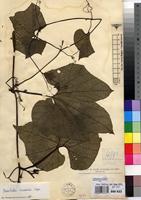
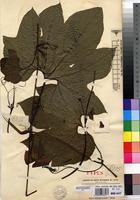
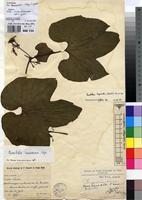
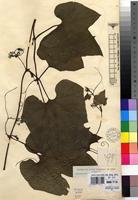
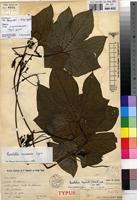
Type of Physedra bequaertii De Wild. [family CUCURBITACEAE]
Previous
Next

Name

Identification
Physedra bequaertii De Wild. [family CUCURBITACEAE ] Verified by Not on sheet, Bambekea racemosa Cogn. [family CUCURBITACEAE ] (stored under name); Verified by Keraudren-Aymonin M., 1971
Related name
  • Bambekea racemosa
  • Physedra bequaertii

Flora

Entry for BAMBEKEA bequaertii (De Wild.) C. Jeffrey [family CUCURBITACEAE]
Herbarium
Royal Botanic Gardens, Kew (K)
Collection
Flora of Tropical East Africa
Resource Type
Reference Sources
Entry From
Flora of Tropical East Africa, page 1, (1967) Author: C. Jeffrey
Names
BAMBEKEA bequaertii (De Wild.) C. Jeffrey [family CUCURBITACEAE], in K.B. 15: 346 (1962). Types: Congo Republic, Kivu, Rutshuru, Bequaert 4791 & 6315 (both BR, syn.!)
Physedra bequaertii De Wild. [family CUCURBITACEAE], Pl. Bequaert. 1: 569 (1922); F.P.N.A. 2: 399 (1947), pro parte, excl. spec. cit. Bequaert 3646 & Lebrun 4825
Information
Climber to 3 m.; stems herbaceous, glabrous. Leaf-blade broadly ovate-cordate in outline, glabrous or shortly and obscurely pubescent or more often minutely punctate, acuminate and apiculate, entire or shallowly sinuate with distinct apiculate teeth, 77–143 mm. long, 86–170 mm. broad, unlobed or palmately 3(–5)-lobed to about the middle or less; lobes triangular, triangular-ovate or elliptic, broadest at or somewhat narrowed towards the base. Male flowers 5–10, racemose on a 16–25 mm. long peduncle with 2–8 mm. long pedicels, with a coaxillary flower on a ± 15 mm. long pedicel; receptacle-tube broad, shallow, 2 mm. long; lobes strap-shaped, 4 mm. long; petals ± 6 mm. long and 4.5 mm. broad, free, yellowish or whitish. Female flowers 2–5, racemose on a 9–10 mm. long peduncle with 1.5–9 mm. long pedicels; bracts minute; ovary cylindrical, ± 9 mm. long and 6 mm. across, glabrous, truncate above; receptacle-tube very broadly and shallowly cylindrical, 1.5 mm. long; lobes lanceolate, acute, ± 7 mm. long; petals obovate-lingulate, ± 12 mm. long, 5 mm. broad, subacute. Fruits and seeds unknown.
Range
DISTR. U4
Altitude range
850–1220 m.
Distribution
UGANDA Mengo District Sezibwa Falls, Dec. 1915, Dummer 2653!
Distribution (external)
; Congo Republic
Notes
This species may eventually prove to be no more than a variant of B. racemosa Cogn. (known from Nigeria, the Cameroun and Congo Republics) from which it differs in its longer receptacle-lobes, shorter fewer-flowered ♂ racemes, and rather longer pedicels; these distinctions seem clear-cut on the specimens so far examined, but further Congo material may show them to break down.

Related Materials

  • Terms and Conditions
  • Privacy Policy
  • Cookie Policy
  • Cookie Settings
  • Accessibility
  • Help
  • Contact Us
  • Facebook
  • Twitter
ITHAKA

JSTOR is part of ITHAKA, a not-for-profit organization helping the academic community use digital technologies to preserve the scholarly record and to advance research and teaching in sustainable ways.

©2000-2026 ITHAKA. All Rights Reserved. JSTOR®, the JSTOR logo, JPASS®, Aluka®, and ITHAKA® are registered trademarks of ITHAKA.

╳