JSTOR Global Plants Home
  • Home
  • Browse
  • About
  • Access
  • Account
    • Saved Items
    • Profile
  • Log in

Global Plants

Skip to Main Content
  • JSTOR Global Plants Home
  • Global Plants

    • Browse
    • About
    • Access
    • Account
      • Saved Items
      • Profile
Log in
  • Browse
  • About
  • Access
  • Account
    • Saved Items
    • Profile
Advanced Search

Compilation
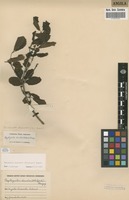
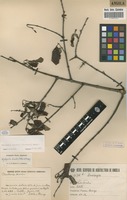
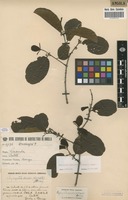
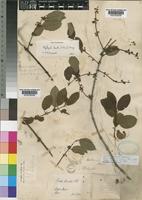
Phyllogeiton discolor

8 Images see all

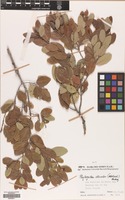
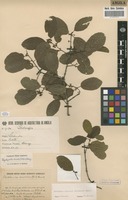
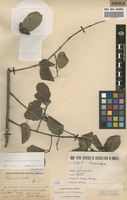
Filed as Berchemia discolor Hemsl. [family RHAMNACEAE]
Filed as Berchemia discolor (Klotzsch) Hemsl. [family RHAMNACEAE]
Berchemia discolor (Klotzsch) Hemsl. [family RHAMNACEAE]
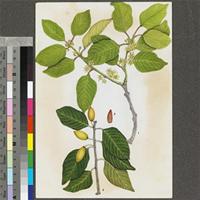
Phyllogeiton discolor (Klotzsch) Herzog original illustration from the 'Trees of Central Africa'
Filed as Berchemia discolor Hemsl. [family RHAMNACEAE]
Previous
Next

Name

Identification
Phyllogeiton discolor (Klotzsch) Herzog [family RHAMNACEAE ]
Related name
  • Phyllogeiton discolor

Flora

Entry for BERCHEMIA discolor (Klotzsch) Hemsl. [family RHAMNACEAE]
Herbarium
Royal Botanic Gardens, Kew (K)
Collection
Flora of Tropical East Africa
Resource Type
Reference Sources
Entry From
Flora of Tropical East Africa, page 1, (1972) Author: MARSHALL C. JOHNSTON (University of Texas Herbarium)
Names
BERCHEMIA discolor (Klotzsch) Hemsl. [family RHAMNACEAE], in F.T.A. 1: 381 (1868); Sim, For. Fl. Port. E. Afr.: 35 (1909); Bak. f. in J.L.S. 40: 45 (1911); Eyles in Trans. Roy. Soc. S. Afr. 5: 407 (1916); Burtt Davy, Fl. Pl. & Ferns Transv. 2: 470 (1932); T.T.C.L.: 466 (1949); Codd, Trees and Shrubs Kruger Nat. Park: 111 (1951); O. B. Mill. in Journ. S. Afr. Bot. 18: 50 (1952); I.T.U.. ed. 2: 323 (1952); F.F.N.R.: 227 (1962); R.B. Drummond in F.Z. 2: 425, t, 88/A (1966). Type: Mozambique, Manica e Sofala, Sena, Peters (B, holo.†, K, P, iso. !)
Scutia discolor Klotzsch [family RHAMNACEAE], in Peters, Reise Mossamb. Bot. 1: 110, t. 21 (1861)
Phyllogeiton discolor (Klotzsch) Herzog [family RHAMNACEAE], in Bot. Centralbl. Beih. 15: 169 (1903); Suesseng. in E. & P. Pf., ed. 2, 20d: 140 (1953); Exell & Mendonça, C.F.A. 2: 30 (1954): Coates Palgrave, Trees Centr. Afr.: 367 (1956); Verdc. in B.J.B.B. 27: 356 (1957): K.T.S.: 390 (1961)
Adolia discolor (Klotzsch) Kuntze [family RHAMNACEAE], Rev. Gen. 1: 117 (1891)
Araliorhamnus punctulata H. Perr. [family RHAMNACEAE], in Not. Syst. Paris 11: 15 (1943). Type: W. Madagascar, between Soalala and Lake Kinkony (Ambongo), Perrier 6035 (P, holo. !)
Araliorhamnus vaginata H. Perr. [family RHAMNACEAE], in Not. Syst. Paris 11: 16 (1943). Type: W. Madagascar, Maronfandilia Forest near Morondava, Perrier 6010 (P, nolo. !)
Information
Shrubs or trees usually no more than 10 m. tall but reported occasionally to 25 m. and with trunks 5–7 dm. thick; wood very hard and heavy; bark deeply checked and tending to shed in sheets. Younger branches conspicuously lenticellate; branchlets 2–20 cm. long, leafy, glabrous to densely pubescent with short spreading whitish hairs. Leaves opposite or nearly so; earliest (lowest) blades of emerging branchlets smallish, elliptic-obovate and blunt, later ones larger, elliptic to ovate-oblong, acute (2–)3–5(–9) cm. long, (l.5–)2–3.5(–6) cm. wide, at the base cuneate or usually rounded, at the apex blunt to acute, green above and glabrous or minutely pubescent near the midrib, beneath slightly paler and microvesiculate and glabrous to densely pubescent with short whitish hairs, on each side of midrib with 6–8 (–9) secondary nerves; petioles (4–)8–10(–13) mm. long, glabrous to pubes-cent. Stipules intra-axillary, 2–4 mm. long, subulate, united about half the length, all but the basal 0.5–1 mm. quickly deciduous. Flowers solitary or usually in fascicles of 2–6 in the axils; pedicels 3–5(–7) mm. long in flower, 4–7(–10) mm. in fruit. Sepals 2–3 mm. long, spreading to reflexed at anthe-sis. Petals 1.8–2.2 mm. long, spreading or weakly arcuate-ascending. Style 1 mm. long, bifid a fourth to a third the length. Disk free from the ovary though thick near its base. Fruit 12–20 mm. long, 7–11 mm. thick, yellow. Fig. 10.
Range
DISTR. U1; K1–4. 6, 7; T1–6, 8 Yemen, Ethiopia and Somali Republic south to Angola, South West Africa and South Africa, also Madagascar Hab. Widespread in thicket, semi-desert grassland and wooded grassland (less abundant but reaching its largest size in stream-valleys or riverine forests); 0–2000 m.
Distribution
KENYA Northern Frontier Province Dandu, 17 Mar. 1952. Gillett 12566!KENYA Baringo District 17 km. on Marigat-Kabarnet road, 30 Oct. 1964, Leippert 5253!;KENYA Teita District Voi, .Mar. 1937, Dale in F.D. 3676 !TANGANYIKA N. Tabora, 24 Jan. 1938, Lindeman 559!TANGANYIKA Mpwapwa, 15 Dec. 1935, Hornby 736 !: Morogoro H., 7 Jan. 1951, Wigg 936 !UGANDA Karamoja District Akoret, June 1955, Philip 725 !
Notes
VARIATION. The variability in pubescence is remarkable but I can discern no other correlated characters and thus do not propose a formal designation for the pubescent plants. A few scattered plants (e.g. Swynnerton H.59/36 and Lindemann 795) show the acute leaves characteristic of many (but not all) of the Madagascan populations, but again there seems to be no correlation with other variables and no formal recognition is deemed necessary.

Related Materials

  • Terms and Conditions
  • Privacy Policy
  • Cookie Policy
  • Cookie Settings
  • Accessibility
  • Help
  • Contact Us
  • Facebook
  • Twitter
ITHAKA

JSTOR is part of ITHAKA, a not-for-profit organization helping the academic community use digital technologies to preserve the scholarly record and to advance research and teaching in sustainable ways.

©2000-2026 ITHAKA. All Rights Reserved. JSTOR®, the JSTOR logo, JPASS®, Aluka®, and ITHAKA® are registered trademarks of ITHAKA.

╳