JSTOR Global Plants Home
  • Home
  • Browse
  • About
  • Access
  • Account
    • Saved Items
    • Profile
  • Log in

Global Plants

Skip to Main Content
  • JSTOR Global Plants Home
  • Global Plants

    • Browse
    • About
    • Access
    • Account
      • Saved Items
      • Profile
Log in
  • Browse
  • About
  • Access
  • Account
    • Saved Items
    • Profile
Advanced Search

Compilation
Phyllanthus wightianus

10 Images see all

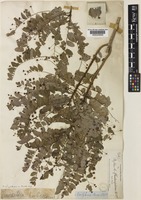
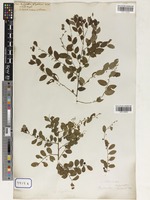
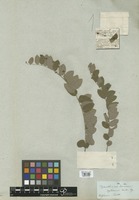
Phyllanthus wightianus Wall. [family EUPHORBIACEAE]
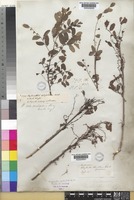
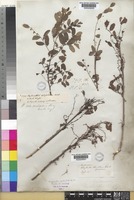
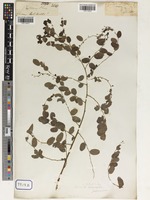
Phyllanthus reticulatus Poir. [family PHYLLANTHACEAE]
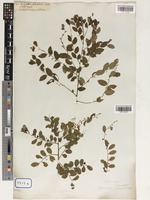
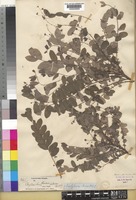
Type of Reidia floribunda Wight [family PHYLLANTHACEAE]
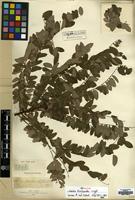
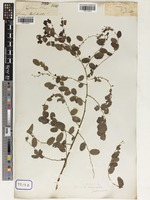
Filed as Phyllanthus wightianus Müll. Arg. [family EUPHORBIACEAE]
Phyllanthus wightianus Wall. [family EUPHORBIACEAE]
Type of Reidia floribunda Wight [family PHYLLANTHACEAE]
Phyllanthus reticulatus Poir. [family PHYLLANTHACEAE]
Phyllanthus wightianus Wall. [family EUPHORBIACEAE]
Isosyntype of Reidia floribunda Wight [family PHYLLANTHACEAE]
Previous
Next

Name

Identification
Reidia floribunda Wight [family PHYLLANTHACEAE ] Verified by Not on sheet, Phyllanthus wightianus (Wight) Mull. Arg. [family PHYLLANTHACEAE ] (stored under name); Verified by Not on sheet,
Related name
  • Phyllanthus wightianus
  • Reidia floribunda

Flora

Entry for Phyllanthus pinnatus Wight G.L. Webster [family EUPHORBIACEAE]
Herbarium
Royal Botanic Gardens, Kew (K)
Collection
Flora Zambesiaca
Resource Type
Reference Sources
Entry From
FZ, Vol 9, Part 4, (1996) Author: A. Radcliffe-Smith
Names
Chorisandra pinnata Wight [family EUPHORBIACEAE], Icon. Pl. Ind. Orient. 6: 13, t. 1994 (1853).
Phyllanthus wightianus Müll. Arg. [family EUPHORBIACEAE], in Linnaea 32: 6, nec 47 (1863); in De Candolle, Prodr. 15, 2: 334, nec 425 (1866). Type from India.
Phyllanthus pinnatus Wight G.L. Webster [family EUPHORBIACEAE], in J. Arnold Arbor. 38: 52 (1957). —Radcliffe-Smith in F.T.E.A., Euphorb. 1: 23 (1987). —Beentje, Kenya Trees, Shrubs Lianas: 218 (1994). Type from India.
Phyllanthus kirkianus Müll. Arg. [family EUPHORBIACEAE], in Flora 47: 486 (1864); in De Candolle, Prodr. 15, 2: 334 (1866). —Engler, Pflanzenw. Ost-Afrikas C: 236 (1895). —Hutchinson in F.T.A. 6, 1: 698 (1912). —Engler, Pflanzenw. Afrikas (Veg. Erde 9) 3, 2: 22 (1921). —Hutchinson, Botanist in Southern Africa: 667 (1946). —Drummond in Kirkia 10: 251 (1975). —K. Coates Palgrave, Trees Southern Africa, ed. 2, rev.: 400 (1983). Type: Mozambique, Tete, male fl. & y. fr. xii.1858, Kirk, Phyllanthus? (4) (K, holotype).
Phyllanthus senensis Müll. Arg. [family EUPHORBIACEAE], in De Candolle, Prodr. 15, 2: 335 (1866). Type: Mozambique, Manica e Sofala Province, Vila de Sena, Peters s.n. (B†, holotype).
Cluytiandra schinzii Pax [family EUPHORBIACEAE], in Bull. Herb. Boissier, Sér. 2, 8: 635 (1908). Type: Mozambique, Tete Province, Boroma (Boruma), y. fr. x.1890, Menyharth 779 (Z, holotype; K).
Chorizonema pinnata Wight Jean F. Brunel [family EUPHORBIACEAE], Phyllanthus Afr. Intertrop. Mad.: 256 (1987).
Information
An often spindly, unbranched, sometimes decumbent, glabrous shrub or small tree to 4.5 m high; plants dioecious.Bark smooth, mottled, light grey, flaking.Twigs often pinkish-grey.Young lead shoots robust, angular.Lateral leafy shoots up to 12 cm long, sometimes with flowers at the base.Short shoots either giving rise to secondary leafy shoots and lead shoots (in female plants) or else directly floriferous (in male plants).Scale leaves and their stipules 1.5–2 × 0.5–1 mm, narrowly lanceolate, light brown with fimbriate hyaline margins.Foliage leaves distichous; petioles 1.5 mm long; blades up to 4.5 × 3 cm, elliptic, obovate or ± suborbicular, obtuse to rounded at the apex, cuneate to rounded at the base, chartaceous, midrib commonly not running to the apex, bluish-green to yellowish-green above, paler beneath; lateral nerves in 5–7 pairs, not prominent above, scarcely so beneath.Stipules 0.5 mm long, linear-lanceolate, soon falling.Male flowers fragrant, usually in dense fascicles on older leafless twigs; bracts 1 mm long, broadly ovate, erose, chestnut-brown; pedicels 3–4(7) mm long, slender; sepals 6, c. 1 × 0.5–1 mm, obovate-suborbicular, the outer convex, the inner ± flat, fimbriate, brown at the apex, otherwise yellowish; disk 1 mm in diameter, annular, ± entire, thin, flat; stamens (5)6, 2 mm long, filaments free or ± so, anthers 0.3 mm long.Female flowers either in few-flowered fascicles on the older twigs or else solitary in the lowest axils of the leafy shoots; bracts ± as in the male; pedicels 0.5–1 cm long, extending to 2–4 cm long in fruit, slender; outer sepals smaller than inner, otherwise sepals ± as in the male; disk 1.5 mm in diameter, collar-like, shallowly hexagonal; ovary 1.5 mm in diameter, ± sessile, subglobose, smooth; styles 3, 2 mm long, united at the base, ± erect at first, later spreading, slender, bifid, the stigmas filiform, minutely papillose.Fruit 4–5 × 8–10 mm, pendent, rounded, depressed-trigonous, shallowly reticulate-venose, crustaceous, pale green ripening to yellowish.Seeds 2.5–3 × 2–2.5 mm, ovoid, faintly lineate, pale brown to whitish, with a deep, dark, hilar excavation.
Habitat
At low altitudes in sandveld and hot dry deciduous and mopane woodlands, along banks of seasonal streams and rivers sometimes with Androstachys johnsonii, sometimes among rocks
Altitude range
100–625 m.
625
100
Distribution
Mozambique MS Sofala Prov. (Beira Distr.), Gorongosa Nat. Park, male fl. v.1972, Tinley 2611 (K; LISC; SRGH).Malawi S Mulanje Distr., Chingozi Hill, Mpinda Village, fr. 6.xi.1983, Patel & Seyani 1343 (MAL; MO).Zimbabwe S Gwanda Distr., Marangadzi, o. fr. 10.v.1958, Drummond 5751 (K; LISC; PRE; SRGH).Zimbabwe E Chipinge Distr., Save (Sabi) R., Dotts Drift, male fl. 16.xi.1959, Goodier 653 (K; LISC; PRE; SRGH).Mozambique T Boroma (Boruma), y. fr. x.1890, Menyharth 779 (K; Z).Malawi C Kasungu Distr., Chilanga, st. 18.xi.1983, Salubeni & Patel 3444 (MAL).Zimbabwe N Mutoko Distr., Mkota, o. fr. 19.ix.1951, Whellan 557 (SRGH).
Distribution (external)
Kenya
Tanzania
South Africa (northern Transvaal)
India
Sri Lanka
Notes
A very distinctive species on account of its dense male inflorescences, annular male disk and excavated seeds.

Related Materials

  • Terms and Conditions
  • Privacy Policy
  • Cookie Policy
  • Cookie Settings
  • Accessibility
  • Help
  • Contact Us
  • Facebook
  • Twitter
ITHAKA

JSTOR is part of ITHAKA, a not-for-profit organization helping the academic community use digital technologies to preserve the scholarly record and to advance research and teaching in sustainable ways.

©2000-2026 ITHAKA. All Rights Reserved. JSTOR®, the JSTOR logo, JPASS®, Aluka®, and ITHAKA® are registered trademarks of ITHAKA.

╳