JSTOR Global Plants Home
  • Home
  • Browse
  • About
  • Access
  • Account
    • Saved Items
    • Profile
  • Log in

Global Plants

Skip to Main Content
  • JSTOR Global Plants Home
  • Global Plants

    • Browse
    • About
    • Access
    • Account
      • Saved Items
      • Profile
Log in
  • Browse
  • About
  • Access
  • Account
    • Saved Items
    • Profile
Advanced Search

Compilation
Philippia trimera

10 Images see all

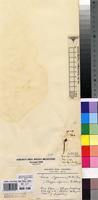
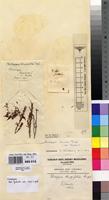
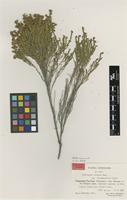
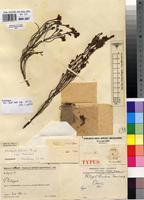
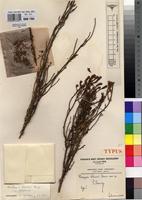
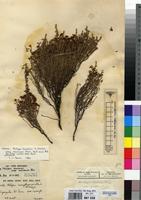
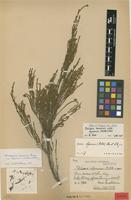
Type of Philippia elgonensis Mildbr. [family ERICACEAE]
Type of Philippia longifolia Engl. [family ERICACEAE]
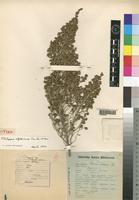
Isotype of Philippia trimera Engl. subsp. kilimanjarica Hedberg [family ERICACEAE]
Type of Philippia neohumbertii Staner [family ERICACEAE]
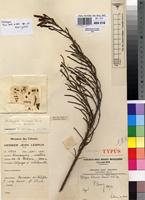
Type of Philippia lebrunii Staner [family ERICACEAE]
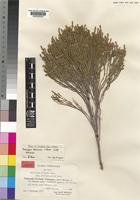
Philippia abyssinica Pic.Serm. & Heiniger [family ERICACEAE]
Isotype of Philippia trimera Engl. ssp. kilimanjarica Hedb. [family ERICACEAE]
Type of Philippia lebrunii Staner [family ERICACEAE]
Isotype of Philippia keniensis S.Moore subsp. meruensis Ross [family ERICACEAE]
Holotype of Philippia elgonensis Mildbr. [family ERICACEAE]
Previous
Next

Name

Identification
Philippia lebrunii Staner [family ERICACEAE ] Verified by Not on sheet, Philippia trimera Engl. [family ERICACEAE ] (stored under name); Verified by Hedberg O., 1954
Related name
  • Philippia elgonensis
  • Philippia neohumbertii
  • Philippia lebrunii
  • Erica trimera
  • Philippia longifolia
  • Philippia trimera
  • Philippia keniensis

Flora

Entry for Erica trimera subsp. trimera [family ERICACEAE]
Herbarium
Royal Botanic Gardens, Kew (K)
Collection
Flora of Tropical East Africa
Resource Type
Reference Sources
Entry From
Flora of Tropical East Africa, page 1, (2006) Author: HENK BEENTJE
Names
Erica trimera subsp. trimera [family ERICACEAE]
Philippia trimera Engl. [family ERICACEAE], P.O.A. C: 302, t. 33/a– h (1895); A.V.P.: 144, 298 (1957); R. Ross in B.J.B.B. 27, 4: 745 (1957); Hamilton, Uganda For. Trees: 80 (1981)
Philippia longifolia Engl. [family ERICACEAE], in E.J. 43: 345 (1909) & in Z.A.E.: 510 (1914); Alm & T.C.E.Fr. in K. Svenska Vetensk.-Akad. Handl. ser. 3, 4 (4): 38 (1927). Type: Congo-Kinshasa, Ruwenzori, Mildbraed 2568 (B†, syn.) & 2571 [or 2573, fide Z.A.E. & Alm & Fries] (B†, syn., BR, fragm., not found)
Philippia lebrunii Staner [family ERICACEAE], in Rev. Zool. Bot. Afr. 22: 243 (1932) & in Ann. Soc. Sci. Bruxelles 53: 159 (1933). Type: Congo-Kinshasa, Ruwenzori, Kiterere Valley, Lebrun 4551 (BR, holo.; not found)
Philippia humbertii Staner [family ERICACEAE], in Ann. Soc. Sci.Bruxelles 53: 160 (1933), non Perrier de la Bathie. Type: Congo-Kinshasa, Ruwenzori, W slope, Humbert 8915 (BR, holo.; not found, P, iso.)
Philippia neohumbertii Staner [family ERICACEAE], in Rev. Zool. Bot. Afr. 23: 232 (1933). Type as for P. humbertii
Information
Shrub or tree 3– 12 m high; branchlets puberulous with small glandular hairs. Leaves linear, (1– )3– 7 mm long, 0.9– 1.3 mm wide, margin faintly denticulate with glands (sometimes stalked) or hyaline teeth, glabrous, often shiny with resin exudate; petiole 0.9– 1.5 mm long. Flowers with pedicels 2– 4.5 mm long, glabrous. Calyx lobes 3, connate for 20– 30%, ovate or triangular, 1.2– 1.3 mm long, 0.9– 1 mm wide, the 4th (actually the bract) free and either closely against the other lobes or inserted up to 0.7 mm below the other lobes, narrowly ovate or elongate-triangular with narrow green apex, 2– 3 mm long, 1– 1.1 mm wide. Corolla pink or red, 1.6– 2.5 mm long, 1.9– 2.8 mm in diameter, widest at the mouth, lobes 0.5– 1.3 mm long. Stamens 7– 8, anthers 0.9– 1.2 mm long. Style 0.3– 2.5 mm long; stigma peltate, orbicular, 1– 1.8 mm in diameter, with 4 raised lines near the centre above; style 0.3– 1 mm long. 
Range
DISTR. U 2 Congo-Kinshasa, endemic to Ruwenzori Mts
Altitude range
3000– 4000 m
Distribution
UGANDA Ruwenzori, Butahu Valley, Kitandara, Aug. 1933, Osmaston 3780! & Mubuku Valley, between Kichuchu and Kabamba, July 1938, Eggeling 3793! & 1.5 km SW of Bigo Hut, Jan. 1969, Lye 1322!
Notes
USES. None recorded on specimensCONSERVATION Probably least concern (LC) as the altitudinal range is considerable

Related Materials

  • Terms and Conditions
  • Privacy Policy
  • Cookie Policy
  • Cookie Settings
  • Accessibility
  • Help
  • Contact Us
  • Facebook
  • Twitter
ITHAKA

JSTOR is part of ITHAKA, a not-for-profit organization helping the academic community use digital technologies to preserve the scholarly record and to advance research and teaching in sustainable ways.

©2000-2026 ITHAKA. All Rights Reserved. JSTOR®, the JSTOR logo, JPASS®, Aluka®, and ITHAKA® are registered trademarks of ITHAKA.

╳