JSTOR Global Plants Home
  • Home
  • Browse
  • About
  • Access
  • Account
    • Saved Items
    • Profile
  • Log in

Global Plants

Skip to Main Content
  • JSTOR Global Plants Home
  • Global Plants

    • Browse
    • About
    • Access
    • Account
      • Saved Items
      • Profile
Log in
  • Browse
  • About
  • Access
  • Account
    • Saved Items
    • Profile
Advanced Search

Compilation
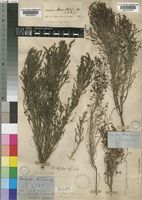
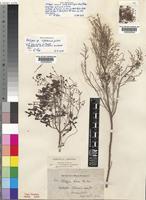
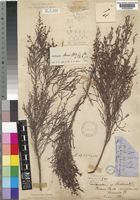
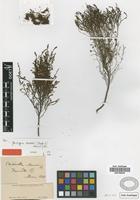
Philippia mannii

9 Images see all

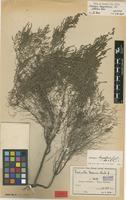
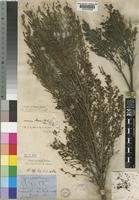
Philippia mannii (Hook.f.) Alm & T.C.E.Fr. [family ERICACEAE]
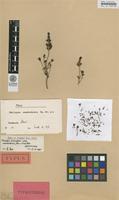
Philippia mannii (Hook.f.) Alm & T.C.E.Fr. subsp. pallidiflora (Engl.) R.Ross [family ERICACEAE]
Philippia mannii (Hook.f.) Alm & T.C.E.Fr. [family ERICACEAE]
Type of Philippia mannii (Hook.f.) Alm & T.C.E.Fr. [family ERICACEAE]
Type of Philippia benguelensis (Welw. ex Engl.) Welw. ex Britten var. albescens R.Ross [family ERICACEAE]
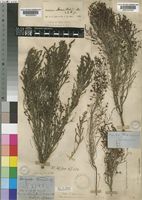
Lectotype of Philippia usambarensis Alm & T.C.E.Fr. [family ERICACEAE]
Philippia mannii (Hook.f.) Alm & T.C.E.Fr. [family ERICACEAE]
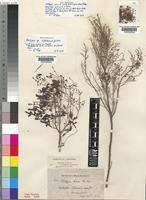
Isosyntype of Philippia simii S.Moore [family ERICACEAE]
Philippia mannii (Hook.f.) Alm & T.C.E.Fr. [family ERICACEAE]
Previous
Next

Name

Identification
Philippia mannii (Hook.f.) Alm & T.C.E.Fr. [family ERICACEAE ] (stored under name); Verified by Wagenitz, G., 1992 Ericinella mannii Hook.f. [family ERICACEAE ] Verified by Not on Sheet,
Related name
  • Philippia mannii
  • Ericinella mannii
  • Erica mannii
  • Philippia simii
  • Philippia hexandra
Common name
  • para (Johnstone) (WEST CAMEROONS, BAMILEKE), Burkill, H.M. 1985. The useful plants of west tropical Africa, Vol. 2

Flora

Entry for Erica mannii (Hook.f.) Beentje [family ERICACEAE]
Herbarium
Royal Botanic Gardens, Kew (K)
Collection
Flora of Tropical East Africa
Resource Type
Reference Sources
Entry From
Flora of Tropical East Africa, page 1, (2006) Author: HENK BEENTJE
Names
Erica mannii (Hook.f.) Beentje [family ERICACEAE], in Utafiti 3, 1: 13 (1990); K.T.S.L.: 444, map (1994). Type: Equatorial Guinea, Bioko, Clarence peak, Mann s.n. (K, holo.)– possibly nr 287? (K!)
Ericinella mannii Hook.f. [family ERICACEAE], in J.L.S. 6: 16 (1862); Oliv., F.T.A. 3: 484 (1877); P.O.A. C: 303 (1895); Z.A.E.: 511 (1914)
Philippia mannii (Hook.f.) Alm & T.C.E.Fr. [family ERICACEAE], in K. Svenska Vetensk.-Akad. Handl. ser. 3, 4 (4): 37 (1927); R. Ross in F.W.T.A. ed. 2, 2: 2 (1963); Letouzey in Fl. Cam. 11: 201, t. 39/1– 6 (1970); R. Ross in Bol. Soc. Brot. ser. 2, 53: 142 (1981) & in F.Z. 7 (1): 178 (1983)
Information
A shrub or tree 1– 10 m tall; much branched, the branchlets densely pubescent with short simple hairs and longer dendritic hairs. Leaves in whorls of 3, ascending to appressed, not curved outwards, linear to narrowly ovate, 2– 6 mm long, 0.5– 1.3 mm wide, acute, glabrous or the margins with a few simple hairs or glands when young; petioles 0.4– 0.7 mm long, glabrous. Flowers in clusters of 3– 10 at the tips of the branchlets; pedicels puberulous with short simple hairs or glabrous with occasionally a few dendritic hairs on the lower part, 1.3– 5.5 mm long. Calyx (apparent calyx; some lobes are really recaulescent bracteoles) connate for about half-way to 2/3, 0.8– 1.5 mm long, the 3 equal lobes ovate, slightly keeled near apex, acute, the 4th (the bract) subequal or up to twice as long as the other 3 and then with green upper part, all lobes connate near base, ciliate, otherwise glabrous. Corolla reddish brown to pale pink (to white, fide Ross in F.Z.), campanulate, 1.2– 2 mm long, the 4 lobes 0.5– 0.6 mm long, rounded, minutely dissected (?glandular-serrulate?). Stamens usually 6 but 5, 7 or 8 in some flowers of some specimens, anthers free, equalling the corolla or slightly exserted. Ovary 3-locular or 4-locular, pubescent; style exserted, 0.6– 2 mm long, the stigma flat, peltate, circular or slightly lobed, 0.6– 1.4 mm in diameter, with raised lines on upper surface. Fruit yellow-green tinged reddish.  
Notes
The typical subspecies (subsp. mannii ) occurs in south-eastern Nigeria, Cameroon and Bioko.

Related Materials

  • Terms and Conditions
  • Privacy Policy
  • Cookie Policy
  • Cookie Settings
  • Accessibility
  • Help
  • Contact Us
  • Facebook
  • Twitter
ITHAKA

JSTOR is part of ITHAKA, a not-for-profit organization helping the academic community use digital technologies to preserve the scholarly record and to advance research and teaching in sustainable ways.

©2000-2026 ITHAKA. All Rights Reserved. JSTOR®, the JSTOR logo, JPASS®, Aluka®, and ITHAKA® are registered trademarks of ITHAKA.

╳