JSTOR Global Plants Home
  • Home
  • Browse
  • About
  • Access
  • Account
    • Saved Items
    • Profile
  • Log in

Global Plants

Skip to Main Content
  • JSTOR Global Plants Home
  • Global Plants

    • Browse
    • About
    • Access
    • Account
      • Saved Items
      • Profile
Log in
  • Browse
  • About
  • Access
  • Account
    • Saved Items
    • Profile
Advanced Search

Compilation
Phialodiscus unijugatus

5 Images see all

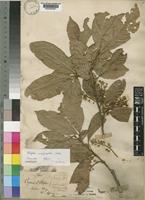
Blighia unijugata Baker [family SAPINDACEAE]
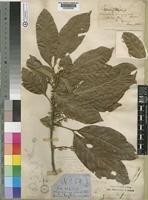
Type of Phialodiscus bancoensis Aubrév. & Pellegr. [family SAPINDACEAE]
Blighia unijugata Baker [family SAPINDACEAE]
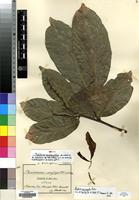
Type of Phialodiscus bancoensis Aubrév. & Pellegr. [family SAPINDACEAE]
Isotype of Phialodiscus myrmecophilus [family SAPINDACEAE]
Previous
Next

Name

Identification
Ratonia unijugata Baker [family SAPINDACEAE ] Cupania unrecorded unrecorded [family SAPINDACEAE ] Phialodiscus unijugatus (Baker) Radlk. [family SAPINDACEAE ] Blighia unijugata Baker [family SAPINDACEAE ] (stored under name);
Related name
  • Phialodiscus bancoensis
  • Ratonia unijugata
  • Blighia welwitschii
  • Cupania unrecorded
  • Phialodiscus unijugatus
  • Blighia unijugata
  • Phialodiscus welwitschii

Flora

Entry for BLIGHIA unijugata Baker [family SAPINDACEAE]
Herbarium
Royal Botanic Gardens, Kew (K)
Collection
Flora of Tropical East Africa
Resource Type
Reference Sources
Entry From
Flora of Tropical East Africa, page 1, (1998) Author: DAVIES & B. VERDCOURT
Names
BLIGHIA unijugata Baker [family SAPINDACEAE], in F.T.A. 1: 427 (1868); R. Wilczek in B.J.B.B. 21: 159, fig. 41 (1951) F.P.S. 2: 336 (1952); F.W.T.A., ed. 2, 1: 723 (1958); Hauman in F.C.B. 9: 316 (1960); K.T.S.: 507 (1961); F.F.N.R.: 224 (1962); Haerdi in Acta Trop., suppl. 8: 123 (1964); Exell in F.Z. 2: 516, t. 104 (1966); Fouilloy & Hallé in Fl. Cameroun 16: 186 (1973) & in Fl. Gabon 23: 186, t. 43/8–15 (1973); Hamilton, Field Guide Uganda For. Trees: 225, fig. 419 (1981); Troupin, Fl. Rwanda 2: 302 (1983); Vollesen in Fl. Ethiopia 3: 508, fig. 125.14 (1990); Beentje, K.T.S.L.: 414, fig. (1994). Type: Cameroon, Ambas Bay, Mann 760 (K!, holo.)
BLIGHIA zambesiaca Baker [family SAPINDACEAE], in F.T.A. 1: 427 (1868). Type: Malawi, W. shore of Lake Nyasa, Kirk (K!, holo.)
Phialodiscus zambesiacus (Baker) Radlk. [family SAPINDACEAE], in Sitz. Akad. Wiss. München 9: 539 (1879) & in E. & P. Pf. III, 5: 345 (1895); P.O.A. C: 251 (1895); Z.A.E.: 481 (1912); Radlk. in E.P. IV, 165: 1148 (1933), F.P.N.A. 1: 523 (1948); T.T.C.L.: 560 (1949)
Phialodiscus unijugatus (Baker) Radlk. [family SAPINDACEAE], in Sitz. Akad. Wiss. München 9: 539 (1879) & in E.P. IV, 165: 1147 (1933); I.T.U., ed. 2: 382 (1952)
Phialodiscus plurijugatus Radlk. [family SAPINDACEAE], in Sitz. Akad. Wiss. München 20: 263 (1890); Hiern, Cat. Afr. Pl. Welw. 1: 171 (1896); Radlk. in E.P. IV, 165: 1148 (1933). Lectotype: Angola, Golungo Alto, Welwitsch 4519 (LISU, lecto., K!, BM, COI, G-DC, isolecto.)
Phialodiscus verschuerenii De Wild. [family SAPINDACEAE], in B.J.B.B. 4: 361 (1914), as ‘ verschuereni ’; Radlk. in E.P. IV, 165: 1150 (1933). Type: Zaire, Congo da Lemba, Verschueren 742 (BR, holo.)
Information
Tree, probably dioecious, usually 6–9 m. but sometimes reaching 30 m. tall, with a dense crown; bark grey-brown smooth, thin, with warts and horizontal ridges; slash white, pale red or brown with white streaks; young twigs golden-hairy, glabrescent, dark grey. Leaves reddish when young, drying bright green or brownish; petiole up to 4 cm. long; rhachis 0.6–10 cm. long; petiolules 1–2 mm. long; leaflets in (1–)2–4(–5) pairs, elliptic, oblong, obovate or oblanceolate, the upper pair 3–26 cm. long, 1.2–9.5 cm. wide (but in West Africa up to 30×13 cm.), the lowest either similar (usually when there are only 2 pairs) or as small as 2×1.2 cm., acuminate at apex and tapering or sometimes rounded at the extreme tip, the midrib visible as a raised line on the upper surface, glabrous apart from some hairs on the veins plus tufts in the nerve axils; lateral veins in 6–10(–12) pairs, curving and ending well inside the leaflet margin, usually whitish beneath, glabrous. Inflorescences borne in axils of current leaves, 5–10 cm. long, flowers singly inserted or in cymose groups; pedicels 1–5(–10 in fruit) mm. long, pubescent. Flowers whitish to yellow, sweet-scented; calyxdivided ± halfway, lobes 2 mm. long, 1 mm. wide; petals rhomboid in outline, 1.5 mm. long, 1.5–2 mm. wide, scale bilobed, shaggy hairy. Stamens 6–8; filaments 4.5 mm. long, the basal part strikingly white hairy. Capsule reddish, (2–)3(–4)-gonous and -locular, 1.7–3 cm. long, 1.9–3 cm. wide, glabrescent, the angles acute or with wings up to 2 mm. broad; style and sepals persistent; endocarp pink with yellow margins, glabrous or nearly so. Seeds, dark brown or black, ovoid 1.5–2 cm. long, 6–8 mm. wide; aril bright yellow, up to 1 cm. long. Fig. 7.
Range
DISTR. U 2–4; K 3–7; T 1–4, 6–8; Z; P tropical Africa from the west to east coast, south to Angola and South Africa
Altitude range
0–1900 m.
Distribution
KENYA Fort Hall District 5 km. SW. of Muranga [Fort Hall], 9 Oct. 1956, Dyson 423!KENYA Masai District Masai Mara Game Reserve, Keekorok, Olchoro, June 1972, Taiti 2160!KENYA Kwale District Mrima Hill, 20 Nov. 1978, Brenan et al. 14629!TANZANIA Mwanza District Ukerewe, Rubya Forest Reserve, 4 Oct. 1960, Carmichael 801!TANZANIA Mbulu District Lake Manyara National Park, Endabash [Ndabash] R., 18 Nov. 1963, Greenway & Kirrika 11041!TANZANIA Songea District 8 km. W. of Mtama, near Nyangao R., 14 Dec. 1955, Milne-Redhead & Taylor 7653!TANZANIA Zanzibar , near Chukwani, 12 Feb. 1961, Faulkner 2754!UGANDA Kigezi District Kanungu, Oct. 1947, Purseglove 2542!UGANDA Busoga District Butembe Bunya [Bunya], Nov. 1937, Webb 53!UGANDA Mengo District Entebbe, Dec. 1934, Chandler 1188!
Notes
Synott, on his 555 from Budongo Forest, states fruit up to 5 cm. but that seems to be unlikely judging by his specimen; probably due to a confusion with B. welwitschii. The fruits are used as a fish poison. Bally 8847 from Kilifi District, Gongoni Forest has dense disk-like galls 4 mm. diameter on the leaves.

Related Materials

  • Terms and Conditions
  • Privacy Policy
  • Cookie Policy
  • Cookie Settings
  • Accessibility
  • Help
  • Contact Us
  • Facebook
  • Twitter
ITHAKA

JSTOR is part of ITHAKA, a not-for-profit organization helping the academic community use digital technologies to preserve the scholarly record and to advance research and teaching in sustainable ways.

©2000-2026 ITHAKA. All Rights Reserved. JSTOR®, the JSTOR logo, JPASS®, Aluka®, and ITHAKA® are registered trademarks of ITHAKA.

╳