JSTOR Global Plants Home
  • Home
  • Browse
  • About
  • Access
  • Account
    • Saved Items
    • Profile
  • Log in

Global Plants

Skip to Main Content
  • JSTOR Global Plants Home
  • Global Plants

    • Browse
    • About
    • Access
    • Account
      • Saved Items
      • Profile
Log in
  • Browse
  • About
  • Access
  • Account
    • Saved Items
    • Profile
Advanced Search

Compilation
Phaulopsis gediensis

3 Images see all

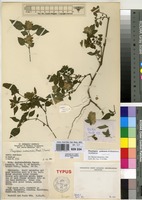
Isotype of Phaulopsis gediensis Mankt. [family ACANTHACEAE]
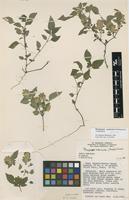
Isotype of Phaulopsis gediensis Manktelow [family ACANTHACEAE]
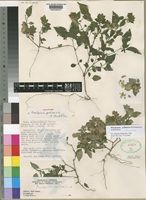
Holotype of Phaulopsis gediensis Manktelow [family ACANTHACEAE]
Previous
Next

Name

Identification
Isotype of Phaulopsis gediensis Mankt. [family ACANTHACEAE ] (stored under name); Verified by Manktelow M., 1996
Related name
  • Phaulopsis unrecorded
  • Phaulopsis imbricata
  • Phaulopsis gediensis

Flora

Entry for Phaulopsis gediensis M.Manktelow [family ACANTHACEAE]
Herbarium
Royal Botanic Gardens, Kew (K)
Collection
Flora of Tropical East Africa
Resource Type
Reference Sources
Entry From
Flora of Tropical East Africa, page 1, (2008) Author: Kaj Vollesen
Names
Phaulopsis gediensis M.Manktelow [family ACANTHACEAE], in Symb. Bot. Ups. 31(2): 152 (1996); Lebrun & Stork, Enum. Pl. Afr. Trop. 4: 498 (1997). Type: Kenya, Kilifi District: Arabuko-Sokoke Forest, Mida, Polhill & Paulo 882 (K!, holo.; BR!, iso.)
Phaulopsis imbricata [family ACANTHACEAE], [sensu Vollesen in Opera Bot. 59: 81 (1980) pro parte, non (Forssk.) Sweet (1826)]
Phaulopsis silvestris [family ACANTHACEAE], [sensu Iversen in Symb. Bot. Ups. 29(3): 162 (1991), non (Lindau) Lindau (1897)]
Information
Perennial herb with prostrate, decumbent or scrambling stems, without woody rootstock; stems to 1 m long, to 1(–2) mm in diameter near base of plant, rooting at lower nodes, when young sparsely to densely sericeous-puberulous (hairs downwardly curved) with hairs to 1 mm long, densest on two sides. Leaves ovate to elliptic or narrowly so, largest 1.5–5.3(–7.5)≈0.7–2.3(–4) cm, apex subacuminate to subacute, base cuneate to attenuate, often very unequal-sided, decurrent to the 0.3–3(–5) cm long petiole, subglabrous to sparsely puberulous or sparsely pubescent with glossy hairs to 1 mm long, below densest along veins, above uniformly. Inflorescences terminal only or terminal and lateral, strobilate or interrupted in basal part, 0.5–7 cm long; axis puberulous or sericeous-puberulous, sometimes with capitate glands; axis bracts to 2 cm long, smaller upwards, indumentum as leaves; cyme bracts green or pale green, suborbicular to reniform, to 10≈14 mm, subacute to rounded, sparsely puberulous and with long thin hairs to 2 mm, also glandular or sparsely so, often only near base. Calyx 6.5–8 mm long of which the basal tube 1–1.5 mm, ciliate on edges and veins with thin hairs to 2 mm long and with scattered to dense capitate glands; dorsal lobe ovate to elliptic or broadly so, 2.5–5 mm wide, subacute to rounded; ventral lobes linear to lanceolate or oblanceolate, 0.5–1.5 mm shorter than dorsal; lateral lobes linear, 1–1.5 mm shorter than ventral. Corolla white, 8–10 mm long; tube straight, 5–6.5 mm long of which the cylindric part about half; throat only slightly widened, 1–2 mm in diameter at apex; lips 2–3.5 mm long, lobes obovate, 1–2.5 mm long, truncate to retuse; lower lip without retrorse hairs. Filaments glabrous; anthers included in throat, ± 1 mm long, without or with minute appendages. Capsule 5–6 mm long. Seed ± 1.5 mm in diameter.
Range
DISTR. K 7; T 3, 6, 8 not known elsewhere
Altitude range
near sea level to 500 m
Distribution
KENYA Kwale District Cha Simba Forest, 2 Feb. 1953, Drummond & Hemsley 1091! & Dzombo Hill, 12 Nov. 1992, Luke et al. 3372!KENYA Kilifi District Gedi, 19 Jan. 1992, Robertson 6575!TANZANIA Lushoto District E Usambara Mts, Maramba–Lugongo, 16 Dec. 1917, Peter 60631!TANZANIA Tanga District Kange Estate, 9 Jan. 1952, Faulkner 850!TANZANIA Kilwa District Selous Game Reserve, Nahomba, 7 May 1970, Rodgers MRC1060!
Notes
Closely related toPhaulopsis imbricatasubsp.imbricatafrom which it differs in the slender habit, small leaves and corolla with a straight tube. A few collections ofP. imbricatasubsp.imbricata(e.g.Abdallah & Vollesen95/94 from T 3, Same District: Mkomazi Game Reserve) are morphologically very similar but have a larger corolla (over 10 mm long).

Related Materials

  • Terms and Conditions
  • Privacy Policy
  • Cookie Policy
  • Cookie Settings
  • Accessibility
  • Help
  • Contact Us
  • Facebook
  • Twitter
ITHAKA

JSTOR is part of ITHAKA, a not-for-profit organization helping the academic community use digital technologies to preserve the scholarly record and to advance research and teaching in sustainable ways.

©2000-2026 ITHAKA. All Rights Reserved. JSTOR®, the JSTOR logo, JPASS®, Aluka®, and ITHAKA® are registered trademarks of ITHAKA.

╳