JSTOR Global Plants Home
  • Home
  • Browse
  • About
  • Access
  • Account
    • Saved Items
    • Profile
  • Log in

Global Plants

Skip to Main Content
  • JSTOR Global Plants Home
  • Global Plants

    • Browse
    • About
    • Access
    • Account
      • Saved Items
      • Profile
Log in
  • Browse
  • About
  • Access
  • Account
    • Saved Items
    • Profile
Advanced Search

Compilation
Persicaria hydropiperoides

15 Images see all

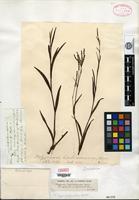
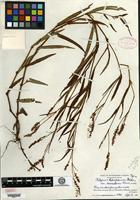
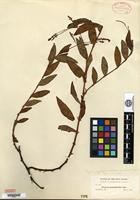
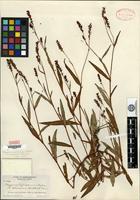
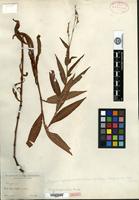
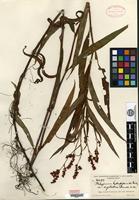
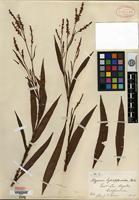
Isotype of Polygonum opelousanum Riddell [family POLYGONACEAE]
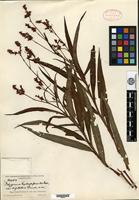
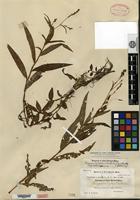
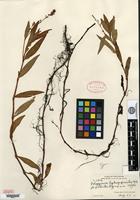
Holotype of Polygonum hydropiperoides Michaux var. euronotorum Fernald [family POLYGONACEAE]
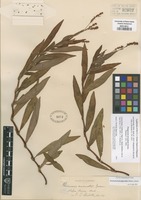
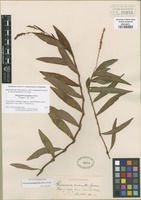
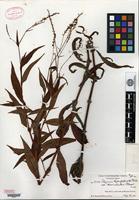
Holotype of Polygonum hydropiperoides Michaux var. sanibelense Stanford [family POLYGONACEAE]
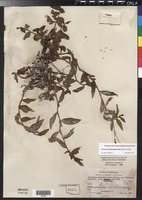
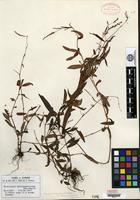
Holotype of Polygonum opelousanum Riddell var. adenocalyx Stanford [family POLYGONACEAE]
Holotype of Polygonum hydropiperoides Michaux var. bushianum Stanford [family POLYGONACEAE]
Type of Polygonum hydropiperoides Michaux var. digitatum Fernald [family POLYGONACEAE]
Original material of Persicaria arcuata (Greene) Greene [family POLYGONACEAE]
Filed as Persicaria hydropiperoides Small variety stanford bushianum [family POLYGONACEAE]
Type of Polygonum hydropiperoides Michaux var. digitatum Fernald [family POLYGONACEAE]
Holotype of Polygonum hydropiperoides Michaux f. leucochranthum A. H. Moore [family POLYGONACEAE]
Original material of Persicaria arcuata (Greene) Greene [family POLYGONACEAE]
Holotype of Polygonum hydropiperoides Michaux var. macerum Stanford [family POLYGONACEAE]
Holotype of Polygonum hydropiperoides Michaux var. asperifolium Stanford [family POLYGONACEAE]
Holotype of Polygonum hydropiperoides Michaux var. psilostachyum H. St. John [family POLYGONACEAE]
Holotype of Polygonum hydropiperoides Michaux var. breviciliatum Fernald [family POLYGONACEAE]
Previous
Next

Name

Identification
Persicaria hydropiperoides (Michaux) Small [family POLYGONACEAE ] (stored under name); Verified by Not on Sheet, Polygonum hydropiperoides Michaux [family POLYGONACEAE ] Verified by Stanford, 1926 Polygonum hydropiperoides Michaux [family POLYGONACEAE ] Verified by Not on Sheet, Polygonum hydropiperoides Michaux [family POLYGONACEAE ] Verified by E. E. Stanford, 1924
Related name
  • Polygonum hydropiperoides
  • Polygonum opelousanum
  • Persicaria hydropiperoides
Common name
  • Swamp smartweed, Flora of North America Vol. 5
  • renouée faux-poivre-d’eau, Flora of North America Vol. 5

Flora

Entry for Persicaria hydropiperoides (Michaux) Small [family POLYGONACEAE]
Herbarium
Flora of North America (FNA)
Collection
Flora of North America
Resource Type
Reference Sources
Entry From
Flora of North America, Vol 5,
Names
Persicaria hydropiperoides (Michaux) Small [family POLYGONACEAE], Fl. S.E. U.S., 378. 1903
Polygonum hydropiperoides Michaux [family POLYGONACEAE], Fl. Bor.-Amer., 1: 239. 1803
Persicaria opelousana (Riddell ex Small) Small [family POLYGONACEAE]
Persicaria paludicola Small [family POLYGONACEAE]
Polygonum hydropiperoides var. adenocalyx (Stanford) Gleason [family POLYGONACEAE]
Polygonum hydropiperoides var. asperifolium Stanford [family POLYGONACEAE]
Polygonum hydropiperoides var. breviciliatum Fernald [family POLYGONACEAE]
Polygonum hydropiperoides var. bushianum Stanford [family POLYGONACEAE]
Polygonum hydropiperoides var. digitatum Fernald [family POLYGONACEAE]
Polygonum hydropiperoides var. opelousanum (Riddell ex Small) W. Stone [family POLYGONACEAE]
Polygonum hydropiperoides var. psilostachyum H. St. John [family POLYGONACEAE]
Polygonum opelousanum Riddell ex Small [family POLYGONACEAE]
Polygonum opelousanum var. adenocalyx Stanford [family POLYGONACEAE]
Treatment Author(s)
Harold R. Hinds†
Craig C. Freeman
Information
Plants perennial, 1.5–10 dm; roots also often arising from proximal nodes; rhizomes often present. Stems decumbent to ascending, usually branched, without noticeable ribs, glabrous or obscurely strigose distally. Leaves: ocrea brown, cylindric, 5–23 mm, chartaceous, base inflated, margins truncate, ciliate with bristles (2–)4–10 mm, surface glabrous or strigose, not glandular-punctate; petiole 0.2–2 cm, glabrous or strigose; blade without dark triangular or lunate blotch adaxially, broadly lanceolate to linear-lanceolate, 5–25 × 0.4–3.7 cm, base tapered or acute, margins antrorsely appressed-pubescent, apex acuminate, faces glabrous or appressed-pubescent along midveins and sometimes on faces, usually punctate abaxially. Inflorescences terminal, sometimes also axillary, erect, uninterrupted or interrupted proximally, 30–80 × 2–5 mm; peduncle 10–30 mm, glabrous or strigose; ocreolae overlapping distally, often not overlapping proximally, margins ciliate with bristles to 2(–3) mm. Pedicels ascending, 1–1.5 mm. Flowers bisexual or unisexual and staminate, 2–6 per ocreate fascicle, homostylous; perianth roseate proximally, roseate, white, or greenish white distally, not glandular-punctate or sometimes glandular-punctate with punctae on tubes and inner tepals, scarcely accrescent; tepals 5, connate ca. 1/3–1/2 their length, obovate, 2.5–4 mm in bisexual flowers, 1.5–2.5 mm in staminate flowers, veins prominent or not, not anchor-shaped, margins entire, apex obtuse to rounded; stamens 8, included or exserted in staminate flowers; anthers pink or red, elliptic to ovate; styles 3, connate near middle. Achenes included or apex exserted, brown to brownish black or black, 3-gonous, 1.5–3 × 1–2.3 mm, shiny, smooth.
Phenology
jun-aug (summer), sep-nov (fall)
Altitude range
0–1500 m;
Distribution
MexicoCentral AmericaSouth America.USA Ala.USA AlaskaUSA Ariz.USA Ark.USA Calif.USA Conn.USA Del.USA D.C.USA Fla.USA Ga.USA IdahoUSA Ill.USA Ind.USA IowaUSA Kans.USA Ky.USA La.USA MaineUSA Md.USA Mass.USA Mich.USA Minn.USA Miss.USA Mo.USA Nebr.USA N.H.USA N.J.USA N.Y.USA N.C.USA N.Dak.USA OhioUSA Okla.USA Oreg.USA Pa.USA R.I.USA S.C.USA S.Dak.USA Tenn.USA Tex.USA Vt.USA Va.USA Wash.USA W.Va.USA Wis.Canada B.C.Canada N.B.Canada N.S.Canada Ont.Canada Que.
Discussion
The extreme variability in Persicaria hydropiperoides is reflected in its extensive synonymy. Among the segregates most often recognized in floras and checklists is P. opelousana, which C. B. McDonald (1980) showed to be broadly sympatric and highly interfertile with P. hydropiperoides. Consistent with this conclusion, R. S. Mitchell (1971) found that P. hydropiperoides and P. opelousana are unique among native North American smartweeds in consistently possessing multicellular plate-glands on the abaxial surface of their leaves. Such glands also are found on P. maculosa, an introduced European species.
Herbarium specimens of Persicaria hydropiperoides sometimes are misidentified as P. maculosa, especially when the roots are missing. The former species may be distinguished reliably by its achenes all trigonous (trigonous and biconvex achenes are mixed in the inflorescences of P. maculosa) and bristles on the margins of the ocreae that average longer. M. L. Fernald (1922c) reported hybrids with P. robustior from Nova Scotia.

Related Materials

  • Terms and Conditions
  • Privacy Policy
  • Cookie Policy
  • Cookie Settings
  • Accessibility
  • Help
  • Contact Us
  • Facebook
  • Twitter
ITHAKA

JSTOR is part of ITHAKA, a not-for-profit organization helping the academic community use digital technologies to preserve the scholarly record and to advance research and teaching in sustainable ways.

©2000-2026 ITHAKA. All Rights Reserved. JSTOR®, the JSTOR logo, JPASS®, Aluka®, and ITHAKA® are registered trademarks of ITHAKA.

╳