JSTOR Global Plants Home
  • Home
  • Browse
  • About
  • Access
  • Account
    • Saved Items
    • Profile
  • Log in

Global Plants

Skip to Main Content
  • JSTOR Global Plants Home
  • Global Plants

    • Browse
    • About
    • Access
    • Account
      • Saved Items
      • Profile
Log in
  • Browse
  • About
  • Access
  • Account
    • Saved Items
    • Profile
Advanced Search

Compilation
Periploca secamone

8 Images see all

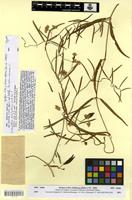
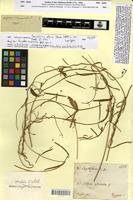
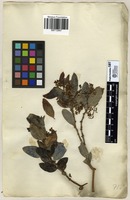
Syntype of Oxystelma alpini Decne. [family ASCLEPIADACEAE]
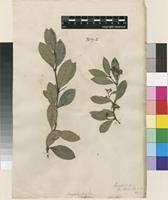
Filed as Periploca secamone L. [family APOCYNACEAE]
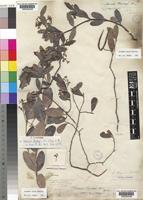
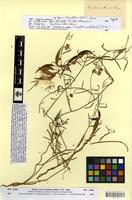
Isotype of Secamone thunbergii unrecorded var. retusa E.Mey. [family ASCLEPIADACEAE]
Syntype of Oxystelma alpini Decne. [family ASCLEPIADACEAE]
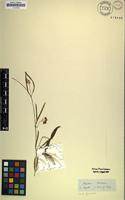
Lectotype of Periploca secamone L. [family APOCYNACEAE]
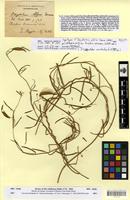
Syntype of oxystelma alpini Decne. [family ASCLEPIADACEAE]
Filed as Secamone thunbergii E.Mey. [family APOCYNACEAE]
Previous
Next

Name

Identification
Secamone alpini Schult. [family ASCLEPIADACEAE ] (stored under name); Verified by Goyder, D.J., Periploca secamone unrecorded [family ASCLEPIADACEAE ] Verified by Brown, N.E., Isotype of Secamone thunbergii unrecorded [family ASCLEPIADACEAE ]
Related name
  • periploca secamone
  • Periploca secamone
  • Secamone thunbergii
  • oxystelma esculentum
  • Secamone alpini
  • Oxystelma alpini
  • Oxystelma esculentum
  • oxystelma alpini

Flora

Entry for SECAMONE Alpini Schultes [family ASCLEPIADACEAE]
Herbarium
Royal Botanic Gardens, Kew (K)
Collection
Flora Capensis
Resource Type
Reference Sources
Entry From
Flora Capensis, Vol 4, page 518, (1909) Author: By N. E. BROWN.
Names
SECAMONE Alpini Schultes [family ASCLEPIADACEAE], Syst. Veg. vi. 125, excl. syn. Secamone, Alpin. Ægypt. ed. 1640, 133 and 134 with fig.;—Spreng. Syst. Veg. i. 837; Dietr. Synop. Pl. ii. 884; N. E. Br. in Dyer, Fl. Trop. Afr. iv. i. 279.
SECAMONE Thunbergii E. Meyer [family ASCLEPIADACEAE], Comm. Pl. Afr. Austr. 224; Harv. Gen. S. Afr. Pl. ed. 1, 221; Decne in DC. Prodr. viii. 501; Schlechter in Engl. Jahrb. xviii. Beibl. 45, 2 and 15, xx. Beibl. 51, 12, and xxi. Beibl. 54, 1; Journ. Bot. 1897, 290, and in Ann. Nat. Hist. Hofmus. Wien, xviii. 398; K. Schum. in Engl. & Prantl, Pflanzenfam. iv. ii. 263.
SECAMONE ægyptica G. Don [family ASCLEPIADACEAE], Gen. Syst. iv. 160, not of Ait.
Periploca Secamone Linn. [family ASCLEPIADACEAE], Mant. ii. 216, excluding both synonyms; Thunb. Prodr. Pl. Cap. 47; Fl. Cap. ed. 2, ii. 153, and ed. Schultes, 233; Poir. Encycl. Meth. v. 189; Willd. Sp. Pl. i. 1249; Ait. Hort. Kew. ed. 1, i. 301.
Information
a scrambling shrub; stem woody, glabrous or with a rust-coloured deciduous pubescence on the very young parts; leaves subcoriaceous; petiole 1–4 lin. long; blade 1/2–2 1/2 in. long, 1/4–1 in. broad, oblong, elliptic or lanceolate, usually obtuse, apiculate, occasionally acute, cuneately rounded or acute at the base, glabrous on both sides in the adult stage, rusty-puberulous when very young; cymes paniculate, pyramidal or corymbose, terminal or axillary, rusty-puberulous or subglabrous on all parts except the corolla; peduncles 1/4– 3/4 in. long; bracts 1/2 lin. long, ovate, acute; pedicels 1 1/2–2 1/2 lin. long; sepals 1/2 lin. long, ovate, obtuse or subacute; corolla 1 3/4–2 lin. in diam., glabrous outside, pubescent with white hairs inside; tube scarcely 1/2 lin. long; lobes spreading, 2/3– 3/4 lin. long, 1/2 lin. broad, oblong-ovate, subacute or minutely and obliquely emarginate at the apex; corona-lobes 1/4– 1/3 lin. long, subulate, erect or incurved over the tips of the anthers; apex of the style about equalling or slightly exceeding the anther-tips, stout, truncate; follicles widely divergent or slightly reflexed, 3–4 in. long, about 1 1/2 lin. thick, terete, tapering to a rather long point, glabrous; seeds 1/2 in. long, 3/4 lin. broad, linear-lanceolate, channelled down the face, very convex on the back, blackish-brown, glabrous, crowned with a tuft of long white hairs. null
Range
Also in Tropical Africa.
Distribution
CENTRAL REGION Somerset Div.; on the Bosch Berg, Burchell, 3131!COAST REGION Clanwilliam Div.; Gift Berg, 1500–2000 ft., Drège! Paarl Div; Paarl Mountains, Drège! Prior (Alexander)! Tulbagh Div.; Tulbagh Waterfall, Ecklon & Zeyher! Mitchells Pass, 800 ft., Bolus, 5203! Worcester Div.; Hex River Mountains, Rehmann, 2702! Cape Div.; Table Mountain, Harvey! near Cape Town? Burchell, 8406! George Div.; Outeniqua woods, Thunberg! Montagu Pass, Rehmann, 285! Knysna Div.; in the forest at Knysna, Burchell, 5396! Plettenberg Bay, Bowie! near Loeri River, Penther, 1926 (ex Schlechter). Uitenhage Div.; Van Stadens Berg, Zeyher, 603! near Uitenhage, Burchell, 4237! Prior! Port Elizabeth Div.; on sand-hill along the coast, E. S. C. A. Herb., 197! Albany Div.; in woods near Grahamstown, 2000 ft., MacOwan, 293! Zeyher, 603! Galpin, 354 (ex Schlechter), Schönland, 648! Glenfilling, Drège, 3474! Komgha Div.; in woods near Komgha, 2000 ft., Flanagan, 377 (ex Schlechter). Bathurst Div.; near Barville Park, Burchell, 4136! Stockenstrom Div.; Wellsdale Mountain, Scully, 337! Queenstown Div.; Finchams Nek, 3900 ft., Galpin, 1891!EASTERN REGION Transkei; near Kentani, Miss Alice Pegler, 662! Natal; near Durban, Wood, 138! 1415! Wilms, 2230! Peddie! Shepstone, 100 ft., Rogers, 599! Inanda, Wood, 1415!KALAHARI REGION Transvaal; near Botsabelo, 4900 ft., Schlechter (ex Schlechter); Rietfontein, Zoutpansberg Range, Leendertz, 875!SOUTH AFRICA without locality, Herb. Linneus! Masson!
Notes
The plant figured and described by Alpino has been erroneously referred to this species by Schultes, and has been misunderstood by all authors. Alpino's figure is undoubtedly a representation of Leptadenia heterophylla, Decne, a well-known inhabitant of Upper Egypt and the Nile Region, whilst the description of S. Alpini given by Schultes, so unmistakably refers to this South African plant, that it evidently was made entirely from it. The var. retusa (E. Meyer, l.c.), founded upon Drège, 3474, with obtuse or slightly retuse leaves, is a common form not worth varietal distinction. The follicles distributed with Miss Pegler's 662 are much longer (5–6 in. long) and more slender (1 lin. thick) than in any other specimen seen, but I find no difference in the flowers.

Related Materials

  • Terms and Conditions
  • Privacy Policy
  • Cookie Policy
  • Cookie Settings
  • Accessibility
  • Help
  • Contact Us
  • Facebook
  • Twitter
ITHAKA

JSTOR is part of ITHAKA, a not-for-profit organization helping the academic community use digital technologies to preserve the scholarly record and to advance research and teaching in sustainable ways.

©2000-2026 ITHAKA. All Rights Reserved. JSTOR®, the JSTOR logo, JPASS®, Aluka®, and ITHAKA® are registered trademarks of ITHAKA.

╳