JSTOR Global Plants Home
  • Home
  • Browse
  • About
  • Access
  • Account
    • Saved Items
    • Profile
  • Log in

Global Plants

Skip to Main Content
  • JSTOR Global Plants Home
  • Global Plants

    • Browse
    • About
    • Access
    • Account
      • Saved Items
      • Profile
Log in
  • Browse
  • About
  • Access
  • Account
    • Saved Items
    • Profile
Advanced Search

Compilation
Pentaschistis meruensis

5 Images see all

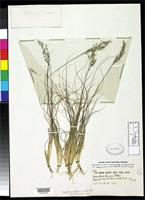
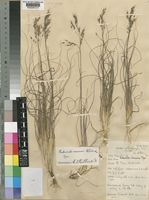
Isotype of Pentaschistis meruensis Hubbard, C.E. 1936 [family POACEAE]
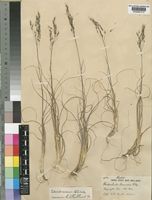
Pentaschistis borussica (K. Schum.) Pilg. [family POACEAE]
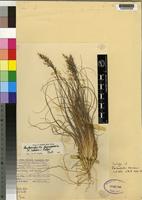
Isotype of Pentaschistis meruensis [family GRAMINEAE]
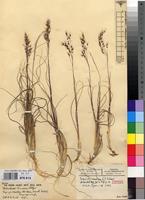
Isotype of Pentaschistis meruensis C.E.Hubb. [family POACEAE]
Pentaschistis borussica (K. Schum.) Pilg. [family POACEAE]
Previous
Next

Name

Identification
Isotype of Pentaschistis meruensis C.E.Hubb. [family POACEAE ] Verified by Not on sheet, Pentaschistis borussica (K.Schum.) Pilg. [family POACEAE ] (stored under name); Verified by Not on sheet,
Related name
  • Agrostis unrecorded
  • Pentaschistis meruensis
  • Pentaschistis borussica

Flora

Entry for PENTASCHISTIS meruensis C. E. Hubbard [family POACEAE]
Herbarium
Royal Botanic Gardens, Kew (K)
Collection
Flora of Tropical Africa
Resource Type
Reference Sources
Entry From
Flora of Tropical Africa, Vol 10, page 1, (1937) Author: (By C. E. HUBBARD.)
Names
PENTASCHISTIS meruensis C. E. Hubbard [family POACEAE], in Kew Bulletin, 1936, 501.
Information
A densely tufted perennial, 1/2–2 ft. high, from a short rhizome; innovations intravaginal. Culms erect, slender, simple, 1-noded, or nodeless except near the base; peduncle exserted, purple, glabrous, bearing sessile elliptic or circular glands towards the panicle, otherwise smooth. Leaf-sheaths overlapping, the lower broad and loose, glandular-tuberculate, loosely to densely pilose or villous with soft spreading hairs, the upper tight, shortly pilose to pubescent; ligule a densely ciliate rim; blade narrowly linear, subsetaceous upwards, 3–10 in. long, tightly involute, or opening out and up to 1 1/2 lin. wide at the base, stiff, flexuous upwards, pubescent to softly pilose or glabrescent, glandular-tuberculate along the margins. Panicle loose and ovate, or somewhat contracted after flowering, 2–5 in. long, up to 2 1/2 in. wide; rhachis and branches glandular like the apex of the culm, the former very slender, capillary upwards; branches mostly paired, at length spreading and nodding, capillary, bare at the base for up to 1 in., loosely trichotomously divided, the lower up to 2 1/2 in. long; pedicels very unequal, 1–10 lin. long. Spikelets 3–5 (mostly 3 1/2–4) lin. long, purple towards the base, pale yellow or whitish above, or pallid throughout. Glumes obliquely and narrowly lanceolate in profile, finely acute, acuminate, thinly scarious, 1-nerved and with 2 very short lateral nerves, often slightly hairy on the sides about the middle when young, more or less scaberulous on the keel. Valves lanceolate-oblong in profile, 1 1/2–2 lin. long (entire part), finely pubescent, finely 9-nerved; lobes acute or obtuse, 1/4– 1/3 lin. long, with a fine bristle 2–3 1/2 lin. long from the inner edge; awn geniculate in the lower third, 4–7 lin. long, with the column twisted and 1 1/2–2 lin. long; callus bearded with hairs about 1/2 lin. long. Valvules linear-oblong, up to 2 lin. long. Anthers 1 1/4 lin. long. Grain about 1 lin. long.
Distribution
Tanganyika Mozamb. Dist. Arusha District; Mt. Meru, dry open tussock-grass steppe, above the wooded region, 10,300–13,000 ft., Troll, 5707! dominant plant on sandy ash scree above Erica zone, 12,000–12,500 ft., Burtt, 4062! rocky slopes, 12,000 ft., Uhlig, 608! steep stony slopes, 12,000 ft., Uhlig, 1067! at the summit, 15,600 ft., Uhlig, 602!
Notes
Closely related to P. borussica, Pilger, which may be distinguished by its glabrous or sparingly hairy basal leaf-sheaths, mostly smaller spikelets (2 1/2–3 1/2 lin.), shorter valves (1–1 1/3 lin.), bristles (3/4–1 1/2 lin.) and awns (3–5 lin.).

Related Materials

  • Terms and Conditions
  • Privacy Policy
  • Cookie Policy
  • Cookie Settings
  • Accessibility
  • Help
  • Contact Us
  • Facebook
  • Twitter
ITHAKA

JSTOR is part of ITHAKA, a not-for-profit organization helping the academic community use digital technologies to preserve the scholarly record and to advance research and teaching in sustainable ways.

©2000-2026 ITHAKA. All Rights Reserved. JSTOR®, the JSTOR logo, JPASS®, Aluka®, and ITHAKA® are registered trademarks of ITHAKA.

╳