JSTOR Global Plants Home
  • Home
  • Browse
  • About
  • Access
  • Account
    • Saved Items
    • Profile
  • Log in

Global Plants

Skip to Main Content
  • JSTOR Global Plants Home
  • Global Plants

    • Browse
    • About
    • Access
    • Account
      • Saved Items
      • Profile
Log in
  • Browse
  • About
  • Access
  • Account
    • Saved Items
    • Profile
Advanced Search

Compilation
Pentaschistis borussica

12 Images see all

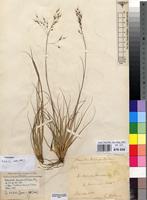
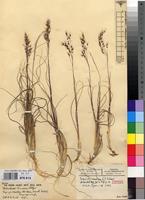
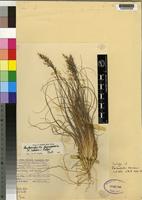
Type of Danthonia borussica K.Schum. [family POACEAE]
Pentaschistis borussica (K. Schum.) Pilg. [family POACEAE]
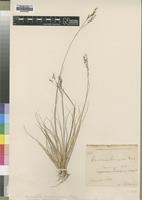
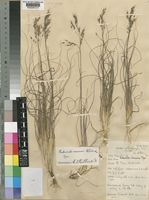
Isotype of Pentaschistis meruensis C.E.Hubb. [family POACEAE]
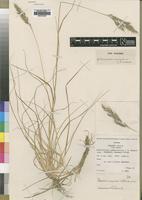
Pentaschistis borussica (K. Schum.) Pilg. [family POACEAE]
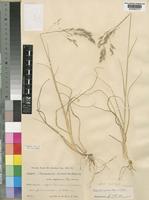
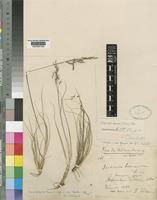
Isotype of Danthonia borussica K. Schum. [family GRAMINEAE]
Isotype of Pentaschistis meruensis [family GRAMINEAE]
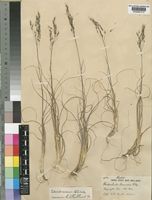
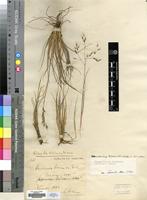
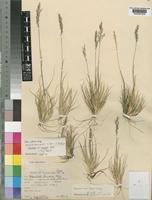
Type of Pentaschistis ruwenzoriensis C.E.Hubb. [family POACEAE]
Pentaschistis pictigluma (Steud.) Pilg. var. minor (Ballard & C.E.Hubb.) S.M.Phillips [family POACEAE]
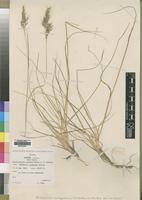
Type of Pentaschistis ruwenzoriensis C.E.Hubb. [family POACEAE]
Previous
Next

Name

Identification
Danthonia borussica K.Schum. [family POACEAE ] Pentaschistis borussica (K.Schum.) Pilg. [family POACEAE ] (stored under name);
Related name
  • Agrostis unrecorded
  • Pentaschistis meruensis
  • Pentaschistis minor
  • Pentaschistis expansa
  • Pentaschistis ruwenzoriensis
  • Danthonia trisetoides
  • Pentaschistis pictigluma
  • Pentaschistis borussica
  • Danthonia borussica
  • Pentaschistis trisetoides

Flora

Entry for PENTASCHISTIS borussica Pilger [family POACEAE]
Herbarium
Royal Botanic Gardens, Kew (K)
Collection
Flora of Tropical Africa
Resource Type
Reference Sources
Entry From
Flora of Tropical Africa, Vol 10, page 1, (1937) Author: (By C. E. HUBBARD.)
Names
PENTASCHISTIS borussica Pilger [family POACEAE], in Notizbl. Bot. Gart. Berlin, ix. 517 (1926). —Ballard in Kew Bulletin, 1930, 121; Peter in Fedde, Repert. Beih. xl. I. 303, in part.
Danthonia borussica K. Schum. [family POACEAE], in Engl. Pflanzenw. Ost-Afr. C. 109 (1895).
Information
A densely tufted perennial, with intravaginal innovations. Culms erect, 7–15 in. high, slender, 1-noded, or nodeless except near the base, glabrous, usually with a few patelliform sessile glands near the panicle. Leaf-sheaths striate, overlapping, the lower short, broad and loose, glabrous to sparingly hairy, coriaceous at the base, the upper tight, glabrous or pubescent; ligule a densely ciliate rim; blade narrowly linear to linear-subulate or setaceous, tapering to a slender blunt tip, 2–10 in. long, involute or convolute, or opening out and up to 1 3/4 lin. wide, green, rigid, curved, rarely flexuous upwards, glabrous or pubescent, closely and prominently nerved above, usually glandular on the margins towards the base and some-times above on the nerves. Panicle ovate to oblong, loose, 1 1/2–4 1/2 in. long, up to 4 in. wide at the base; rhachis filiform, like the branches usually bearing dark sessile glands, otherwise smooth; branches 2–3-nate or solitary, capillary, simple for up to 1 1/2 in. from the base, loosely trichotomously divided above, the lower at length spreading, up to 2 1/2 in. long; pedicels up to 7 1/2 lin. long. Spikelets 2 1/2–3 1/2 (mostly 3–3 1/4) lin. long, purple below the middle, yellowish or whitish above. Glumes obliquely lanceolate in profile, acuminate, 1-nerved and with 2 short lateral nerves at the base, thinly scarious, glabrous, slightly scaberulous on the keel or smooth. Valves narrowly oblong in profile, 1–1 1/3 lin. long (entire part), pubescent, obscurely 7–9-nerved; lobes obtuse, up to 1/4 lin. long, each with a fine bristle 3/4–1 1/2 lin. long from the inner side; awn geniculate below the middle, 3–5 lin. long, with the column tightly twisted and 1–2 1/2 lin. long. Valvules linear-oblong, 1 1/4–1 1/2 lin. long. Anthers 1–1 1/2 lin. long. Grain 3/4 lin. long.
Distribution
Tanganyika Mozamb. Dist. Mt. Kilimanjaro, Marangu, 6660 ft., Grote, 6322! mountain meadow, 9300 ft., Schlieben, 4825! 10,000–13,000 ft., Endlich, 622! between Bismarck Hut and Peters Hut, 8500–10,000 ft., Peter, 46685 (? in part)! Bismarck Hill, 10,000 ft., Grote, 6320B! near Peters Hut, 11,500–12,500 ft., Cotton & Hitchcock, 66! moist grassland towards Peters Hut, 11,900 ft., Hitchcock, 24626! 24629! Peters Hut, on stony and rocky slopes, 12,500 ft., Greenway, 3920! 13,000 ft., Pelley, 2826! 15,000 ft., Grote, 6321! on the lava, southern slope of Mawenzi, 12,300–13,000 ft., Volkens, 1368! on stony slopes above Moshi, 12,300 ft., Uhlig, 78 (in part)! stony slopes at the source of the Garanga, 12,600 ft., Uhlig, 208! in the crater of Kifinika Volcano, 10,600 ft., Volkens, 1859! Shira Mtns., 12, 000ft., Haarer, 1130!Uganda Nile Land Mt. Elgon, in crater, moorland, 13,500 ft., rare, Dummer, 3379!Kenya Nile Land Mt. Kenya, lower alpine region, in rocky places, 10,600 ft., Fries, 1310!
Notes
The specimens collected by R. E. & Th. C. E. Fries (no. 1310) on Mt. Kenya are the only ones cited above in which the divisions of the panicles are eglandular. Volkens' specimens (no. 1859) from the Kifinika Volcano represent a form with very narrow setaceous leaf-blades. Some rather poor specimens collected by Dummer (nos. 3335 and 3378), on Mt. Elgon, from 13,000–14,000 ft., differ in possessing smaller anthers (1/2– 3/4 lin. long), thinner leaf-sheaths and blades, and pallid spikelets. P. effusa, Peter in Fedde, Repert. Beih. xl. I. Descr. Pl. Nov. Afr. Or. 97 (1930), Fl. Deutsch-Ostafr. 303, is based on specimens collected by Peter (no. 46685) on Mt. Kilimanjaro, between Bismarck Hut and Peters Hut. I have examined an old inflorescence from the type-material and this is, without doubt, P. borussica, Pilger. Peter's description does not agree in every respect, however, with this or other material of that species. Certain characters, such as the 2-flowered spikelets and the awned lobes of the valves, apply to the Pentaschistis, but the bearded prolongation of the rhachilla, ovate and elliptic-oblong glumes are strongly suggestive of Deschampsia flexuosa, Trin. var. afromontana, C. E. Hubbard. It is very probable that Peter's description was drawn up from a mixture of these two grasses.

Related Materials

  • Terms and Conditions
  • Privacy Policy
  • Cookie Policy
  • Cookie Settings
  • Accessibility
  • Help
  • Contact Us
  • Facebook
  • Twitter
ITHAKA

JSTOR is part of ITHAKA, a not-for-profit organization helping the academic community use digital technologies to preserve the scholarly record and to advance research and teaching in sustainable ways.

©2000-2026 ITHAKA. All Rights Reserved. JSTOR®, the JSTOR logo, JPASS®, Aluka®, and ITHAKA® are registered trademarks of ITHAKA.

╳