JSTOR Global Plants Home
  • Home
  • Browse
  • About
  • Access
  • Account
    • Saved Items
    • Profile
  • Log in

Global Plants

Skip to Main Content
  • JSTOR Global Plants Home
  • Global Plants

    • Browse
    • About
    • Access
    • Account
      • Saved Items
      • Profile
Log in
  • Browse
  • About
  • Access
  • Account
    • Saved Items
    • Profile
Advanced Search

Compilation
Pentas parvifolia

7 Images see all

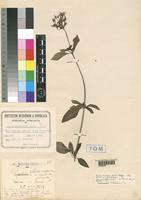
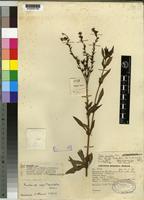
Pentas parvifolia Hiern var. nemorosa Chiov. [family RUBIACEAE]
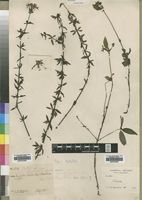
Filed as Pentas parvifolia Hiern [family RUBIACEAE]
Pentas parvifolia Hiern var. nemorosa Chiov. [family RUBIACEAE]
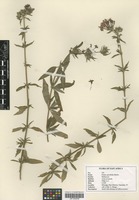
Pentas parvifolia Hiern [family RUBIACEAE]
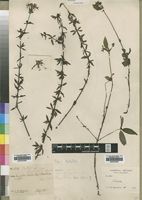
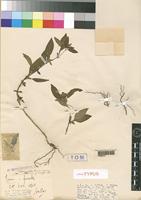
Holotype of Pentas parvifolia Hiern f. spicata Verdc. [family RUBIACEAE]
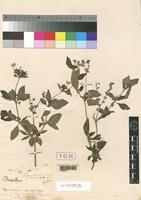
Type of Pentas parvifolia Hiern [family RUBIACEAE]
Pentas parvifolia Hiern var. nemorosa Chiov. [family RUBIACEAE]
Previous
Next

Name

Identification
Pentas parvifolia Hiern [family RUBIACEAE ] (stored under name);
Related name
  • Pentas lanceolata
  • Pentas parvifolia

Flora

Entry for PENTAS parvifolia Hiern [family RUBIACEAE]
Herbarium
Royal Botanic Gardens, Kew (K)
Collection
Flora of Tropical East Africa
Resource Type
Reference Sources
Entry From
Flora of Tropical East Africa, page 1, (1976) Author: B. VERDCOURT
Names
PENTAS parvifolia Hiern [family RUBIACEAE], in J.L.S. 16: 262, t. 7 (1877); T.T.C.L.: 518 (1949); Verdc. in B.J.B.B. 23: 303 (1953); U.K.W.F.: 404, fig. (1974). Type: Kenya, Mombasa, Hildebrandt 1994 (BM, holo.!, K, W, iso.!)
Information
Subshrub 0.6–2.5 m. tall, with erect or straggling often irregularly branched stems but not a true liane; in straggling forms the branches are frequently very unequally developed on opposite sides of a node; stems pale or purplish brown, woody, pubescent with white or ferruginous hairs above, glabrous below and the epidermis often peeling. Leaf-blades elliptic-lanceolate, ovate-lanceolate or oblong-elliptic, 1.2–9(–10.5) cm. long, 0.3–0.8(–2) cm. wide, acute at the apex, cuneate at the base, glabrescent to pubescent above, with fine white pubescence beneath; petiole 0–6 mm. long; stipules with 5–9 setae up to 6 mm. long from a brown base up to 4 mm. long. Inflorescence terminal, combined with axillary ones from the apical node, mostly 2–3 cm. wide, often only few-flowered; in one form the branches are distinctly spicate. Flowers scarlet, rarely pink and white, mostly dimorphic, but sometimes practically trimorphic. Calyx-tube obovoid, ± 1.5 mm. long and wide, glabrous to velutinous; lobes 5–6, unequal, the largest 0.3–1.2 cm. long, 0.7–2(–6) mm. wide, the rest short, 1.5 mm. long. Short-styled flowers; corolla-tube 0.7–1.8(–2.2) cm. long, 0.7 mm. wide, gradually dilated to 1–2 mm. at the apex; lobes oblong to linear-oblong, 2.5–10 mm. long, 1–3.3 mm. wide, glabrous or pubescent outside; stamens with anthers well exserted or rarely almost included; throat densely hairy. Long-styled flowers similar; corolla-tube enlarged cylindrically at apex to 1.5–5 mm. for a distance of 2–4 mm.; style exserted 1–6 mm.; stigma 2–2.5 mm. long; stamens completely included. Capsules as in P. bussei.

Related Materials

  • Terms and Conditions
  • Privacy Policy
  • Cookie Policy
  • Cookie Settings
  • Accessibility
  • Help
  • Contact Us
  • Facebook
  • Twitter
ITHAKA

JSTOR is part of ITHAKA, a not-for-profit organization helping the academic community use digital technologies to preserve the scholarly record and to advance research and teaching in sustainable ways.

©2000-2026 ITHAKA. All Rights Reserved. JSTOR®, the JSTOR logo, JPASS®, Aluka®, and ITHAKA® are registered trademarks of ITHAKA.

╳