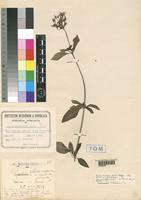
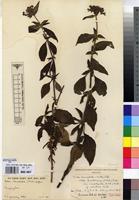
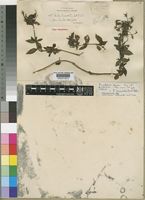
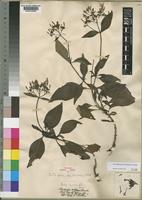
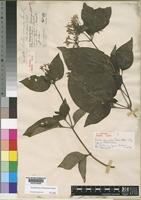
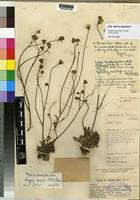
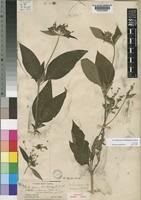
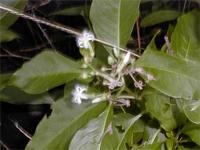
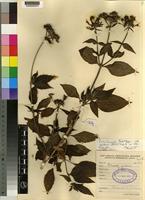
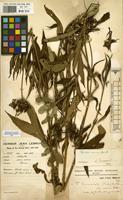
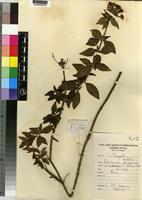
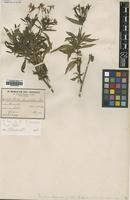
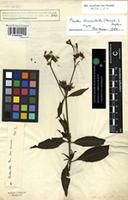
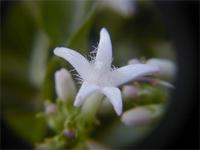
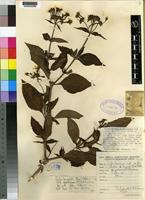
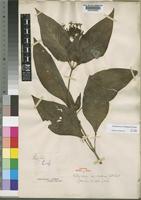
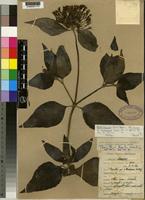
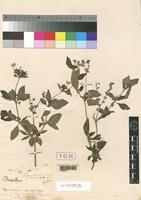
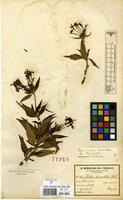
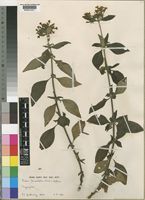
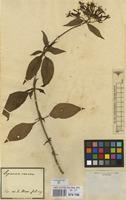
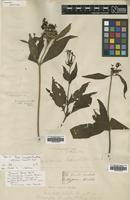
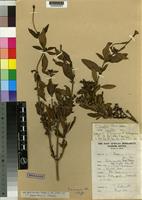
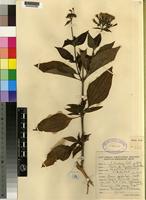
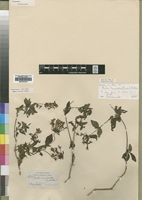
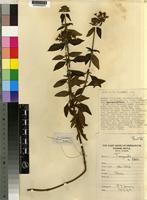
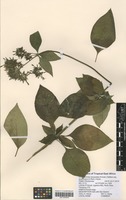
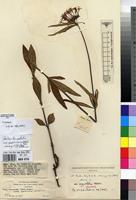
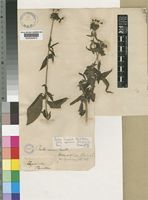
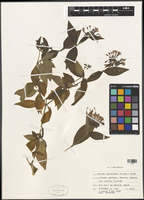
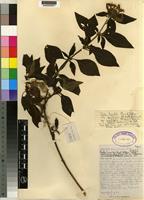
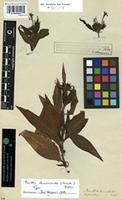
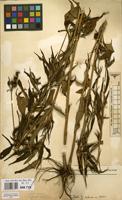
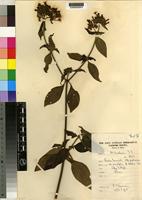
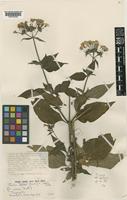
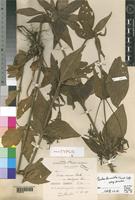
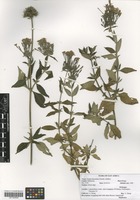
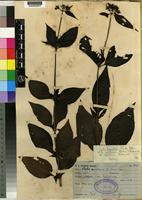
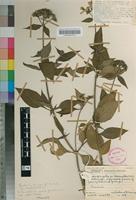
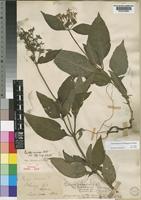
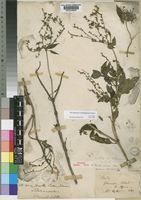
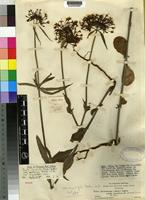
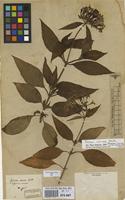
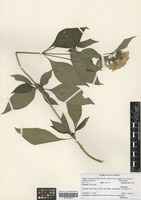
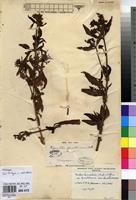
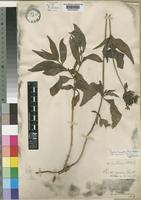
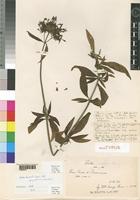
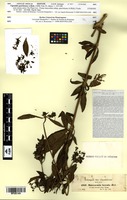
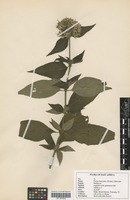
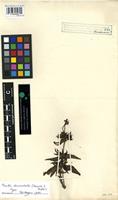
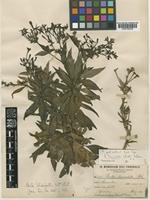
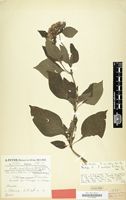
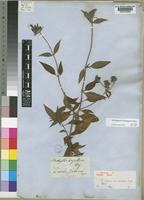
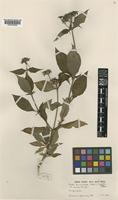
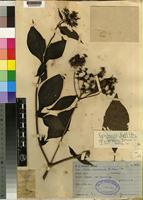
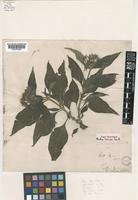
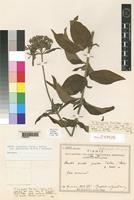
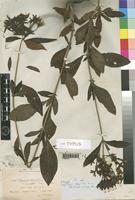
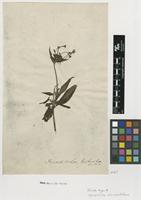
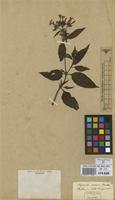
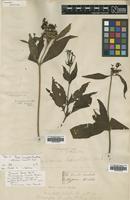
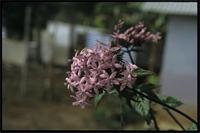
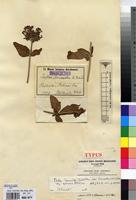
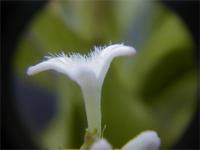
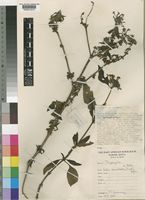
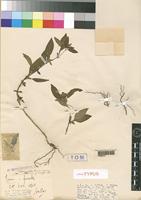
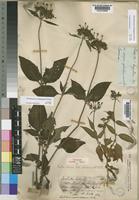
Herb or subshrub with erect or straggling mostly woody stems 0.5–1.3 m. tall, hairy. Leaf-blades ovate, lanceolate, ovate-lanceolate or elliptic, 3–13 cm. long, 1–6 cm. wide, acute at the apex, cuneate at the base, pubescent to densely velvety on both surfaces; petioles 0–5 cm. long; stipules with 3–9(–14) setae, 2–9 mm. long, bearing small colleters, from a short base. Inflorescence with terminal and axillary components combined into a single cluster. Calyx-tube hairy, 1–3 mm. long, 1.5–2.5 mm. wide; lobes very unequal, the largest lanceolate, 0.5–1.3 cm. long, 0.5–3 mm. wide, the smallest 1–3 mm. long. Flowers often trimorphic, either with style exserted and anthers included, anthers exserted and style included or both included. Long-styled flowers: corolla-tube (1–)2.3–3.9 cm. long, dilated at the apex to 3(–6) mm. wide for a distance of 4–8 mm., hairy or glabrous outside; lobes oblong-ovate to elliptic, 0.3–1 cm. long, (1–)1.5–4.5 mm. wide; throat hairy within; anthers completely included; style exserted 1.5–5.5 mm.; stigma 2–5 mm. long. Short-styled flowers very similar, corolla-lobes 4.5–8 mm. long; anthers exserted 2.5–4 mm.; style and stigma usually completely enclosed or rarely tips of stigma-lobes exserted 2.5 mm. Flowers with both style and stigma and anthers included: tube 2–4 cm. long; lobes ovate-oblong 0.5–1.1 cm. long, 2.5–3.3 mm. wide; anthers sometimes with tips exserted 0.25 mm. but usually included; style and stigma always included. Fruit obtriangular, 4–6 mm. tall and wide; beak 1–2 mm. tall.