JSTOR Global Plants Home
  • Home
  • Browse
  • About
  • Access
  • Account
    • Saved Items
    • Profile
  • Log in

Global Plants

Skip to Main Content
  • JSTOR Global Plants Home
  • Global Plants

    • Browse
    • About
    • Access
    • Account
      • Saved Items
      • Profile
Log in
  • Browse
  • About
  • Access
  • Account
    • Saved Items
    • Profile
Advanced Search

Compilation
Pennisetum quartinianum

4 Images see all

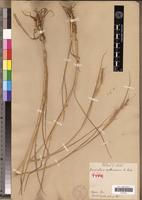
Pennisetum macrourum Trin. [family POACEAE]
Isotype of Pennisetum quartinianum A.Rich. [family POACEAE]
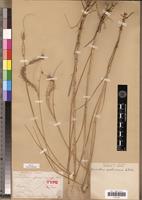
Holotype of Pennisetum quartinianum A.Rich. [family POACEAE]
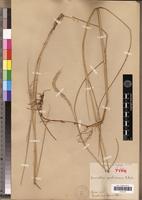
Isotype of Pennisetum quartinianum A.Rich. [family POACEAE]
Previous
Next

Name

Identification
Pennisetum quartinianum A.Rich. [family POACEAE ] Pennisetum macrourum Trin. [family POACEAE ] (stored under name);
Related name
  • Pennisetum macrourum
  • Pennisetum quartinianum

Flora

Entry for PENNISETUM Quartinianum A. Rich. [family POACEAE]
Herbarium
Royal Botanic Gardens, Kew (K)
Collection
Flora of Tropical Africa
Resource Type
Reference Sources
Entry From
Flora of Tropical Africa, Vol 9, page 1, (1917) Author: (By O. STAPF.)
Names
PENNISETUM Quartinianum A. Rich. [family POACEAE], Tent. Fl. Abyss. ii. 384 (1851). —Steud. Syn. Pl. Glum. i. 104; Schweinf. Beitr. Fl. Æthiop. 301; Engl. Hochgebirgsfl. Trop. Afr. 125; Durand & Schinz, Consp. Fl. Afr. v. 783; Chiov. in Ann. Istit. Bot. Roma, viii. 43, 323; Leeke in Zeitschr. Naturwiss. lxxix. 40.
Gymnothrix Quartiniana Walp. [family ], Ann. Bot. iii. 723 (1852).
Information
Perennial, with a creeping rhizome. Culms erect or geniculately ascending, up to 2 1/2 ft. high, moderately slender, terete, simple, up to 7-noded, glabrous and smooth. Leaf-sheaths slightly shorter or longer than the internodes, keeled upwards, striate, glabrous and smooth; ligule reduced to a densely ciliolate rim; blade linear, as wide as or narrower than the sheath at the base, tapering to a fine acute tip, up to 9 in. or more long and 3 lin. wide, convolute, folded or flat, rigid, glabrous, closely nerved and scaberulous above, smooth below. False spike dense, cylindric, flexuous, plumose, 4 1/2–6 in. long, 2–2 1/2 lin. wide (exclusive of the bristles), purplish; rhachis slender, finely ribbed, scaberulous, loosely studded with the minute stumps of the deciduous involucres; involucres sessile, slightly spreading; bristles up to 20 to each involucre, very slender or subcapillary, scaberulous, of unequal length, free to the base, flexuous, purplish, one stouter than the rest and up to 9 lin. long, the remainder shorter and up to 4 1/2 lin. long. Spikelets solitary, sessile within the involucre, lanceolate or narrowly ovate, acute, about 1 3/4 lin. long, glabrous. Lower glume absent or reduced to a very minute scale; upper oblate or ovate, obtuse or acute, 1/4– 1/2 lin. long, hyaline, nerveless. Lower floret barren and reduced to the valve: valve when flattened lanceolate-oblong or oblong, acute, nearly as long as the spikelet, membranous, 5-nerved; valvule suppressed. Upper floret hermaphrodite, lanceolate-oblong, acute: valve when flattened broadly elliptic-oblong to ovate-oblong, obtuse, mucronulate, as long as the spikelet, membranous, 5-nerved; valvule nearly as long as the valve, thinly membranous. Lodicules minute. Anthers 1 lin. long, with glabrous tips. Styles connate for one-third their length or free nearly to the base.
Distribution
Eritrea Nile Land Mensa; Mt. Agaro, 6000–8000 ft., Terracciano & Pappi, 561; Amasen; Addi Baro, along the River Mareb, Pappi, 2401; Sarae; Adi Ugri, 6300 ft., Pappi, 70, 83; Ocule Cusai; Loggo Sarda, Deggahen, 8600 ft., Pappi, 2094; Mt. Saic-Ara, 9700 ft., Pappi, 2007.Abyssinia Nile Land Shire, Quartin-Dillon & Petit, 184! without precise locality, Schimper, 720!
Notes
This species is recorded by A. Peter in his “Flora von Deutsch-Ostafrika” (Fedde, Repert. Beih. xl. 247) from Tanganyika Territory, between Ngaruka and Nahowze, Merker, 369.

Related Materials

  • Terms and Conditions
  • Privacy Policy
  • Cookie Policy
  • Cookie Settings
  • Accessibility
  • Help
  • Contact Us
  • Facebook
  • Twitter
ITHAKA

JSTOR is part of ITHAKA, a not-for-profit organization helping the academic community use digital technologies to preserve the scholarly record and to advance research and teaching in sustainable ways.

©2000-2026 ITHAKA. All Rights Reserved. JSTOR®, the JSTOR logo, JPASS®, Aluka®, and ITHAKA® are registered trademarks of ITHAKA.

╳