JSTOR Global Plants Home
  • Home
  • Browse
  • About
  • Access
  • Account
    • Saved Items
    • Profile
  • Log in

Global Plants

Skip to Main Content
  • JSTOR Global Plants Home
  • Global Plants

    • Browse
    • About
    • Access
    • Account
      • Saved Items
      • Profile
Log in
  • Browse
  • About
  • Access
  • Account
    • Saved Items
    • Profile
Advanced Search

Compilation
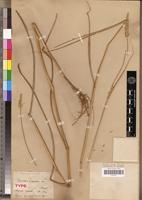
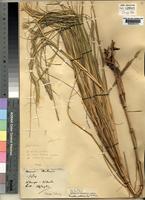
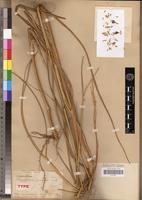
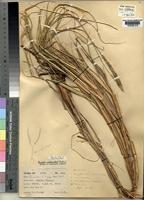
Pennisetum giganteum

12 Images see all

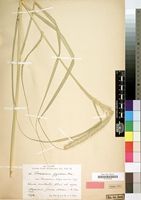
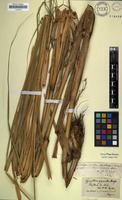
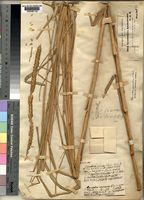
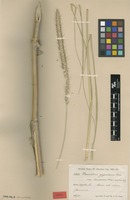
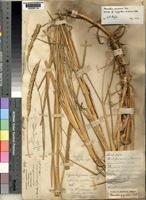
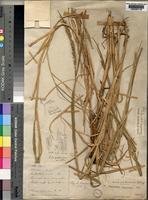
Type of Pennisetum giganteum var. trinervium Pilg. [family GRAMINEAE]
Filed as Pennisetum giganteum A.Rich. [family POACEAE]
Pennisetum glaucum (L.) R.Br. [family POACEAE]
Syntype of Pennisetum giganteum A.Rich. var. trinervium Pilg. [family POACEAE]
Type of Pennisetum giganteum A.Rich. [family POACEAE]
Type of Pennisetum catabasis Stapf & C.E.Hubb. [family POACEAE]
Type of Pennisetum giganteum A.Rich. [family POACEAE]
Holotype of Pennisetum catabasis Stapf & C.E.Hubb. [family POACEAE]
Type of Pennisetum giganteum var. minor Leeke [family GRAMINEAE]
Isosyntype of Pennisetum giganteum A.Rich. var. trinervium Pilger [family POACEAE]
Isotype of Pennisetum giganteum unrecorded var. minor Leeke [family POACEAE]
Pennisetum glaucum R.Br. [family POACEAE]
Previous
Next

Name

Identification
Pennisetum giganteum Not on sheet. [family GRAMINEAE ] (stored under name); Verified by Not on sheet.,
Related name
  • Pennisetum catabasis
  • Gymnothrix hordeiformis
  • Pennisetum macrourum
  • Gymnothrix gigantea
  • Pennisetum glaucum
  • Pennisetum hohenackeri
  • Gymnothrix riparioides
  • Pennisetum giganteum
Common name
  • gotonga (DA) (WEST CAMEROONS, BAMILEKE), Burkill, H.M. 1985. The useful plants of west tropical Africa, Vol. 2

Flora

Entry for PENNISETUM giganteum A. Rich. [family POACEAE]
Herbarium
Royal Botanic Gardens, Kew (K)
Collection
Flora of Tropical Africa
Resource Type
Reference Sources
Entry From
Flora of Tropical Africa, Vol 9, page 1, (1917) Author: (By O. STAPF.)
Names
PENNISETUM giganteum A. Rich. [family POACEAE], Tent. Fl. Abyss. ii. 382 (1851). —Steud. Syn. Pl. Glum. i. 104; Schweinf. Beitr. Fl. Æthiop. 301; Durand & Schinz, Consp. Fl. Afr. v. 779; Leeke in Zeitschr. Naturwiss. lxxix. 40, including vars. genuina, and minor; Chiov. in Ann. Istit. Bot. Roma, viii. 322; A. Peter in Fedde, Repert. Beih. xl. 243.
PENNISETUM giganteum Pilger var. trinervium [family POACEAE], in Notizbl. Bot. Gart. Berlin, x. 271 (1928).
PENNISETUM macrourum Engl. [family POACEAE], Hochgebirgsfl. Trop. Afr. 67; not of Trin.
Gymnothrix gigantea Walp. [family ], Ann. Bot. iii. 722 (1852).
Information
Perennial, with a long stout creeping rhizome; innovations extravaginal. Culms erect or ascending, 5–15 ft. high, stout to very robust and bamboo-like, terete, up to 8 lin. in diameter, branched with the branches erect, up to 12- or more-noded, glabrous, scaberulous and finely striate below the inflorescence. Leaf-sheaths longer than the internodes, glabrous or loosely bearded at the mouth, quite smooth or the lower loosely pilose from tubercles and at length glabrescent, the lower broad and loose, prominently striate, firm and rigid; ligule reduced to a ciliate rim; blade linear, gradually passing into the sheath, tapering to a fine blunt tip, up to 1 1/2 ft. or more long, 2 1/2–9 lin. wide, flat, folded or rolled when dry, erect, rigid, green or subglaucous, glabrous or densely hairy at the back of the ligule, closely nerved and scaberulous above or quite smooth. False spike dense, cylindric, 3 1/2–12 in. long, 3 1/2–4 1/2 lin. wide (exclusive of the bristles), stramineous, greenish or tinged with purple; rhachis slender, finely ribbed, scaberulous, rather loosely to densely beset with the very minute stumps of the deciduous involucres; involucres sessile, spreading; bristles 12–25 to each involucre, very slender, scaberulous, of unequal length, free to the base, pallid, one much stouter than the rest and up to 8 lin. long, the remainder much shorter and up to 3 lin. long. Spikelets solitary, sessile within the involucre, lanceolate to narrowly ovate, acute and usually mucronate, 2–2 1/2 (rarely 3) lin. long, glabrous. Lower glume broadly elliptic or oblate, obtuse, 1/4– 1/3 lin. long, hyaline, nerveless, or suppressed; upper lanceolate to oblong, acute or obtuse, 1/3–1 lin. long, thinly membranous, 1–3-nerved or nerveless. Lower floret ♂ or barren, very rarely hermaphrodite: valve when flattened broadly ovate- to elliptic-oblong, obtuse or subacute, frequently mucronulate, as long or nearly as long as the spikelet, membranous, 5–9-nerved; valvule lanceolate-oblong, bifid, nearly as long as the valve, with minutely scaberulous keels, or suppressed. Upper floret hermaphrodite, lanceolate to lanceolate-oblong, acute or acuminate: valve when flattened broadly ovate- or elliptic-oblong, obtuse, mucronulate, as long as the spikelet, membranous, 5–7-nerved, finely scaberulous upwards; valvule lanceolate, slightly shorter than the valve. Lodicules minute. Anthers 1–1 1/4 lin. long, with glabrous tips. Styles connate or free nearly to the base.
Distribution
Eritrea Nile Land Sarae; along the River Mareb, near Debarroa, 6300 ft., Pappi, 476, 477; Adi Ugri, 6300 ft., Pappi, 80.Abyssinia Nile Land Shire; in streams in deep valleys, Schimper, 1811! Tigre; near Adowa, on the banks of streams, Mariam-Chawito, Quartin-Dillon & Petit, 186! near Mariam Schoido, 6000 ft., Schimper, 295! Worrhey River, 4600 ft., Schimper, 1044!Uganda Nile Land Bugishu; near Mbale, 4000 ft., also on Mt. Elgon up to 5000 ft., usually near streams and in deep soil, Snowden, 1144!Kenya Nile Land Muhoroni, forming a thick belt on the banks of the Nyando River, 4200 ft., McDonald, 961! Nyeri, on banks of the Guaso-Nyeri, Fries, 166! Meru, Fries, 1810; Nairobi, 5500 ft., McDonald, 907! Nairobi to Nanyuki, in water or wet ground along river, Hitchcock, 24770! Thika, 5500 ft., McDonald, 904!
Notes
Vern. Names:— Dis (Kavirondo); Kisagazi (Luganda); Samia (Lugishu).

Related Materials

  • Terms and Conditions
  • Privacy Policy
  • Cookie Policy
  • Cookie Settings
  • Accessibility
  • Help
  • Contact Us
  • Facebook
  • Twitter
ITHAKA

JSTOR is part of ITHAKA, a not-for-profit organization helping the academic community use digital technologies to preserve the scholarly record and to advance research and teaching in sustainable ways.

©2000-2026 ITHAKA. All Rights Reserved. JSTOR®, the JSTOR logo, JPASS®, Aluka®, and ITHAKA® are registered trademarks of ITHAKA.

╳