JSTOR Global Plants Home
  • Home
  • Browse
  • About
  • Access
  • Account
    • Saved Items
    • Profile
  • Log in

Global Plants

Skip to Main Content
  • JSTOR Global Plants Home
  • Global Plants

    • Browse
    • About
    • Access
    • Account
      • Saved Items
      • Profile
Log in
  • Browse
  • About
  • Access
  • Account
    • Saved Items
    • Profile
Advanced Search

Compilation
Pennisetum asperifolium

16 Images see all

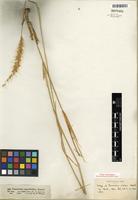
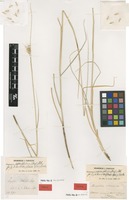
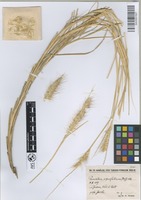
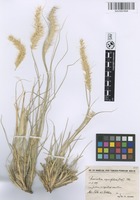
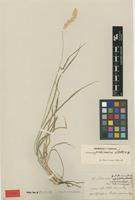
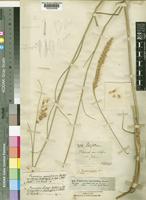
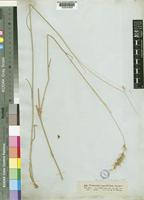
Holotype of Phalaris setacea Forssk. [family GRAMINEAE]
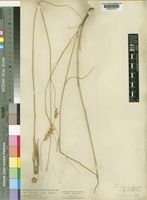
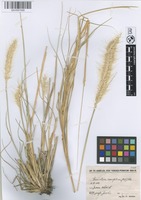
Isotype of Pennisetum divisum (Forssk. ex J.F. Gmel.) Henrard [family POACEAE]
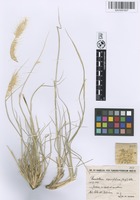
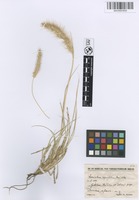
Type? of Pennisetum tiberiadis Boiss. [family POACEAE]
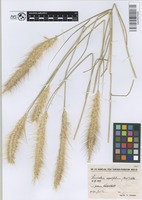
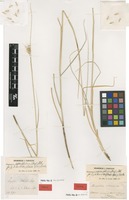
Filed as Pennisetum asperifolium (Desf.) Kunth [family POACEAE]
Pennisetum divisum (Forsk.ex F.Gmel.) Henrard [family POACEAE]
Filed as Pennisetum asperifolium (Desf.) Kunth [family POACEAE]
Type of Pennisetum proximum Leeke [family POACEAE]
Pennisetum divisum (Forsk.ex F.Gmel.) Henrard [family POACEAE]
Filed as Pennisetum asperifolium (Desf.) Kunth [family POACEAE]
Filed as Pennisetum setaceum (Forssk.) Chiov. subsp. asperifolium (Desf.) Maire [family GRAMINEAE]
Filed as Pennisetum asperifolium (Desf.) Kunth [family POACEAE]
Filed as Pennisetum setaceum (Forssk.) Chiov. subsp. asperifolium (Desf.) Maire [family GRAMINEAE]
Filed as Pennisetum asperifolium (Desf.) Kunth [family POACEAE]
Type? of Pennisetum tiberiadis Boiss. [family POACEAE]
Pennisetum divisum (Forsk.ex F.Gmel.) Henrard [family POACEAE]
Previous
Next

Name

Identification
Pennisetum setaceum (Forssk.) Chiov. [family GRAMINEAE ] (stored under name); Verified by C.E. Hubbard, 1932 Phalaris setacea Forssk. [family GRAMINEAE ] Verified by Not on Sheet, Panicum polystachyon Not on sheet [family GRAMINEAE ] Verified by Not on Sheet, Pennisetum asperifolium (Desf.) Kunth [family GRAMINEAE ] Verified by Not on Sheet,
Related name
  • Pennisetum unrecorded
  • Benniseto asperifolia
  • Panicum polystachyon
  • Pennisetum proximum
  • Pennisetum elanum
  • Pennisetum elatum
  • Pennisetum not on sheet
  • Pennisetum dichotomum
  • Pennisetum cenchroides
  • Pennisetum divisum
  • Penniseto asperifolio
  • Pennisetum setaceum
  • Panicum dichotomum
  • Pennisetum asperifolium
  • Enniseto asperifolia
  • Pennisetum pentastachyum
  • Phalaris setacea

Flora

Entry for PENNISETUM setaceum Chiov. [family POACEAE]
Herbarium
Royal Botanic Gardens, Kew (K)
Collection
Flora of Tropical Africa
Resource Type
Reference Sources
Entry From
Flora of Tropical Africa, Vol 9, page 1, (1917) Author: (By O. STAPF.)
Names
PENNISETUM setaceum Chiov. [family POACEAE], in Bull. Soc. Bot. Ital. 1923, 113.
PENNISETUM phalaroides Schult. [family POACEAE], Mant. Syst. Veg. ii. 147 (1824).
PENNISETUM asperifolium Kunth [family POACEAE], Rév. Gram. i. 49 (1829), Enum. Pl. i. 162, Suppl. 118; Steud. Syn. Pl. Glum, i. 108; Coss. & Kralik in Bull. Soc. Bot. France, iv. 496; Coss. & Durieu, Expl. Sci. Algér, ii. 40; Boiss. Fl. Orient. v. 446; Martelli, Fl. Bogos, 93; Durand & Schinz, Consp. Fl. Afr. v. 777; Batt. & Trab. Fl. Algér. et Tunis, 357; Leeke in Zeitschr. Naturwiss. lxxix. 25: 1907 (including forma genuina, Leeke & forma Tiberiadis, Leeke); Chiov. in Ann. Istit. Bot. Roma, viii. 316.
PENNISETUM macrostachyon Fresen. [family POACEAE], in Mus. Senckenb. ii. 135 (1837); A. Rich. Tent. Fl. Abyss. ii. 386; not of Trin.
PENNISETUM Ruppellii Steud. [family POACEAE], Nomencl. Bot. ed. 2, ii. 298 (1841) and Syn. Pl. Glum. i. 107; Martelli, Fl. Bogos, 92; Schweinf. in Bull. Herb. Boiss. ii. App. 2, 25; Leeke in Zeitschr. Naturwiss. lxxix. 24; Stapf in Kew Bulletin, 1907, 215; Chiov. in Ann. Istit. Bot. Roma, viii. 315; Chase in Contrib. U.S. Nat. Herb. xxii. 214; L. H. Bailey, Stand. Cycl. Hort. 2537, f. 2858.
PENNISETUM Ruppellii Schweinf. var. depauperatum [family POACEAE], in Bull. Herb. Boiss. ii. App. 2, 96 (1894); Chiov. in Ann. Istit. Bot. Roma, viii. 42.
PENNISETUM spectabile Fig. & De Not. [family POACEAE], in Mem. Accad. Torin., ser. II. xii. 248 (1852).
PENNISETUM Tiberiadis Boiss. [family POACEAE], Diagn. Pl. Orient., nov. ser. I. no. 13, 43 (1853); Steud. Syn. Pl. Glum. i. 419.
PENNISETUM orientale Engl. [family POACEAE], Hochgebirgsfl. Trop Afr. 125; Durand & Schinz, Consp. Fl. Afr. v. 782 (in part); Chiov. in Ann. Istit. Bot. Roma, vii. 65, viii. 42; Massey, Sudan Grasses; 36; not of L. Rich.
PENNISETUM orientale Chiov. var. altissimum [family POACEAE], l.c. vii. 66 (1898), viii. 42.
PENNISETUM Rueppellianum Hochst. ex Penzig [family POACEAE], in Act. Congr. Bot. Genoa, 1893, 366.
PENNISETUM dichotomum I. B. Balf. [family POACEAE], in Trans. Roy. Soc. Edinb. xxxi. 313; not of Delile.
Phalaris setacea Forsk. [family POACEAE], Fl. Ægypt.-Arab. 17 (1775); Christensen in Dansk Bot. Arkiv. iv. 12.
Cenchrus asperifolius Desf. [family POACEAE], Fl. Atl. ii. 388 (1800).
Information
A densely tufted perennial; innovations intravaginal. Culms erect or ascending from a geniculate base, 3/4–3 ft. high, slender, terete, rather rigid, simple or branched below, 3–8-noded, scabrid and sometimes minutely pubescent just below the inflorescence, otherwise glabrous and smooth. Leaf-sheaths as long as or longer than the internodes, terete or slightly keeled towards the blade, firm, tight, ciliate on the margins and usually loosely bearded at the mouth or glabrous and smooth, the basal persistent, becoming coriaceous; ligule reduced to a ciliate rim; blade narrowly linear, narrower than the sheath at the base, tapering to a fine point, up to 1 ft. or more long, convolute, folded or flat and up to 1 3/4 lin. wide, erect, rigid, tough, prominently nerved, glaucous, glabrous or with a few hairs towards the mouth, very scabrid on the margins and usually above, smooth below. False spike moderately dense, plumose, erect or slightly nodding, 4–9 in. (or more) long, 6–8 lin. wide (exclusive of the bristles), pallid or purplish; rhachis striate, loosely pubescent or pilose, scaberulous, loosely beset with the very minute stumps of the deciduous involucres; involucres at length spreading, each with a villous stalk up to 1 1/2 lin. long; bristles up to 25 to each involucre, slender, free to the base, usually straight, loosely plumose around the spikelet with long white tubercle-based hairs, scaberulous above, or the outer entirely scaberulous, of unequal length, one usually stouter than the rest and 8–20 lin. long, the others shorter, varying in length and up to 13 lin. long. Spikelets in clusters of 1–3, one subsessile, the others if present pedicelled with the pedicel up to 3/4 lin. long, lanceolate, finely acute, 2 1/4–3 1/4 lin. long, glabrous or minutely bearded at the base. Lower glume a hyaline obtuse scale up to 1/2 lin. long or suppressed; upper lanceolate or narrowly ovate, acute or slightly acuminate, usually mucronate, up to 2 1/2 lin. long, membranous, 1-nerved, asperulous, or similar to the lower. Lower floret barren or rarely ♂: valve when flattened lanceolate, ovate or ovate-oblong, finely acute and mucronate or shortly aristate, 2–3 lin. long, membranous, 1–3 (rarely 5) -nerved, scaberulous on the nerves; valvule suppressed or lanceolate, nearly as long as the valve, keels scaberulous. Upper floret hermaphrodite or ♂ in the lateral spikelets of a cluster, lanceolate, acute: valve when flattened ovate-oblong or oblong, acute, as long as the spikelet, mucronate with the mucro up to 1/2 lin. long, membranous, usually 5-nerved, scaberulous at the apex and rarely with the upper margins ciliolate; valvule slightly shorter than the valve. Lodicules very minute. Anthers 1 1/4–1 3/4 lin. long, with glabrous tips. Styles connate or free for half their length. Grain obovate-oblong, nearly 1 1/4 lin. long.
Distribution
Tanganyika Mozamb. Dist. Lake Challa, in a rocky gorge, Hitchcock, 24677! cultivated at Amani, Greenway, 1521!Sudan Nile Land Red Sea Province; Erkowit, Schweinfurth, 262! Tamanib, near Suakin, Lord ! slopes near Kamobsana, 2600 ft., MacDougal & Sykes, 113! about 21° lat., sea-coast to between 3000 and 4000 ft., Bent !Eritrea Nile Land Keren, Steudner, 1019! Addi Conzi, near Acrur, 6000 ft., Schweinfurth & Riva, 1168! Acrur, Schweinfurth & Riva, 1227! also, according to Chiovenda, from numerous localities in most parts of Eritrea.Abyssinia Nile Land Tigre; Mt. Sholoda, near Adowa, Schimper, 72! Goelleb, 3000–6000 ft., on cliffs, Schimper, 2130! Seriro District; Abba Matha, 6500 ft., Schimper, 486! Amba Harres, 7500 ft., Schimper, 1066! near Dirre Daua, Drake-Brockman, 28! 29! without precise locality, Schimper, 510!Somaliland Nile Land Berbera, Bury ! Dimoleh, Gillett & Aylmer ! within a radius of about 5 miles of the Hargeisa Station, 4500 ft., Farquharson, 39! Wagga, Burne, 27! Wagga Mtns., Lort Phillips ! river bed at foot of Rugga Pass, Lort Phillips ! Upper Sheikh, 4700 ft., Godman, 60! Burao, near the river bed and at Upper Sheikh, Appleton ! Golis Range, Drake-Brockman, 151! 465! Buran, on dry rocky ledges above the water pool, fairly common, 3000 ft., Collenette, 18! without precise locality, Lort Phillips ! Drake-Brockman, 50!Socotra Nile Land Keregnigiti, Schweinfurth, 456! Balfour, 232! 251!Central Sahara Upper Guinea Haggar Mts., Oued Tamanrasset, 5000 ft., Meinertzhagen, 195!
Distribution (external)
Algeria
Tunis
Egypt
Palestine
Arabia
Notes
Vern. Names:— Arabjeb or Arab Cheb (Somaliland). A phenomenon unusual in the Paniceae, and as far as we are aware, unique in the genus Pennisetum, occurs in this species, namely the production of the rhachilla beyond the upper floret. This character was used by Leeke in distinguishing P. Ruppellii, Steud. and P. asperifolium, Kunth; it is, however, unreliable. The rhachilla is occasionally developed in Abyssinian specimens, but it is very small, whereas in specimens from Algeria and Tunis it varies from a minute point to a very fine flexuous bristle nearly as long as the upper floret. This species is commonly cultivated in warm countries under the name Pennisetum Ruppellii or “Fountain Grass.” It produces beautiful silky purple inflorescences. In a few cases it has escaped from cultivation and become naturalized.

Related Materials

  • Terms and Conditions
  • Privacy Policy
  • Cookie Policy
  • Cookie Settings
  • Accessibility
  • Help
  • Contact Us
  • Facebook
  • Twitter
ITHAKA

JSTOR is part of ITHAKA, a not-for-profit organization helping the academic community use digital technologies to preserve the scholarly record and to advance research and teaching in sustainable ways.

©2000-2026 ITHAKA. All Rights Reserved. JSTOR®, the JSTOR logo, JPASS®, Aluka®, and ITHAKA® are registered trademarks of ITHAKA.

╳