JSTOR Global Plants Home
  • Home
  • Browse
  • About
  • Access
  • Account
    • Saved Items
    • Profile
  • Log in

Global Plants

Skip to Main Content
  • JSTOR Global Plants Home
  • Global Plants

    • Browse
    • About
    • Access
    • Account
      • Saved Items
      • Profile
Log in
  • Browse
  • About
  • Access
  • Account
    • Saved Items
    • Profile
Advanced Search

Compilation
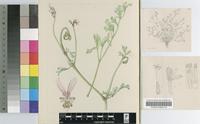
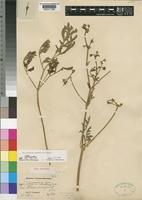
Pelargonium bechuanicum

2 Images see all

Pelargonium bechuanicum Burtt Davy
Type of Pelargonium dolomiticum R.Knuth [family GERANIACEAE]
Previous
Next

Name

Identification
Pelargonium bechuanicum Burtt Davy [family GERANIACEAE ]
Related name
  • Pelargonium bechuanicum

Flora

Entry for Pelargonium dolomiticum Knuth [family GERANIACEAE]
Herbarium
Royal Botanic Gardens, Kew (K)
Collection
Flora Zambesiaca
Resource Type
Reference Sources
Entry From
FZ, Vol 2, Part 1, page 130, (1963) Author: T. Müller
Names
Pelargonium dolomiticum Knuth [family GERANIACEAE], [ex Engl. in Sitzungsber. Königl. Pr. Akad. Wissensch. 11: 877 (1906) nom. nud.] in Engl., Bot. Jahrb. 40: 71 (1907); in Engl., Pflanzenr. IV, 129: 386 (1912); in Engl., Pflanzenw. Afr. 3, 1: 711 (1915). Type from the Transvaal.
Pelargonium bechuanicum Burtt Davy [family GERANIACEAE], F.P.F.T. 1: 48, 189 (1926). Type from the Transvaal.
Information
Erect perennial herb up to 50 cm. high, with a tuberous woody rootstock and 1 — several short lateral stems (each 1–5 cm. long) branching from an extremely short woody basal region; vegetative parts, peduncles and pedicels glandular and pubescent, covered with short stiff patent or ± appressed hairs and sessile glands, giving the whole plant a glaucous-canescent appearance. Leaves densely crowded on the short lateral stems; lamina 2·5–12 (15) × 1·5–8 (12) cm., narrowly ovate to ovate, 2–3-pinnate, ultimate segments 1–10 × 0·5–2 (3) mm., linear to oblong, apex rounded to acute; petiole up to 8 (18) cm. long; stipules 4–6 × 2·5–3·5 mm., oblong; to ovate, acute, membranous. 1–2 sympodial leafy, sometimes two-branched flowering shoots arising from each lateral stem, terminating in a compound, cincinnately cymose inflorescence; peduncle 3–10 (15) cm. long, opposed to a very much reduced leaf, inserted at a wide angle, each one shorter than the one below and each bearing a terminal pseudumbel of 2–5 (7) flowers; bracts 3–5 (7), 5–6·5 × 3·5–5 mm., ovate, acute, membranous; free part of pedicel 1–4 (8) mm. Spur 8–12 mm. Sepals 5–8 (9) × 1–3 mm., lorate to narrowly oblong, obtuse or sometimes acute, with conspicuous veins, studded with sessile bottle-shaped glands and a few short stiff hairs. Petals 4 (5), white to mauve with darker veins; 2 posterior 13–16 × 2–3·2 (4) mm., lorate, with a claw 5–7 mm. long, obtuse to deeply emarginate, slightly expanded laterally above the claw, expansion often inrolled; 2 (3) anterior 7–9 (10) × 3–4 (5) mm., oblong or sometimes ± elliptic, with a claw 3–5 mm. long, often with obliquely truncate base and apex. Stamens with fertile filaments 7, 4·5–10 mm. long, sterile filaments (staminodes) 3, 3–4 mm. long, all 10 connate at the base for 2–3·5 mm.; anthers 2–3 (3·5) × 1 (1·5) mm. Ovary with basal part tomentose; rostrum pubescent; style 3·5–7 mm. long; stigma 1·7–2·4 mm. long. Fruit 3·5–4·5 cm. long; cocci 8·0 × 1·6–2·0 mm. Seeds 4·8–5·5 × 1·3–1·6 mm., pale brown, very minutely reticulate (× 50).
Habitat
On light sandy soil in open bushland
Altitude range
1200–1400 m.
1400
1200
Distribution
Botswana SW Ghanzi, fl. & fr. 28.vii.1955, Story 5063 (PRE).
Distribution (external)
Transvaal
Orange Free State
Griqualand West
SW. Africa
Notes
The larger measurements in brackets are taken from specimens collected in the Transvaal. P.dolomiticum is closely related to P. senecioides L’Hérit. from the western parts of S. Africa, but the latter can be distinguished by the shape of the petals and the shortness of the style (1 mm. or shorter). The type of P. dolomiticum has been destroyed, but Knuth’s description agrees in most points with the material (named P. bechuanicum) which I have seen. It differs only in the smaller size of the leaves (3 cm. long incl. petiole) and height of the plant (17 cm.), both variable characters.

Related Materials

  • Terms and Conditions
  • Privacy Policy
  • Cookie Policy
  • Cookie Settings
  • Accessibility
  • Help
  • Contact Us
  • Facebook
  • Twitter
ITHAKA

JSTOR is part of ITHAKA, a not-for-profit organization helping the academic community use digital technologies to preserve the scholarly record and to advance research and teaching in sustainable ways.

©2000-2026 ITHAKA. All Rights Reserved. JSTOR®, the JSTOR logo, JPASS®, Aluka®, and ITHAKA® are registered trademarks of ITHAKA.

╳