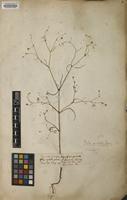
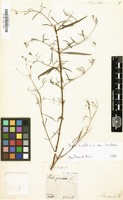
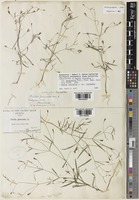
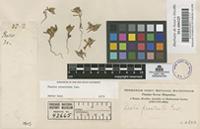
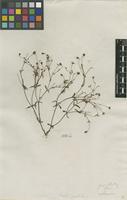
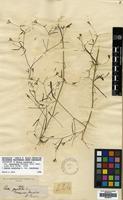
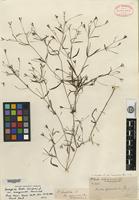
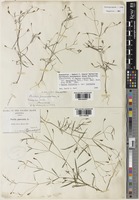
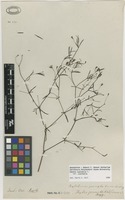
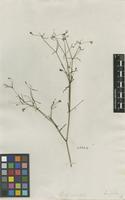
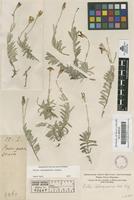
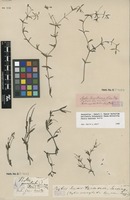
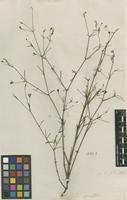
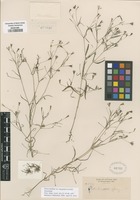
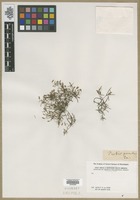
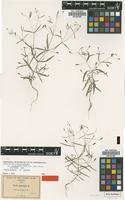
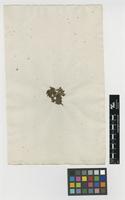
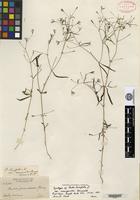
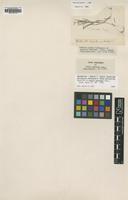
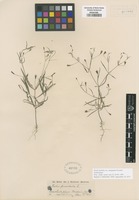
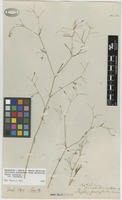
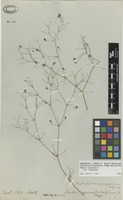
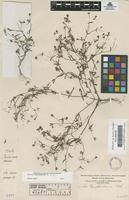
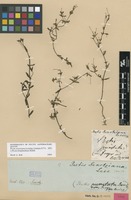
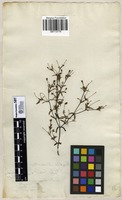
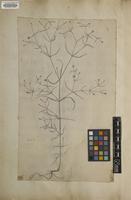
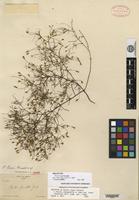
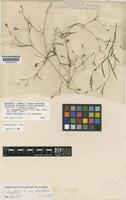
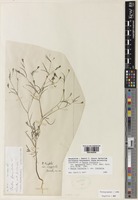
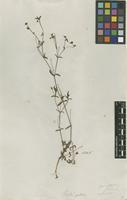
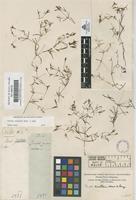
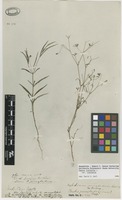
Entry for Pectis linifolia Linnaeus var. linifolia [family COMPOSITAE]
Herbarium
Flora of North America (FNA)
Collection
Flora of North America
Resource Type
Reference Sources
Entry From
Flora of North America, Vol 21,
Names
Pectis linifoliaLinnaeus var. linifolia [family COMPOSITAE]
Pectis linifolia var. marginalis Fernald [family COMPOSITAE]
Pectis punctataJacquin [family COMPOSITAE]
Treatment Author(s)
David J. Keil
Information
Annuals, 10–100 cm; herbage unscented. Stems erect or ascending, glabrous. Leaves linear to linear-elliptic, 20–60 × 1–4.5 mm, margins with 0–1 pairs of setae, faces glabrous (abaxial dotted with scattered or marginal oil-glands, adaxial often with 1 elongate, medial, subterminal oil-gland). Heads borne singly or in diffuse, cymiform arrays. Peduncles 10–30 mm. Involucres cylindric. Phyllaries distinct, linear, 4.5–7.5 × 0.5 mm (dotted submarginally with linear-elongate to elliptic oil-glands and subapically with 1+ elliptic oil-glands). Ray florets 5; corollas 2–3 mm. Disc florets 1–3; corollas 2–3.5 mm (lobes 5, equal, 4 or 5 each with 1 round oil-gland, throats sometimes with additional oil-glands). Cypselae 3.5–5 mm, strigillose or hirtellous (ray cypselae and subtending phyllaries widely spreading at maturity with pappi projecting downward); pappi of 1–4 stiff, often divaricate, awns 2–3 mm. 2n = 24.
Pectis linifolia is widespread with disjunctions among populations. Most of it is attributable to the widespread var. linifolia. Variety hirtella S. F. Blake is known only from southern Mexico. The wide distribution of var. linifolia is probably attributable to its adaptations for animal dispersal. The cypselae and spreading pappus awns resemble tiny grappling hooks. Field observations indicate that the cypselae readily cling to fabrics, and presumably they cling equally well to feathers and fur. The plants are autogamous and a single long-distance dispersal event is probably sufficient to establish a new population.